Classic Chicken and Dumplings — Creamy, Fluffy & Soul-Warming
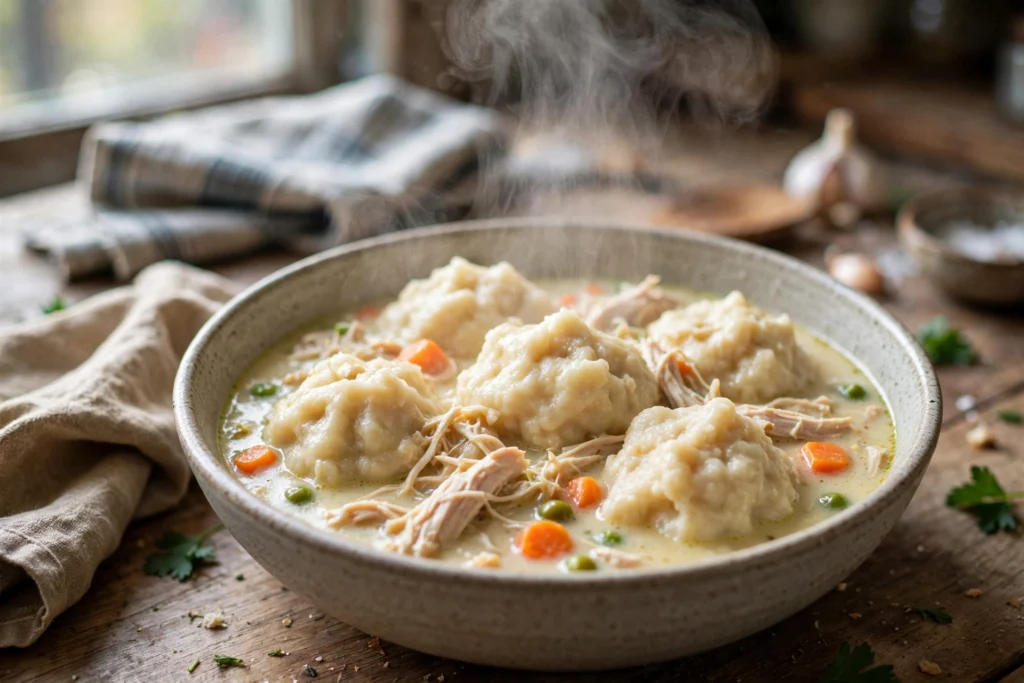
Classic chicken and dumplings is tender shredded chicken and soft, fluffy dumplings in a creamy, savory broth. This version takes 70 minutes total, serves 6 people, and uses one pot on the stove. The dumplings steam covered in a gentle simmer, so they cook through the middle without falling apart.
That last point matters more than any other part of this recipe. Plenty of pots taste fine until the dumplings go in. Then the dough sinks, sticks, or turns gummy, and dinner becomes a bowl of chicken-flavored paste. This recipe fixes that with three controls that cost nothing: cold butter in the dough, a light mix that stops the second the flour disappears, and a lid that stays on while the dumplings steam. Get those three right, and the rest of the pot almost takes care of itself.
You also get a real choice in this post. The main method poaches chicken right in the pot, which builds the best broth. A shortcut path further down uses store-bought broth and cooked chicken, with the same dumpling method, for nights when 70 minutes is too long. Both paths end at the same place: a thick, creamy broth, carrots that still hold their shape, and dumplings you can cut with a spoon.
Key facts up front: prep time 20 minutes, cook time 50 minutes, total time 70 minutes, 6 servings, one large pot or Dutch oven, and an estimated cost of about $12 to $14 for the whole pot, which works out to roughly $2.20 per serving. The dumplings need 15 minutes of covered steaming at the end. Do not lift the lid early to check on them. Steam is doing the cooking, and every peek lets it out.
Why You’ll Love This Chicken and Dumplings
This pot earns its place on a cold-weather rotation for plain reasons. The broth is creamy without being heavy, because a flour roux and a splash of cream do the thickening instead of a whole block of cream cheese or a can of condensed soup. The chicken stays tender because it poaches gently instead of boiling hard. The vegetables are simple and familiar: onion, carrot, and celery, plus peas stirred in at the end for color.
The dumplings are the real reason to make this version. They are soft on top, set in the middle, and light enough to soak up broth without dissolving into it. The dough takes about five minutes and uses pantry staples. No special flour is needed, and no rolling pin is required for the drop style used here.
It also scales well for a family table. One pot feeds six generously, and leftovers reheat better than most soups, as long as you add a splash of broth when you warm them. Serve it with nothing more than a spoon and a salad, and dinner is done.
Ingredients You’ll Need
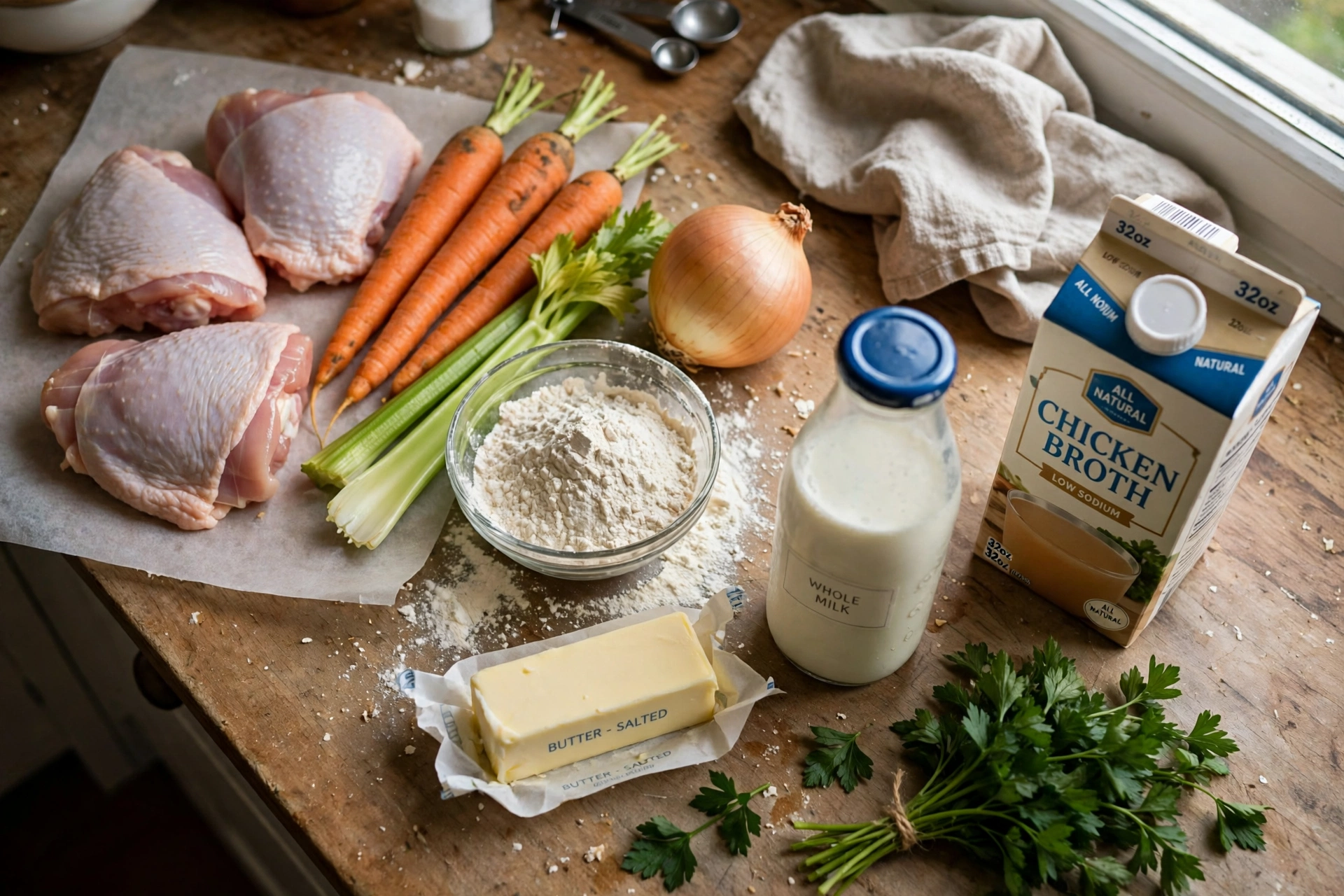
Every ingredient below has a job. Read the notes before you swap anything, because dumpling dough is less forgiving than the stew around it.
For the chicken and broth
Chicken is the backbone of the pot. Boneless, skinless chicken thighs stay moist through a gentle simmer, and they shred into soft strands. Chicken breasts work too, but pull them out the minute they hit 165 degrees Fahrenheit, or they dry out fast. Bone-in thighs add more flavor, but they take longer and need an extra step to pick the meat off the bone.
Butter and a little olive oil start the pot. The butter gives the roux its flavor, and the oil keeps the butter from browning too fast while the vegetables soften. Yellow onion, carrots, and celery form the base. Cut them into even pieces so they cook at the same rate. Garlic goes in last, for one minute, so it perfumes the pot without burning.
Flour does two jobs here. A quarter cup stirred into the softened vegetables makes the roux that thickens the broth. Keep stirring for a full minute after it goes in, or the finished broth can taste raw and pasty. Low sodium chicken broth is the safer buy, because you control the salt at the end. Regular broth works, but taste before you add extra salt.
Bay leaves and dried thyme season the broth while the chicken poaches. Fresh thyme is fine too, about a tablespoon of leaves. Frozen peas go in at the very end, so they stay bright and sweet instead of turning gray. Heavy cream, just a quarter cup, rounds the broth out. It goes in after the dumplings, so it never boils hard and never curdles.
For the dumplings
All-purpose flour, baking powder, salt, and black pepper make the dry base. Baking powder is what lifts the dumplings, so check that yours is fresh if the tin has sat in the cupboard for a year. Flat baking powder gives flat dumplings, and no amount of careful steaming fixes that.
Cold butter is the single most important dumpling ingredient. Cut it into small cubes and keep it cold until it goes into the flour. Cold fat melts slowly in the steam and leaves little pockets behind, which is what makes a dumpling fluffy instead of dense. Melted butter mixed straight into the dough gives a heavier result, so skip that shortcut.
Whole milk brings the dough together. Buttermilk works too and adds a slight tang. Use whichever you have, but keep it cold as well. Fresh parsley in the dough is optional, but it looks good and adds a mild herbal note. Dried parsley, a teaspoon, stands in fine.
Equipment You’ll Need
A large pot or Dutch oven, at least 5 quarts, is the main tool. A heavy pot holds a steady simmer, which is exactly what dumplings need. A thin pot can scorch the roux on the bottom and swing between a boil and a dead stop. A wooden spoon, a whisk for the roux, tongs for lifting the chicken, and two forks for shredding cover the rest. An instant-read thermometer takes the guesswork out of chicken doneness, and a medium bowl plus a fork handle the dumpling dough. No mixer, no rolling pin, and no special equipment is needed for the drop style.
How to Make Chicken and Dumplings
1. Soften the Vegetables
Melt the butter with the olive oil in a large pot or Dutch oven over medium heat. Add the diced onion, carrots, and celery with a pinch of salt. Cook for 6 to 8 minutes, stirring now and then, until the onion turns translucent and the carrots start to soften at the edges. Add the garlic and cook for 1 minute more, just until it smells fragrant.
2. Make the Roux and Broth
Sprinkle the quarter cup of flour over the vegetables and stir constantly for 1 minute. The flour will coat the vegetables and turn slightly golden. Pour in the chicken broth a little at a time, whisking as you go, so no lumps form. Add the bay leaves, thyme, salt, and pepper. Bring the pot to a gentle simmer, with small bubbles breaking the surface, not a rolling boil.
3. Poach the Chicken
Add the chicken thighs to the simmering broth in a single layer. Lower the heat so the broth stays at a gentle simmer. Cover the pot and cook for 18 to 20 minutes, until the chicken reaches 165 degrees Fahrenheit on an instant-read thermometer. Lift the chicken out with tongs and set it on a plate. Leave the broth simmering on low.
4. Shred the Chicken
Let the chicken rest for 5 minutes, until it is cool enough to handle. Shred it into bite-size pieces with two forks. Discard any large pieces of fat. Set the shredded chicken aside. Taste the broth now and adjust the salt and pepper, since the dumplings will pick up whatever seasoning is in the pot.
5. Mix the Dumpling Dough
Whisk the flour, baking powder, salt, and pepper in a medium bowl. Add the cold butter cubes and rub them into the flour with your fingertips until the mix looks like coarse crumbs, with a few pea-size bits left. Stir in the parsley. Pour in the cold milk and stir with a fork just until the flour disappears. Stop there. A few small lumps are fine, and overmixing is the fastest way to tough dumplings.
6. Drop the Dumplings
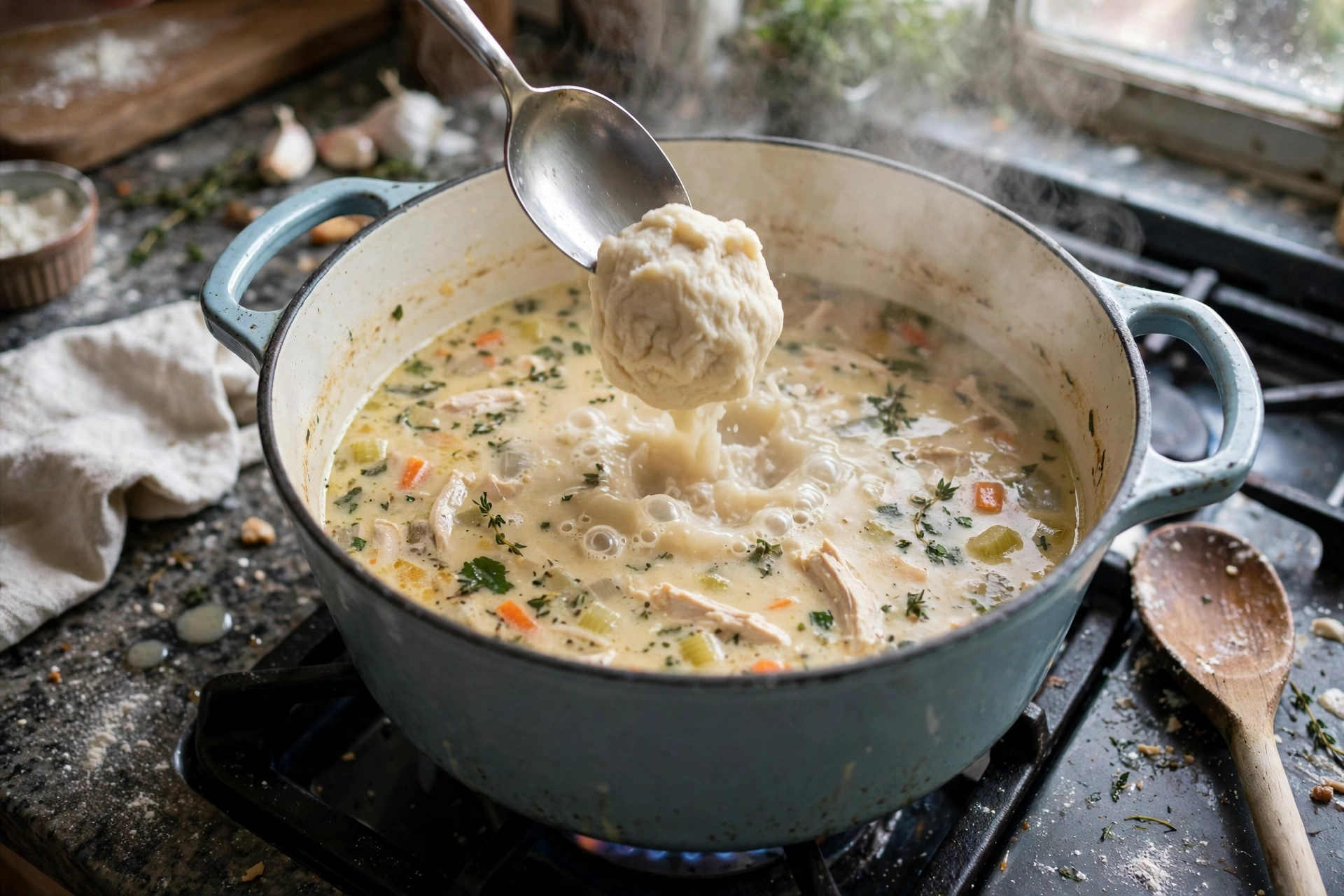
Check that the broth is at a gentle simmer. If it is boiling hard, lower the heat and wait a minute. Scoop heaping tablespoons of dough and drop them onto the surface of the broth, leaving a little space between each one. You should get about 14 to 16 dumplings. They will look crowded. That is normal, since they puff up as they steam.
7. Steam Until Fluffy
Put the lid on and cook for 15 minutes without lifting it. Do not stir, do not peek, and do not turn the heat up to hurry it along. The dumplings cook in trapped steam, and lifting the lid drops the temperature inside the pot. After 15 minutes, lift the lid. The dumplings should look matte, not shiny, and puffed to about double their size. A toothpick poked into the center of the largest dumpling should come out clean.
8. Finish with Peas and Cream
Stir the shredded chicken back into the pot, along with the frozen peas and the heavy cream. Simmer gently for 2 to 3 minutes, just until the peas are heated through and the chicken is hot again. Remove the bay leaves. Taste once more for salt and pepper, then ladle into warm bowls, making sure each serving gets dumplings, chicken, and vegetables.
Pro Tips for Fluffy Dumplings
Cold fat, a light mix, and a closed lid cover most dumpling failures. Keep the butter and milk cold right up to mixing time. If your kitchen is warm, chill the bowl for a few minutes first. Mix the dough by hand with a fork, not a mixer, and stop the second the dry flour is gone. The dough should look shaggy, not smooth. Smooth dough has been worked too much, and worked dough turns gummy.
Heat control matters just as much. A rolling boil breaks dumplings apart and sheds starch into the broth, which turns the whole pot pasty. A gentle simmer, with small bubbles lazily breaking the surface, lets the dumplings set on the outside and steam through the middle. If your stove runs hot, use the lowest setting that keeps a simmer going, and slide the pot partly off the burner if needed.
Spacing helps too. Drop the dumplings in one layer with a little room between them. If they are packed tight, the ones in the middle steam slower and stay doughy. If your pot is small, make slightly smaller dumplings so they all fit in one layer.
One more habit saves dinners: taste the broth before the dumplings go in. Dumplings absorb broth as they cook, and an under-seasoned broth gives bland dumplings no matter how perfect their texture is. Salt in stages, taste after the chicken comes out, and adjust again at the end.
Dumpling Troubleshooting
Gummy or doughy centers usually come from overmixed dough, a lid lifted too early, or dumplings dropped into a boiling pot. Fix it next time by mixing just until combined, keeping the lid on for the full 15 minutes, and holding a gentle simmer.
Dumplings that fall apart usually mean the broth was boiling too hard or the dough was too wet. Fix it by lowering the heat before the dough goes in, and by measuring the milk instead of pouring it freehand.
A broth that is too thin after cooking usually means too much liquid went in at the start, or the roux was skipped. Fix it by stirring a slurry of 1 tablespoon cornstarch mixed with 2 tablespoons cold water into the simmering pot, then cooking for 1 minute. Crushing one dumpling into the broth also thickens it fast.
A broth that is too thick usually means the pot simmered uncovered for too long, or the dumplings absorbed more liquid than expected. Fix it by stirring in warm broth, a half cup at a time, until it loosens to the texture you want.
Bland dumplings almost always trace back to unsalted dough or an under-seasoned broth. The dumpling dough itself needs salt and pepper in the dry mix, not just salt in the broth. Taste and adjust before the dumplings go in, and again at the end.
Hard dumplings point to old baking powder or dough that was packed down while measuring. Spoon flour into the measuring cup and level it off, and replace baking powder that has been open for more than a year.
Variations
Rolled Dumplings (Southern Style)
For flat, noodle-like dumplings, use the same dough but add 1 extra tablespoon of milk, then roll it out on a floured surface to about 1/4 inch thick. Cut it into 2 inch squares or strips with a pizza cutter, and drop the pieces into the simmering broth one at a time. Cook covered for 10 to 12 minutes. Rolled dumplings thicken the broth more than drop dumplings, so add an extra half cup of broth if the pot looks tight.
Creamier Version
Stir in an extra 1/4 cup of heavy cream at the end, for 1/2 cup total, and add 1/2 cup of shredded sharp cheddar off the heat, stirring until it melts. The cheese version is richer and heavier, so skip the peas if you want the cheese flavor to stand out.
Lighter Version
Use chicken breasts instead of thighs, swap the heavy cream for whole milk, and cut the butter in the dumplings to 3 tablespoons. The broth will be a little thinner and the dumplings a little less rich, but the method stays the same. Do not skip the roux, or the lighter version turns watery.
Vegetable Loaded Version
Add 1 cup of diced potatoes with the carrots, and 1 cup of sliced mushrooms with the onion. Potatoes need the full simmer time to soften, so add them early. Mushrooms add an earthy note that suits the thyme in the broth.
Slow Cooker Adaptation
Cook the onion, carrots, celery, and garlic in butter on the stove first, then move them to a slow cooker with the broth, thyme, bay leaves, and chicken. Cook on low for 4 hours or high for 2 hours, until the chicken reaches 165 degrees. Shred the chicken, stir in the roux as a slurry of flour and cold water, then drop the dumpling dough on top and cook covered on high for 30 to 40 minutes, without lifting the lid. Slow cookers vary a lot, so check the largest dumpling with a toothpick before serving.
Ingredient Substitutions
No fresh chicken on hand? Use 4 cups of shredded cooked chicken or rotisserie chicken. Add it at step 8 with the peas and cream, and simmer just long enough to heat it through. The broth will be a little less rich, since it did not poach the chicken, so taste it well and add an extra pinch of thyme if it tastes flat.
No whole milk? Buttermilk gives a slight tang and works well in the dumplings. Half and half also works, but it makes a richer dough. Skip skim milk if you can, since it gives a leaner dumpling with less flavor.
No fresh parsley? Use 1 teaspoon of dried parsley in the dough, or leave it out. The dumplings taste the same without it. No dried thyme? Use 1 tablespoon of fresh thyme leaves, or 1 teaspoon of poultry seasoning, which already contains thyme and sage.
Gluten-free flour blends that measure like all-purpose flour can stand in for the dumpling flour and the roux. The dumplings may be a little more delicate, so handle the dough gently and do not stir the pot after they go in. Check that your broth is certified gluten-free as well, since some brands add wheat-based flavoring.
Dairy-free cooks can use olive oil instead of butter for the vegetables, and an unsweetened oat or soy milk in the dumplings, with a dairy-free butter alternative cut in cold. The dumplings will be a little less rich, but the steam method still gives a soft result. Skip the heavy cream and use an extra splash of oat milk at the end.
Dietary Notes
This is a classic comfort dish, not a light one, and the numbers below reflect that honestly. It contains wheat, milk, and chicken, so it is not gluten-free, dairy-free, or vegetarian as written. The substitutions section above gives workable paths for gluten-free and dairy-free versions, but those changes alter the texture a bit, so expect a slightly different dumpling.
For a lower-fat version, use chicken breasts, whole milk instead of cream, and 3 tablespoons of butter in the dumplings. That trims fat without changing the method. For a lower-sodium version, use no-salt-added broth and season at the end, tasting as you go. Most of the salt in this recipe sits in the broth, so that one change has the biggest effect.
Make-Ahead, Storage, and Reheating
You can prep the vegetables and mix the dry dumpling ingredients a day ahead. Store the chopped vegetables in the fridge in a covered container, and keep the dry mix in a sealed bag. Mix the wet dough only when you are ready to cook, since dumpling dough goes slack if it sits mixed for hours.
Leftovers keep in the fridge for up to 3 days in an airtight container. The dumplings will absorb broth overnight, so the pot thickens as it sits. That is normal. Reheat gently on the stove over low heat, adding a splash of chicken broth or milk to loosen it. Stir carefully so the dumplings do not break apart. Avoid high heat, which can split the cream.
Freezing is possible but imperfect. The broth and chicken freeze well for up to 2 months, but cooked dumplings turn soft and spongy after thawing. For the best frozen result, freeze the chicken and broth without dumplings, then make a fresh batch of dumpling dough and steam it in the reheated broth. If you do freeze the finished dish, thaw it overnight in the fridge and reheat it gently, expecting softer dumplings.
What to Serve With Chicken and Dumplings
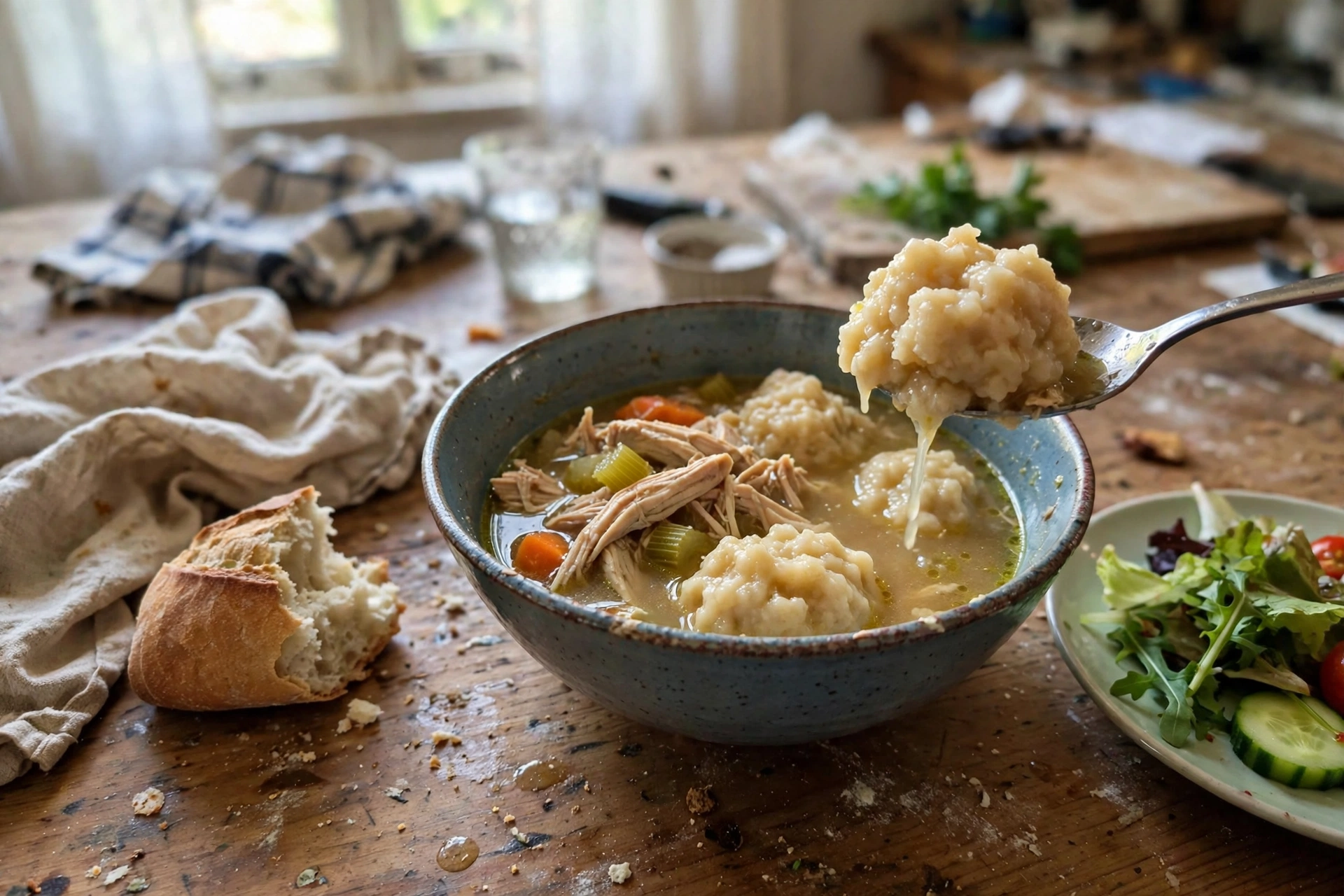
Chicken and dumplings is a full meal in a bowl, so sides should stay simple. A crisp green salad with a sharp vinaigrette cuts through the creamy broth. Crusty bread is useful for scooping, though the dumplings already cover the starchy side of the plate. Roasted green beans or a simple slaw add crunch without competing with the main pot.
For a bigger family table, pair this pot with our KFC-style crispy fried chicken on a different night rather than the same table, since both dishes are rich and heavy. If you want a fun starter before a lighter main, our mummy hot dogs and our pumpkin cheese ball both work as party food in their own seasons. Keep this dinner simple, and let the pot do the work.
Recipe Notes
Keep the butter and milk cold for the dumplings, and mix the dough just until the flour disappears.
Hold a gentle simmer, never a rolling boil, once the dumplings go in.
Keep the lid on for the full 15 minutes of steaming. No peeking.
Taste the broth before the dumplings go in, and adjust salt and pepper again at the end.
Chicken is done at 165 degrees Fahrenheit on an instant-read thermometer.
Food safety: refrigerate leftovers within 2 hours of cooking, and reheat until steaming hot throughout, to 165 degrees Fahrenheit for the chicken.
Nutrition figures below are estimates based on the ingredients listed, and they will vary with brands and exact cuts used.
Tender shredded chicken and fluffy drop dumplings in a creamy, savory broth with carrots, celery, and peas. One pot, 70 minutes, and a dumpling method that stays fluffy instead of turning gummy.
3medium carrots (peeled and sliced into half inch rounds)
3stalks celery (sliced)
3cloves garlic (minced)
1/4cup all-purpose flour (for the roux)
6cups low sodium chicken broth
2whole bay leaves (removed before serving)
1teaspoon dried thyme
1 1/2pounds boneless, skinless chicken thighs
1teaspoon kosher salt (plus more to taste)
1/2teaspoon black pepper (plus more to taste)
1cup frozen peas
1/4cup heavy cream
Dumplings
2cups all-purpose flour
1tablespoon baking powder
1teaspoon kosher salt
1/2teaspoon black pepper
1/4cup cold unsalted butter (cut into small cubes)
1cup cold whole milk
2tablespoons fresh parsley (chopped)
Instructions
1
Soften the VegetablesMelt the butter with the olive oil in a large pot or Dutch oven over medium heat. Add the diced onion, carrots, and celery with a pinch of salt. Cook for 6 to 8 minutes, stirring now and then, until the onion turns translucent and the carrots start to soften at the edges. Add the garlic and cook for 1 minute more, just until it smells fragrant.
2
Make the Roux and BrothSprinkle the quarter cup of flour over the vegetables and stir constantly for 1 minute. The flour will coat the vegetables and turn slightly golden. Pour in the chicken broth a little at a time, whisking as you go, so no lumps form. Add the bay leaves, thyme, salt, and pepper. Bring the pot to a gentle simmer, with small bubbles breaking the surface, not a rolling boil.
3
Poach the ChickenAdd the chicken thighs to the simmering broth in a single layer. Lower the heat so the broth stays at a gentle simmer. Cover the pot and cook for 18 to 20 minutes, until the chicken reaches 165 degrees Fahrenheit on an instant-read thermometer. Lift the chicken out with tongs and set it on a plate. Leave the broth simmering on low.
4
Shred the ChickenLet the chicken rest for 5 minutes, until it is cool enough to handle. Shred it into bite-size pieces with two forks. Discard any large pieces of fat. Set the shredded chicken aside. Taste the broth now and adjust the salt and pepper, since the dumplings will pick up whatever seasoning is in the pot.
5
Mix the Dumpling DoughWhisk the flour, baking powder, salt, and pepper in a medium bowl. Add the cold butter cubes and rub them into the flour with your fingertips until the mix looks like coarse crumbs, with a few pea-size bits left. Stir in the parsley. Pour in the cold milk and stir with a fork just until the flour disappears. Stop there. A few small lumps are fine, and overmixing is the fastest way to tough dumplings.
6
Drop the DumplingsCheck that the broth is at a gentle simmer. If it is boiling hard, lower the heat and wait a minute. Scoop heaping tablespoons of dough and drop them onto the surface of the broth, leaving a little space between each one. You should get about 14 to 16 dumplings. They will look crowded. That is normal, since they puff up as they steam.
7
Steam Until FluffyPut the lid on and cook for 15 minutes without lifting it. Do not stir, do not peek, and do not turn the heat up to hurry it along. The dumplings cook in trapped steam, and lifting the lid drops the temperature inside the pot. After 15 minutes, lift the lid. The dumplings should look matte, not shiny, and puffed to about double their size. A toothpick poked into the center of the largest dumpling should come out clean.
8
Finish with Peas and CreamStir the shredded chicken back into the pot, along with the frozen peas and the heavy cream. Simmer gently for 2 to 3 minutes, just until the peas are heated through and the chicken is hot again. Remove the bay leaves. Taste once more for salt and pepper, then ladle into warm bowls, making sure each serving gets dumplings, chicken, and vegetables.
Nutrition Facts
Servings 6
Amount Per Serving
Calories565kcal
% Daily Value *
Total Fat21g33%
Saturated Fat10g50%
Sodium890mg38%
Total Carbohydrate55g19%
Dietary Fiber4g16%
Sugars5g
Protein34g68%
* Percent Daily Values are based on a 2,000 calorie diet. Your daily value may be higher or lower depending on your calorie needs.
Note
Keep butter and milk cold for the dumplings, and mix just until the flour disappears. Hold a gentle simmer, never a rolling boil, once dumplings go in. Keep the lid on for the full 15 minutes. Chicken is done at 165 degrees Fahrenheit. Refrigerate leftovers within 2 hours, and reheat until steaming hot throughout. Estimated cost is $12 to $14 total, about $2.20 per serving. Best season: Fall/Winter. Cooking method: Stovetop. Nutrition figures are estimates based on the ingredients listed and will vary with brands and cuts used.
Keywords:
chicken and dumplings recipe, classic chicken and dumplings, fluffy dumplings
Pin this recipe to share with your friends and followers.
Laura
Our Family Taste author
Laura is the home cook and founder of Our Family Taste, sharing easy family recipes, comforting favorites, simple desserts, and practical cooking ideas for everyday life.