Italian Ricotta Cookies — Pillow-Soft Christmas Cookies with Glaze
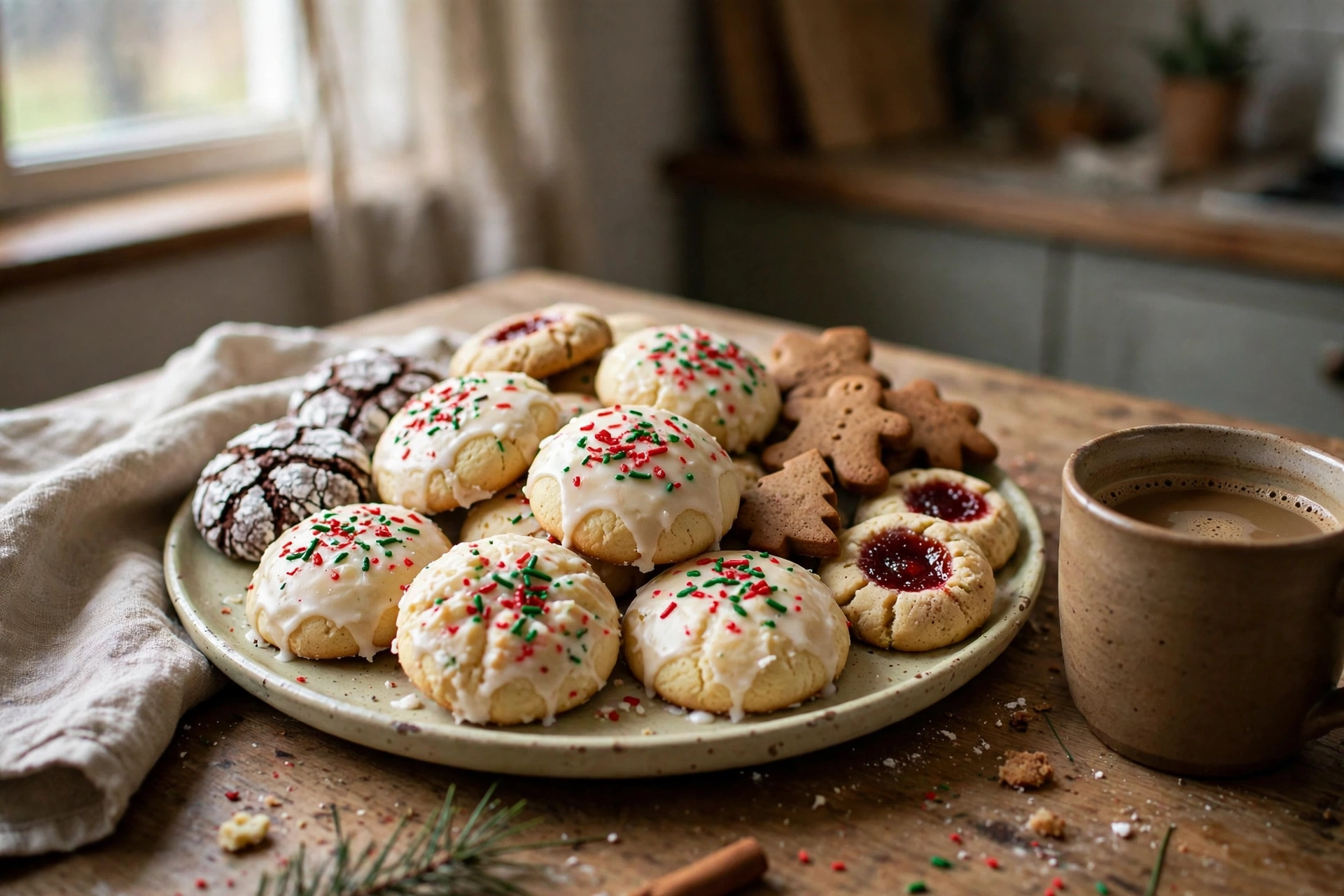
Italian ricotta cookies are soft, cake-like little cookies with a tender crumb, a sweet glaze, and a shower of sprinkles. They bake in about 12 minutes, need no chilling and no rolling, and one batch makes 36 cookies, which is enough for a full Christmas cookie tray with some left over for the freezer. The ricotta keeps them moist for days, and the glaze sets into a thin, crackly shell that looks straight out of an Italian bakery.
This is the cookie to bake when you want a tray that looks generous without spending the whole day in the kitchen. The dough comes together in one bowl, you scoop it straight onto the pan, and the only real skill is knowing when the glaze is thick enough. That part is easy once you see the test in the steps below. Pick your flavor, lemon, almond, vanilla, or anise, and the same base dough carries all four.
Why You'll Love These Italian Ricotta Cookies
No chilling and no rolling. You mix the dough, scoop it, and bake it. The whole batch is in and out of the oven in under 40 minutes.
Pillow-soft for days. Ricotta holds moisture in the crumb, so these cookies stay tender on day three in a way most cut-out cookies never do.
One dough, four flavors. Lemon zest, almond extract, vanilla, or anise each give the same cookie a different personality, and the flavor guide below spells out which to pick.
Built for a cookie tray. They look festive with almost no decorating skill, they stack well once the glaze sets, and they freeze beautifully.
Simple pantry ingredients. Flour, sugar, butter, eggs, ricotta, and powdered sugar cover nearly the whole list.
Ingredients You'll Need
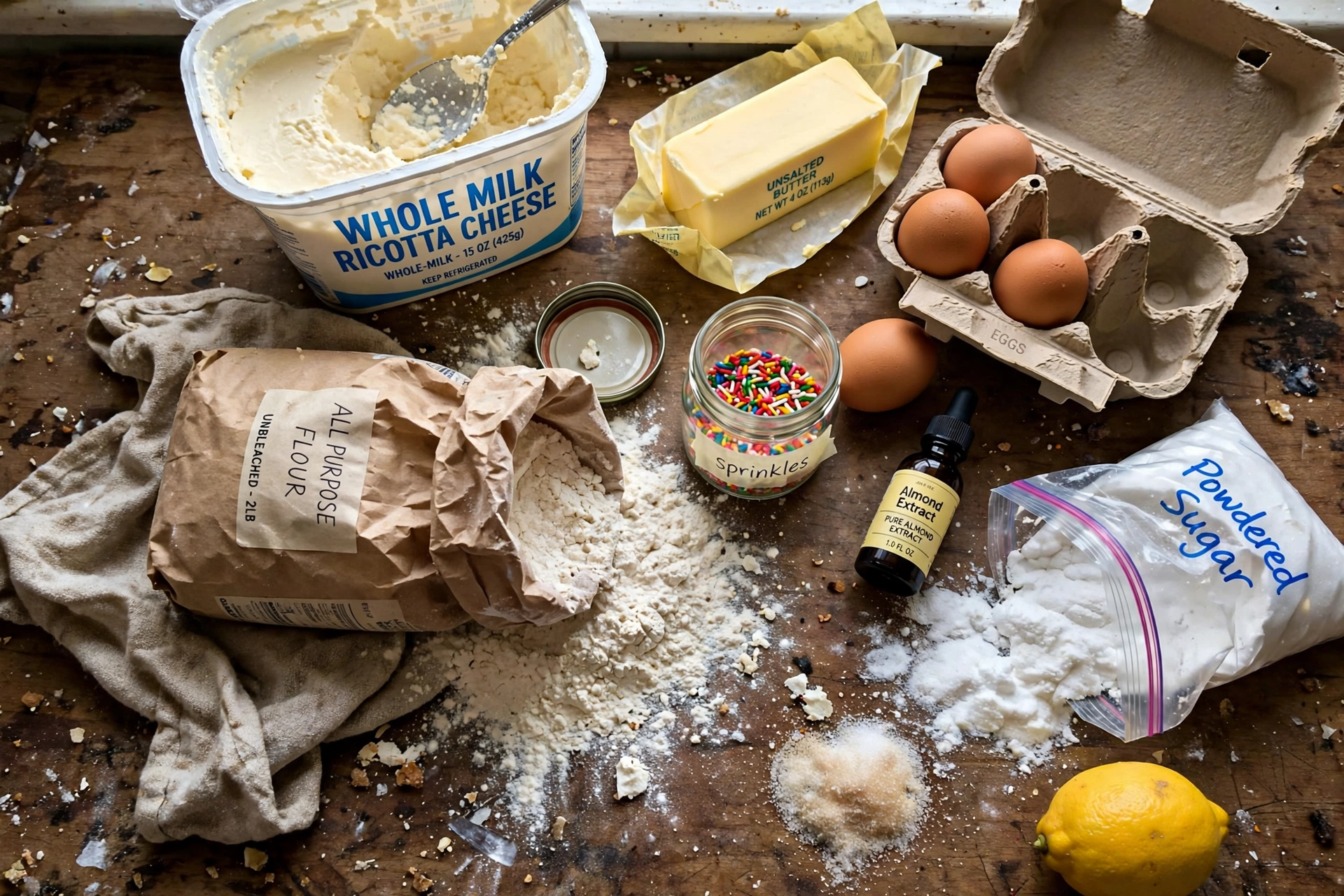
The dough uses everyday ingredients, and each one has a job. The ricotta is the star, so buy the good kind and drain it.
For the cookies
Whole-milk ricotta cheese, 15 ounces. This is what makes the cookies soft. Ricotta adds moisture and a little richness without any cheese flavor in the finished cookie. Whole milk matters here. Part-skim ricotta holds more water and less fat, and the cookies come out wetter and less tender. Drain it in a fine-mesh sieve for 15 to 30 minutes before you start, or press it gently between paper towels. Wet ricotta is the number one reason these cookies spread flat.
All-purpose flour, 2 cups. Plain all-purpose flour gives the cookies their cake-like structure. Spoon the flour into the measuring cup and level it off. Scooping straight from the bag packs in too much flour, and the cookies turn dense.
Baking powder, 1 teaspoon, and baking soda, 1/2 teaspoon. The two leaveners work as a pair. Baking powder lifts the dough, and baking soda reacts with the ricotta's mild acidity to keep the crumb light. Measure both carefully. Too much baking soda leaves a soapy taste.
Salt, 1/2 teaspoon. Salt sharpens the sweet flavors and keeps the glaze from tasting flat. Fine sea salt or table salt both work.
Unsalted butter, 1/2 cup (1 stick), softened. Butter gives the cookies their rich flavor and helps them brown on the bottoms. Softened means it dents when you press it but still holds its shape. If the butter is melted or greasy, the cookies will spread.
Granulated sugar, 1 cup. Sugar sweetens the dough and helps the tops set with a slight sheen. It also works with the butter to trap air when creamed, which is part of what makes the crumb light.
Large eggs, 2, at room temperature. Eggs bind the dough and add structure. Room-temperature eggs mix into the butter more smoothly than cold ones. Set them on the counter for 20 minutes before you start.
Vanilla extract, 1 teaspoon. Vanilla is the background flavor in the dough. It works with every glaze flavor, so keep it in the dough even when you choose lemon or almond for the glaze.
Lemon zest, 1 tablespoon (optional). Fresh lemon zest is the classic ricotta cookie flavor. It adds brightness that cuts through the sweet glaze. Use it if you like a citrus note, and skip it if you are going the almond or anise route.
For the glaze
Powdered sugar, 1 1/2 cups, sifted. Sifting takes 30 seconds and it is the difference between a smooth glaze and a lumpy one. Powdered sugar dissolves fast in a little milk, so the glaze comes together in one bowl with a whisk.
Milk, 3 tablespoons. Milk thins the glaze to dipping consistency. Whole milk gives the glossiest finish, but any milk works. Add it a tablespoon at a time so you can stop at the right thickness.
Almond extract, 1/2 teaspoon (or vanilla or lemon extract). This is where you choose the cookie's personality. Almond extract is the most traditional Christmas flavor and tastes faintly like marzipan. Vanilla keeps it mild and kid-friendly. Lemon extract or a teaspoon of lemon juice makes the glaze bright and tangy.
Colorful sprinkles, 1/4 cup. Nonpareils are the classic choice. They add color and a little crunch, and they are what makes these cookies read as Christmas cookies on a tray. Add them while the glaze is still wet or they will not stick.
Recommended Equipment
Two large rimmed baking sheets
Parchment paper
Fine-mesh sieve (for draining the ricotta)
Large mixing bowl and a medium bowl
Electric hand mixer or stand mixer
Whisk and rubber spatula
Tablespoon or small cookie scoop (for even portions)
Wire cooling rack
Small bowl and whisk (for the glaze)
How to Make Italian Ricotta Cookies
1. Drain the ricotta and heat the oven
Set the ricotta in a fine-mesh sieve over a bowl and let it drain for 15 to 30 minutes. Press it gently with the back of a spoon once or twice to help the liquid out. Meanwhile, heat the oven to 350°F (175°C) and line two baking sheets with parchment paper. Draining the ricotta is the step most recipes skip, and it is the step that keeps your cookies tall instead of flat.
2. Whisk the dry ingredients
Whisk the flour, baking powder, baking soda, and salt together in a medium bowl. Whisking now means you will not have to overmix later, and overmixing is what makes soft cookies tough. Set the bowl aside.
3. Cream the butter and sugar
Beat the softened butter and granulated sugar in a large bowl on medium speed for 2 to 3 minutes. The mixture should turn pale, fluffy, and almost white at the edges. This step traps air in the dough, and that air is part of the soft texture. Scrape down the sides of the bowl halfway through so no streaks of butter hide at the bottom.
4. Add the eggs, ricotta, and flavor
Add the eggs one at a time, beating well after each one. Then add the drained ricotta, the vanilla extract, and the lemon zest if you are using it. Beat on medium speed until the mixture looks smooth and creamy. It will look a little loose and wet at this point. That is normal. Ricotta dough is softer than regular cookie dough, closer to a thick cake batter than to a dough you can roll.
5. Mix in the dry ingredients
Add the flour mixture to the wet mixture in two parts, mixing on low speed just until the flour disappears. Stop as soon as you cannot see dry flour anymore. A few small streaks are fine. The dough will be soft and sticky, and you will not be able to roll it into balls by hand. That is exactly right for this cookie.
6. Scoop and bake
Drop tablespoon-size portions of dough onto the lined baking sheets, about 2 inches apart. A small cookie scoop keeps the sizes even, which keeps the bake time even. Bake one sheet at a time for 12 to 14 minutes. The tops should stay pale and look dry and set, while the bottoms and edges turn light gold. Pull them out while the tops still look pale. They firm up as they cool, and an extra two minutes in the oven is the difference between soft and dry.
7. Cool the cookies completely
Let the cookies rest on the baking sheet for 5 minutes, then move them to a wire rack. Cool them completely, about 20 to 30 minutes, before you glaze. Warm cookies melt the glaze into a thin, runny layer that slides right off. Cool cookies hold a thick, even coat.
8. Whisk the glaze
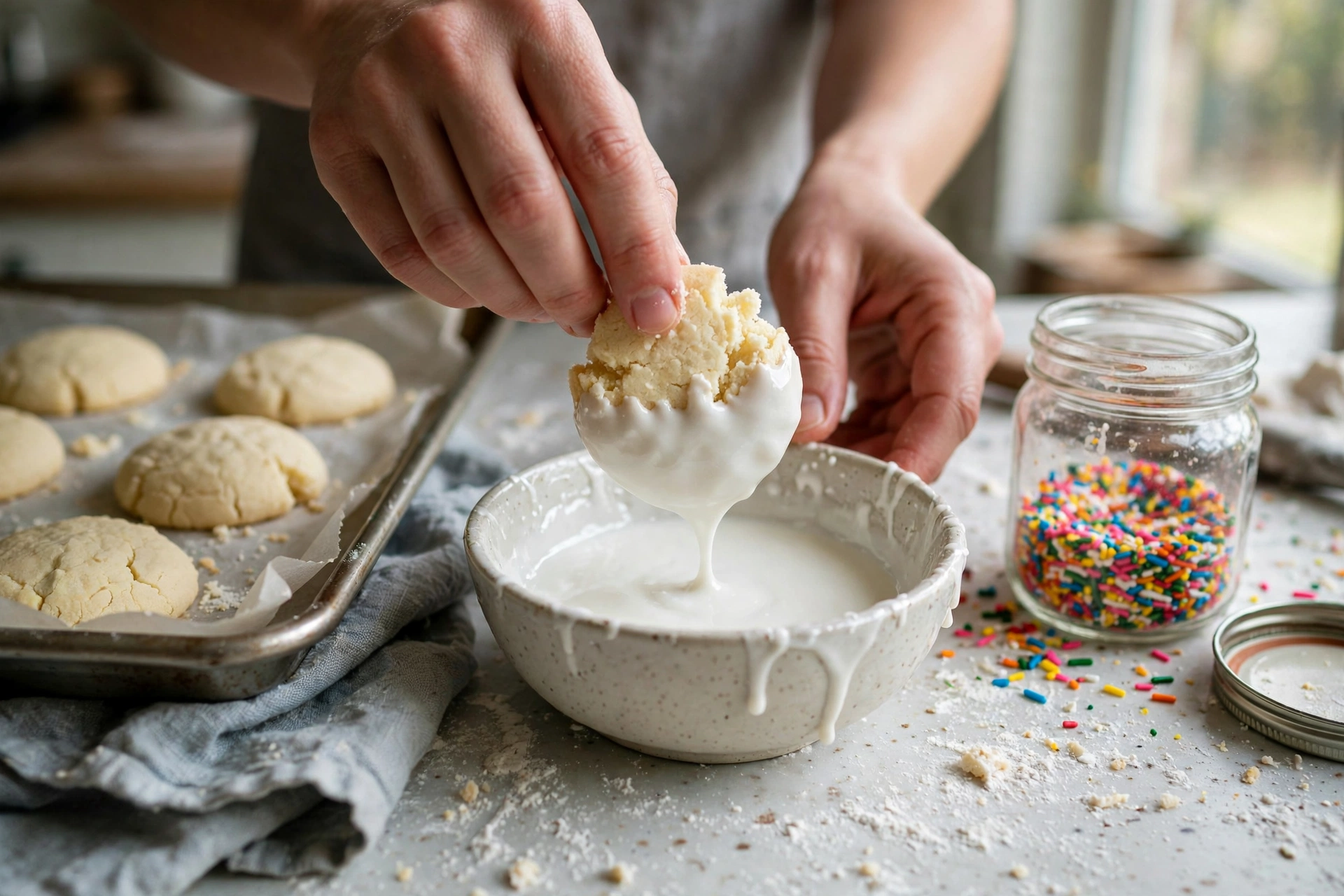
Whisk the sifted powdered sugar, 2 tablespoons of the milk, and the almond extract in a small bowl until smooth. Add the remaining milk a teaspoon at a time until the glaze ribbons off the whisk and coats the back of a spoon. It should flow slowly, not run like water. If it pours off the spoon in a thin stream, it is too thin, so whisk in another tablespoon of powdered sugar. If it clumps and will not drip, it is too thick, so add milk a teaspoon at a time.
9. Glaze and sprinkle
Working with one cookie at a time, dip the top into the glaze and let the extra drip off for a few seconds, then set it back on the rack. Or spoon the glaze over the tops if you prefer more control. Add the sprinkles right away, while the glaze is still wet. Let the cookies sit uncovered for 45 minutes to 1 hour, until the glaze feels dry to the touch. Once the glaze sets, the cookies stack neatly with parchment between the layers.
Pro Tips for Soft Ricotta Cookies
Drain the ricotta, every time. Even good whole-milk ricotta holds loose water, and that water is what flattens the cookies. Fifteen minutes in a sieve is enough. Thirty is better if you have the time.
Pull the cookies while the tops look pale. The bottoms tell you when they are done, not the tops. Lift one cookie and check the underside. Light gold means done. If you wait for golden tops, the centers will be dry by the time they cool.
Glaze cool cookies only. This is the most common mistake with glazed cookies, and it is easy to avoid. If the cookies feel even slightly warm, wait another ten minutes.
Test the glaze on one cookie first. Dip a single cookie, watch how the glaze settles, and adjust before you do the whole batch. A test cookie saves a tray of runny glaze.
Keep the dough soft and the mixing short. Once the flour goes in, mix only until it disappears. Long mixing builds gluten, and gluten makes these cookies chewy instead of tender.
Variations
Lemon Ricotta Cookies: Add the tablespoon of lemon zest to the dough and use lemon extract or a teaspoon of fresh lemon juice in the glaze instead of almond. The citrus keeps the cookies bright, and they pair well with tea or coffee after dinner.
Almond Ricotta Cookies: Skip the lemon zest and use almond extract in both the dough and the glaze, 1 teaspoon in the dough and 1/2 teaspoon in the glaze. This is the most traditional Christmas version, with a sweet marzipan note that smells like an Italian bakery.
Anise Ricotta Cookies: Use 1 teaspoon of anise extract in the dough and 1/2 teaspoon in the glaze. Anise gives a gentle licorice flavor that many Italian families consider the real Christmas taste. It divides a crowd, so bake a small test batch first if you have never tried it.
Chocolate Chip Ricotta Cookies: Fold 3/4 cup of mini chocolate chips into the dough after the flour. The chips stay soft in the tender crumb, and the cookies need no sprinkles. This version is a good pick for a mixed tray where one cookie needs to please the chocolate lovers.
Pistachio Ricotta Cookies: Top the glazed cookies with 1/4 cup of finely chopped pistachios instead of sprinkles. The green nuts look festive, add a little crunch, and give the cookies a grown-up finish for a holiday dessert table.
Ingredient Substitutions
No whole-milk ricotta? Part-skim ricotta works, but drain it longer, a full 30 minutes, and expect a slightly less rich cookie. Do not use whipped or flavored ricotta spreads. They hold too much water and often contain gums that change the texture.
No almond extract? Vanilla extract is the easiest swap and keeps the cookies mild. Lemon extract gives a brighter glaze. Anise extract gives the old-school Italian flavor. Each one changes the cookie's character, so pick the one your family will actually eat.
No sprinkles? Chopped pistachios, colored sugar, or a dusting of cocoa powder all work. Or skip the topping entirely. The glaze alone looks clean and pretty.
Dairy-free? This recipe leans hard on dairy, so a dairy-free version needs a different recipe. Almond-milk ricotta alternatives exist, but they bake differently and the results vary by brand, so test a half batch first.
Gluten-free? A cup-for-cup gluten-free flour blend with xanthan gum works in this dough. The cookies stay soft, and the ricotta helps cover the texture difference that gluten-free flour sometimes shows. Use a blend you already trust for cakes.
Dietary Notes
These cookies are vegetarian, and they contain wheat, milk, and eggs. They are not gluten-free or dairy-free as written. The gluten-free swap above works well, and a few readers make them with a trusted cup-for-cup blend every December. For nut allergies, skip the almond extract and the pistachio variation, and use vanilla or lemon instead. Almond extract is made from bitter almonds, so it counts as a tree nut flavoring. Check your sprinkle labels too, since some brands are made in facilities that handle nuts.
Make-Ahead, Storage, and Freezing
Make ahead: The dough can rest in the fridge for up to 24 hours. Cover the bowl tightly with plastic wrap. Scoop and bake straight from the fridge, and add 1 to 2 minutes to the bake time. You can also bake the cookies a day early and glaze them the next morning, which splits the work across two short sessions.
Storage: Once the glaze has set completely, store the cookies in an airtight container at room temperature for up to 5 days. Put parchment paper between the layers so the glaze does not stick and the sprinkle colors do not bleed. Keep the container in a cool, dry spot. Warm kitchens soften the glaze and fade the sprinkles.
Freezing: Baked cookies freeze well for up to 3 months. For the cleanest result, freeze them unglazed in a single layer first, then pack them with parchment between the layers. Thaw at room temperature, then glaze and sprinkle. Glazed cookies can also be frozen the same way. Thaw them in the closed container so condensation forms on the container instead of on the glaze.
A day-by-day tray timeline: Bake the cookies on December 20 and freeze them unglazed. Thaw them on the morning of December 23. Glaze and sprinkle them that afternoon, and let the glaze set overnight. Pack the tray on December 24, and the cookies will be at their best through Christmas Day.
What to Serve With Italian Ricotta Cookies
Ricotta cookies belong on a mixed Christmas tray, where their soft texture stands out next to crisp cookies. Set them beside shortbread, biscotti, and chocolate crinkle cookies so the tray has a range of textures. They also work as a sweet finish after a rich dinner, with espresso or hot tea.
For a holiday party table, pair the cookie tray with a warm main dish the crowd already loves. Our KFC-style crispy fried chicken is a good anchor for a casual family gathering, and the cookies give the meal a festive ending. For a Halloween-to-Christmas baking run, the mummy hot dogs and the pumpkin cheese ball show how one baking session can stretch across the whole season.
Recipe Notes
Drain the ricotta for at least 15 minutes. Wet ricotta is the main cause of flat cookies.
The dough is soft and sticky. Scoop it, do not try to roll it by hand.
Pull the cookies while the tops still look pale. Check the bottoms for light gold.
Cool the cookies fully before glazing, or the glaze will slide off.
Test the glaze on one cookie before glazing the whole batch.
The glaze needs 45 minutes to 1 hour to set. Do not stack the cookies before then.
One batch makes about 36 cookies. The recipe doubles cleanly if you have two baking sheets and a big bowl.
Pillow-soft Italian ricotta cookies with a sweet almond glaze and colorful sprinkles. No chilling, no rolling. Scoop, bake, and glaze for the Christmas cookie tray.
Ingredients
For the cookies
2cups all-purpose flour
1teaspoon baking powder
1/2teaspoon baking soda
1/2teaspoon salt
1/2cup unsalted butter (softened)
1cup granulated sugar
2 eggs (large, room temperature)
15ounces whole-milk ricotta cheese (drained)
1teaspoon vanilla extract
1tablespoon lemon zest (optional)
For the glaze
1 1/2cups powdered sugar (sifted)
3tablespoons milk
1/2teaspoon almond extract (or vanilla or lemon extract)
1/4cup colorful sprinkles
Instructions
1
Drain the ricotta and heat the ovenSet the ricotta in a fine-mesh sieve over a bowl and drain for 15 to 30 minutes. Heat the oven to 350°F (175°C) and line two baking sheets with parchment paper.
2
Whisk the dry ingredientsWhisk the flour, baking powder, baking soda, and salt together in a medium bowl.
3
Cream the butter and sugarBeat the softened butter and granulated sugar on medium speed for 2 to 3 minutes, until pale and fluffy. Scrape down the bowl halfway through.
4
Add the eggs, ricotta, and flavorAdd the eggs one at a time, beating well after each. Add the drained ricotta, vanilla extract, and lemon zest if using. Beat until smooth and creamy.
5
Mix in the dry ingredientsAdd the flour mixture in two parts, mixing on low speed just until the flour disappears. The dough will be soft and sticky.
6
Scoop and bakeDrop tablespoon-size portions onto the lined sheets, about 2 inches apart. Bake one sheet at a time for 12 to 14 minutes, until the tops look dry and pale and the bottoms are light gold.
7
Cool the cookies completelyRest on the baking sheet for 5 minutes, then move to a wire rack and cool completely, about 20 to 30 minutes.
8
Whisk the glazeWhisk the sifted powdered sugar, 2 tablespoons of the milk, and the almond extract until smooth. Add the remaining milk a teaspoon at a time until the glaze ribbons off the whisk and coats the back of a spoon.
9
Glaze and sprinkleDip the top of each cookie into the glaze, let the extra drip off, and set it back on the rack. Add sprinkles right away, while the glaze is wet. Let the cookies sit uncovered for 45 minutes to 1 hour, until the glaze is dry to the touch.
Nutrition Facts
Servings 36
Amount Per Serving
Calories115kcal
% Daily Value *
Total Fat4g7%
Sodium65mg3%
Total Carbohydrate16g6%
Sugars11g
Protein2g4%
* Percent Daily Values are based on a 2,000 calorie diet. Your daily value may be higher or lower depending on your calorie needs.
Note
Bake at 350°F (175°C). Drain the ricotta for at least 15 minutes. Wet ricotta flattens the cookies. The dough is soft and sticky. Scoop it, do not roll it by hand. Pull the cookies while the tops still look pale. The bottoms should be light gold. Cool the cookies fully before glazing, or the glaze will slide off. The glaze needs 45 minutes to 1 hour to set before stacking. Food safety note: these cookies contain eggs and dairy. Keep them at room temperature for up to 5 days, or refrigerate if your kitchen is warm. Do not leave glazed cookies in a hot car or in direct sun, since the glaze will soften and the dairy filling can spoil. Nutrition values are estimates calculated from the ingredients listed above. Actual values will vary with the brands you use and the exact size of each cookie.
Keywords:
italian christmas cookies, italian ricotta cookies, ricotta cookies recipe, soft italian cookies
Pin this recipe to share with your friends and followers.
Laura
Our Family Taste author
Laura is the home cook and founder of Our Family Taste, sharing easy family recipes, comforting favorites, simple desserts, and practical cooking ideas for everyday life.