

This Christmas breakfast casserole is a sausage, egg, and cheddar bake built on cubes of day-old sourdough. You assemble it on Christmas Eve, chill it overnight, and bake it on Christmas morning in about 50 minutes. One 9×13 pan serves 12, and the whole thing costs about $16, or roughly $1.35 a serving.
That is the whole plan. Christmas morning has enough going on without a cook standing at the stove cracking a dozen eggs before coffee. The work happens the night before, when the kitchen is already warm from dinner and the counters are already out. In the morning you slide a cold dish into a hot oven, and breakfast is ready while the wrapping paper piles up.
The overnight rest is not a shortcut. It is the reason the casserole works. Bread cubes soak in the egg custard for 8 to 24 hours, so the center bakes up soft and sliceable instead of dry in spots. The sausage flavors the eggs as it sits. The cheese melts through the whole pan instead of pooling on top. A casserole baked the same day can taste fine, but it will not taste like this one.
Table of Contents
Why You’ll Love This Christmas Breakfast Casserole
- You do every bit of cooking on Christmas Eve, so Christmas morning needs nothing from you except an oven.
- One pan feeds 12 people, which covers a full house of family and overnight guests.
- The ingredient list is short and ordinary: sausage, eggs, bread, cheese, milk, peppers, and onion.
- It costs about $16 for the whole pan, or roughly $1.35 per serving at typical grocery prices.
- Leftovers reheat well, so a second breakfast the next day is already handled.
- The recipe flexes easily: swap the sausage, change the cheese, or use hash browns instead of bread.
Ingredients You’ll Need
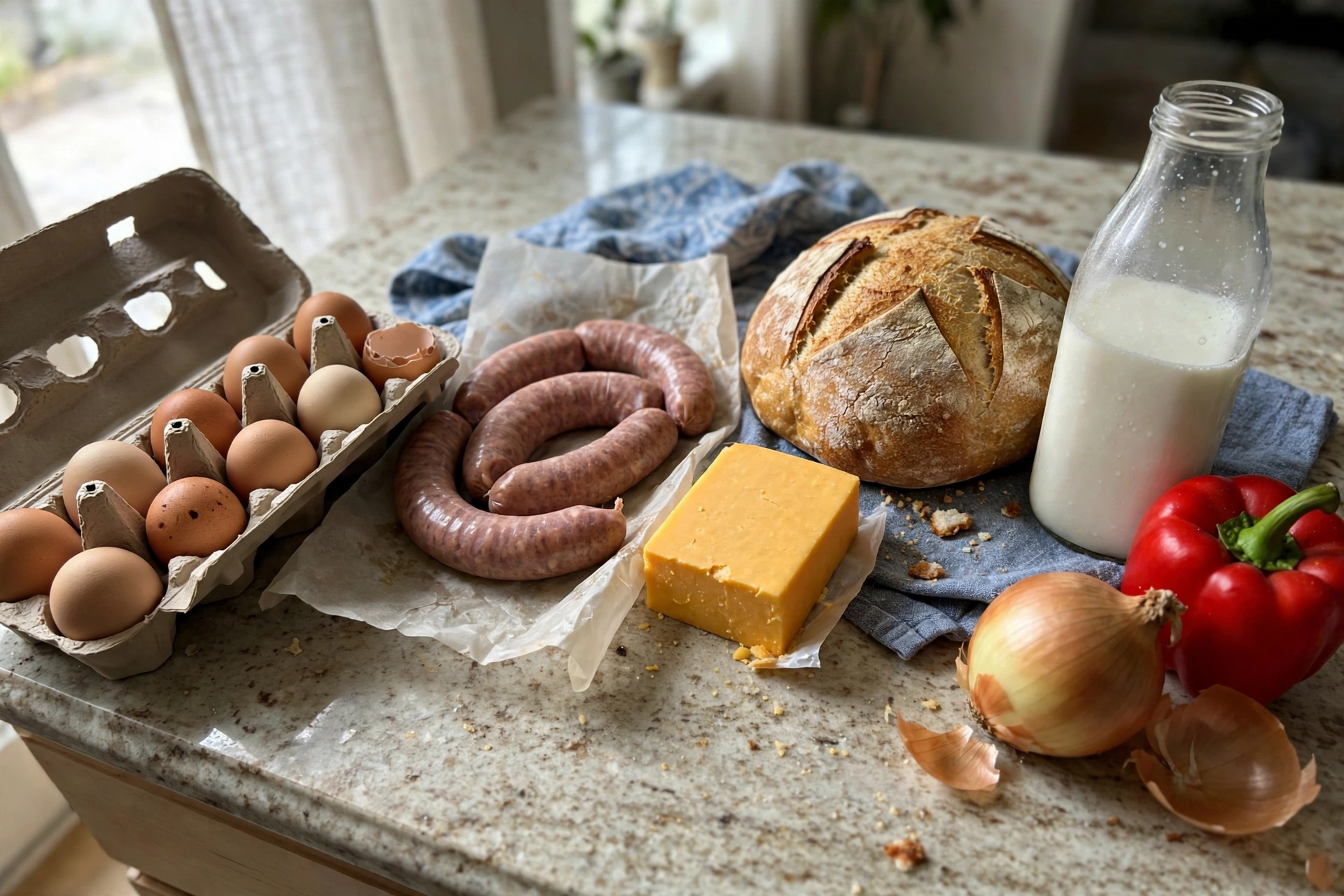
Twelve eggs form the custard that holds the casserole together. Use large eggs, and whisk them with milk, mustard, salt, pepper, garlic powder, and smoked paprika until smooth. The mustard is easy to miss in the list, but it matters: a tablespoon of Dijon gives the custard a gentle savory edge and keeps the eggs from tasting flat.
One pound of pork breakfast sausage is the flavor base. Brown it first, crumble it fine, and drain the fat. Raw sausage dumped into the egg mixture steams gray and leaks fat into the custard, so this step is not optional. Mild sausage suits a mixed-age table. Hot sausage works if your crowd likes heat.
Eight cups of cubed day-old sourdough bread is the structure. Day-old bread drinks up custard without falling apart, and sourdough adds a mild tang that plain white bread does not. Cut the loaf into roughly 1-inch cubes. Fresh bread works if you dry the cubes in a low oven for 10 minutes first, but day-old bread straight from the bag is the easy path.
Two cups of shredded sharp cheddar bring the cheese pull and the golden top. Sharp cheddar holds its flavor after baking better than mild cheddar, which mostly disappears into the eggs. Shredding a block yourself melts more smoothly than pre-shredded cheese, because bagged shreds carry an anti-caking coating that can leave a slight grain. Either works, so use what you have.
Two cups of whole milk make the custard rich without turning heavy. Skim milk thins the custard and can leave the center watery, so whole milk is worth it here. Half and half is a fine swap if you want a richer result, though it adds cost.
One red bell pepper and one small yellow onion, both diced, add color and sweetness. Red pepper reads festive on a Christmas table, and onion softens into the background as it bakes. Dice them small, about a quarter inch, so they cook through in the same time as everything else.
Butter greases the pan and keeps the edges from sticking. A tablespoon, rubbed over the inside of a 9×13 dish, is enough. Nonstick spray works too.
Chopped chives or sliced green onions finish the top. They are optional, but a scatter of green over the golden cheese makes the pan look finished, and the mild onion bite cuts the richness.
Recommended Equipment
- 9×13-inch baking dish (glass or ceramic; metal works too, see tips)
- Large skillet for browning the sausage
- Large mixing bowl for the custard
- Whisk
- Cutting board and sharp knife
- Aluminum foil and plastic wrap for the overnight chill
- Instant-read food thermometer (the reliable way to know the center is done)
- Paper towels for draining the sausage
How to Make Christmas Breakfast Casserole
1. Brown the sausage and vegetables
Heat a large skillet over medium-high heat. Add the sausage and break it into small crumbles with a wooden spoon. Cook for 6 to 8 minutes, until it is browned all over with no pink left. Add the diced onion and red pepper in the last 3 minutes so they soften slightly. Drain off the fat and set the mixture aside to cool for 5 minutes.
2. Grease the baking dish
Rub a tablespoon of butter over the inside of the 9×13 dish, getting into the corners. A greased dish releases clean squares and saves you scrubbing later.
3. Layer the bread and sausage
Scatter the bread cubes evenly across the bottom of the dish. Spoon the sausage, onion, and pepper mixture over the bread in an even layer. Sprinkle two-thirds of the shredded cheddar over the top. Save the last third for the finish.
4. Whisk the egg custard
Crack all 12 eggs into a large bowl. Add the milk, Dijon mustard, salt, black pepper, garlic powder, and smoked paprika. Whisk for about a minute, until the mixture is smooth and a little frothy, with no streaks of yolk left. A smooth custard sets evenly; streaks of yolk bake into pale patches.
5. Pour, press, and cover
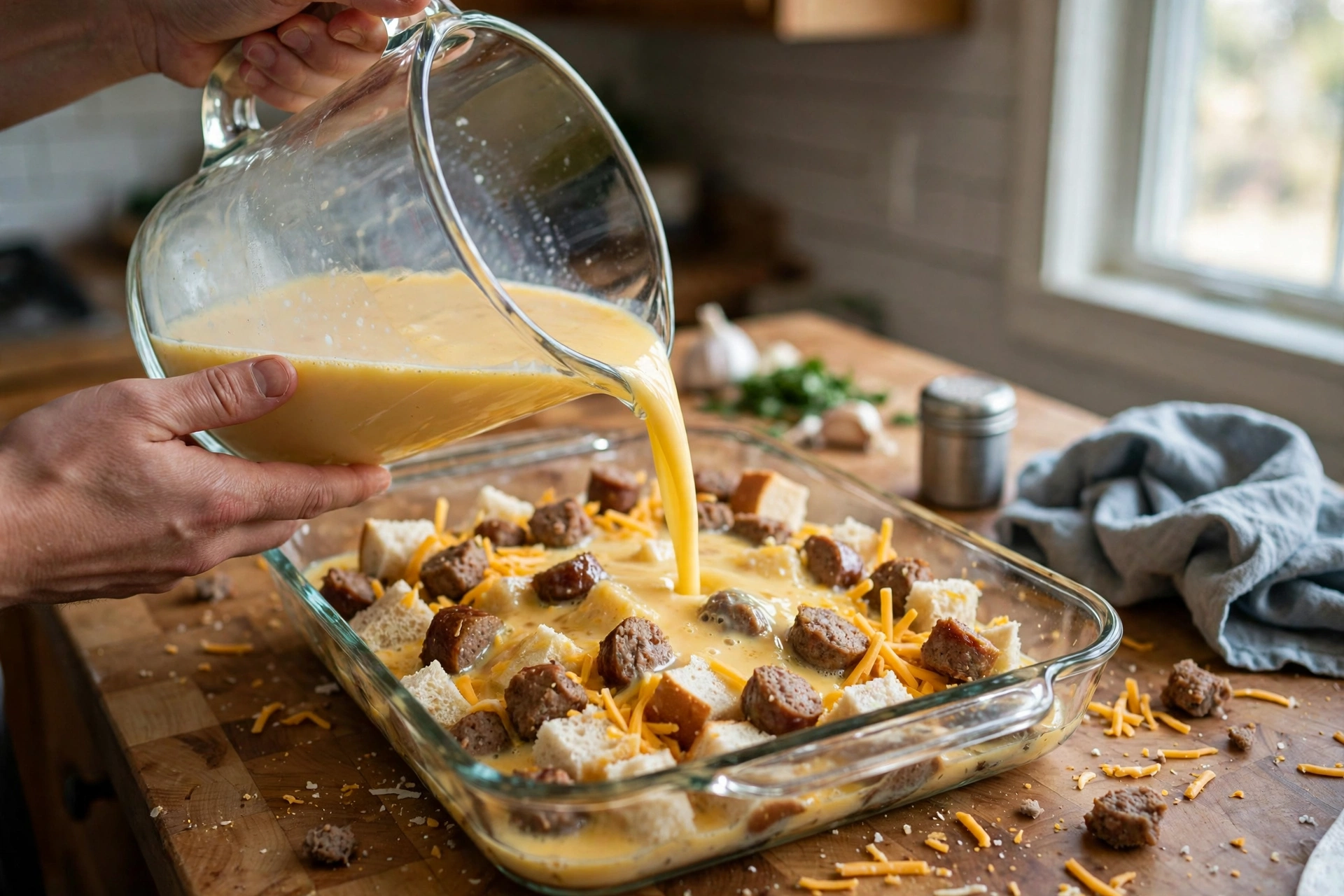
Pour the custard slowly and evenly over the bread and sausage, letting it seep into the corners. Press the bread cubes down gently with the back of a spoon so each piece gets a soak. Scatter the remaining cheddar over the top, then sprinkle on the chives if you are using them. Cover the dish tightly with foil, then wrap the whole thing in plastic wrap for a good seal.
6. Chill overnight
Refrigerate the covered dish for at least 8 hours and up to 24 hours. This is the step that makes Christmas morning easy. The bread drinks up the custard, the sausage flavors the eggs, and the casserole sets up so it bakes evenly from cold. Keep the dish on a level shelf so the liquid settles evenly.
7. Bake until golden and set
On Christmas morning, pull the dish out of the fridge while the oven heats to 350F (175C). Bake covered with foil for 30 minutes, then remove the foil and bake 20 to 25 minutes more. The top should be golden and bubbling, and the center should read 160F on an instant-read thermometer. That temperature is the USDA target for egg dishes, and it is the surest way to know the middle is set without drying out the edges.
8. Rest, slice, and serve
Let the casserole rest for 10 minutes before cutting. The rest lets the custard finish setting, so the squares hold their shape instead of slumping. Cut into 12 squares and serve warm, straight from the dish.
Your Christmas Morning Timeline
The timeline is the reason this recipe exists, so here it is plain. On December 23, buy the sausage, eggs, bread, and cheese if you do not have them. On December 24 after dinner, brown the sausage, assemble the dish, cover it, and put it in the fridge. That takes about 25 minutes of active work.
On Christmas morning, turn the oven on at 7:30 and put the dish in at 7:45, once the oven is hot. It bakes covered until 8:15, then uncovered until about 8:35. Rest it for 10 minutes and serve at 8:45, right as the present opening winds down. If your family opens presents later, hold the baked casserole covered in a warm oven for up to 30 minutes. Shift every time back or forward by the same amount and the plan still works.
Pro Tips for a Perfect Christmas Breakfast Casserole
Day-old bread is the single biggest texture decision. Fresh bread soaks too fast and can turn mushy in the center. If your bread is fresh, spread the cubes on a baking sheet and dry them in a 300F oven for 10 minutes before assembling.
Drain the sausage well. Fat left in the pan pools under the eggs and makes the bottom layer greasy. Tip the skillet and press the crumbles with a spoon, or lift them out with a slotted spoon and leave the fat behind.
Use a thermometer instead of guessing. The center of a 9×13 casserole can look set while the middle is still soft. 160F in the center means done. If the top is browning too fast, lay a loose sheet of foil over it for the last 10 minutes.
Glass and ceramic dishes bake a little slower than metal. If you use a metal pan, start checking the center at 45 minutes total. If you use glass, expect the full 50 to 55 minutes. Either way, the thermometer decides, not the clock.
Let it rest the full 10 minutes. Cutting into a hot casserole is tempting, and it is also how squares fall apart. Ten minutes is the difference between neat slices and a spoonful.
Variations
Hash Brown Base
Swap the bread cubes for a 30-ounce bag of frozen shredded hash browns, thawed and patted dry. The result is crisper at the edges and a little heartier, closer to a diner breakfast. Press the hash browns into the dish as the base layer, then continue with the same sausage, custard, and cheese. Bake time stays the same.
Veggie Christmas Casserole
Leave out the sausage and add a cup of sliced mushrooms and a cup of baby spinach, wilted and squeezed dry. The mushroom and spinach add enough savory depth that the casserole still feels complete. Add the mushrooms with the onion and pepper in step 1.
Spicy Southwest Version
Use hot breakfast sausage, swap the cheddar for pepper jack, and add a small can of diced green chiles and a teaspoon of cumin to the custard. Serve with salsa and sour cream on the side. This version suits a crowd that likes heat at breakfast.
Ham and Swiss Version
Replace the sausage with 2 cups of diced cooked ham and the cheddar with Swiss cheese. Skip the smoked paprika and add a pinch of nutmeg to the custard instead. This is a good use for leftover Christmas ham the day after, though it works just as well with deli ham.
Ingredient Substitutions
No sourdough? Any sturdy day-old bread works: French bread, Italian bread, or a crusty white loaf. Soft sandwich bread is the one to avoid, because it collapses into paste after an overnight soak. If sandwich bread is all you have, toast the cubes until dry and use a shorter chill, about 4 hours.
No pork sausage? Turkey breakfast sausage is a direct swap and keeps the flavor close to the original. Bulk Italian sausage works too, though it changes the seasoning; skip the smoked paprika if you use it, since Italian sausage brings its own spice.
No cheddar? Monterey Jack melts beautifully and tastes mild. A mix of mozzarella and a little Parmesan gives a stretchier top with a salty edge. Avoid pre-shredded cheese blends with added starch if you can, though they will still work.
No whole milk? Half and half makes a richer custard. Two percent milk works and the difference is small. Skim milk is the only one to skip, because the custard can turn watery.
No Dijon? A teaspoon of dry mustard stirred into the custard gives a similar lift. Yellow mustard works in a pinch, but use half the amount, since its flavor is sharper.
Dietary Notes
This casserole is naturally nut-free and soy-free as written. It is not gluten-free, dairy-free, or vegetarian in its standard form, and this post does not pretend otherwise.
For gluten-free guests, swap the sourdough for a sturdy gluten-free loaf, cubed and dried the same way. Gluten-free bread soaks faster, so a 6 to 8 hour chill is enough, and the texture will be a little softer. Check the sausage label, since some brands add wheat-based fillers.
For dairy-free guests, use an unsweetened plant milk, a dairy-free cheddar-style shred, and oil instead of butter for greasing. The custard sets fine, though the top browns a little less. Check that the sausage and bread are dairy-free as well.
For a vegetarian version, use the veggie variation above. Plant-based breakfast sausage crumbles also work and need no browning step, just a quick warm-through in the skillet.
Make-Ahead, Storage, Freezing, and Reheating
Make ahead: assemble the casserole up to 24 hours before baking and keep it covered in the fridge. Do not leave the assembled dish on the counter overnight. Egg dishes belong in the fridge, and the overnight soak happens cold.
Storage: cool leftovers completely, then cover the dish or move slices to an airtight container. They keep in the fridge for up to 4 days. Get leftovers into the fridge within 2 hours of serving.
Freezing: freeze the casserole unbaked for up to 2 months. Assemble it, wrap it tightly in plastic wrap and then foil, and label it with the date. Thaw in the fridge for 24 hours before baking as directed. Baked leftovers freeze too: wrap individual squares and freeze up to 1 month.
Reheating: warm single squares in the microwave for 60 to 90 seconds. Reheat the whole pan covered with foil in a 300F oven for about 20 minutes. Reheat leftovers to 165F. The oven method keeps the top crisp; the microwave is faster and a little softer.
What to Serve With Christmas Breakfast Casserole
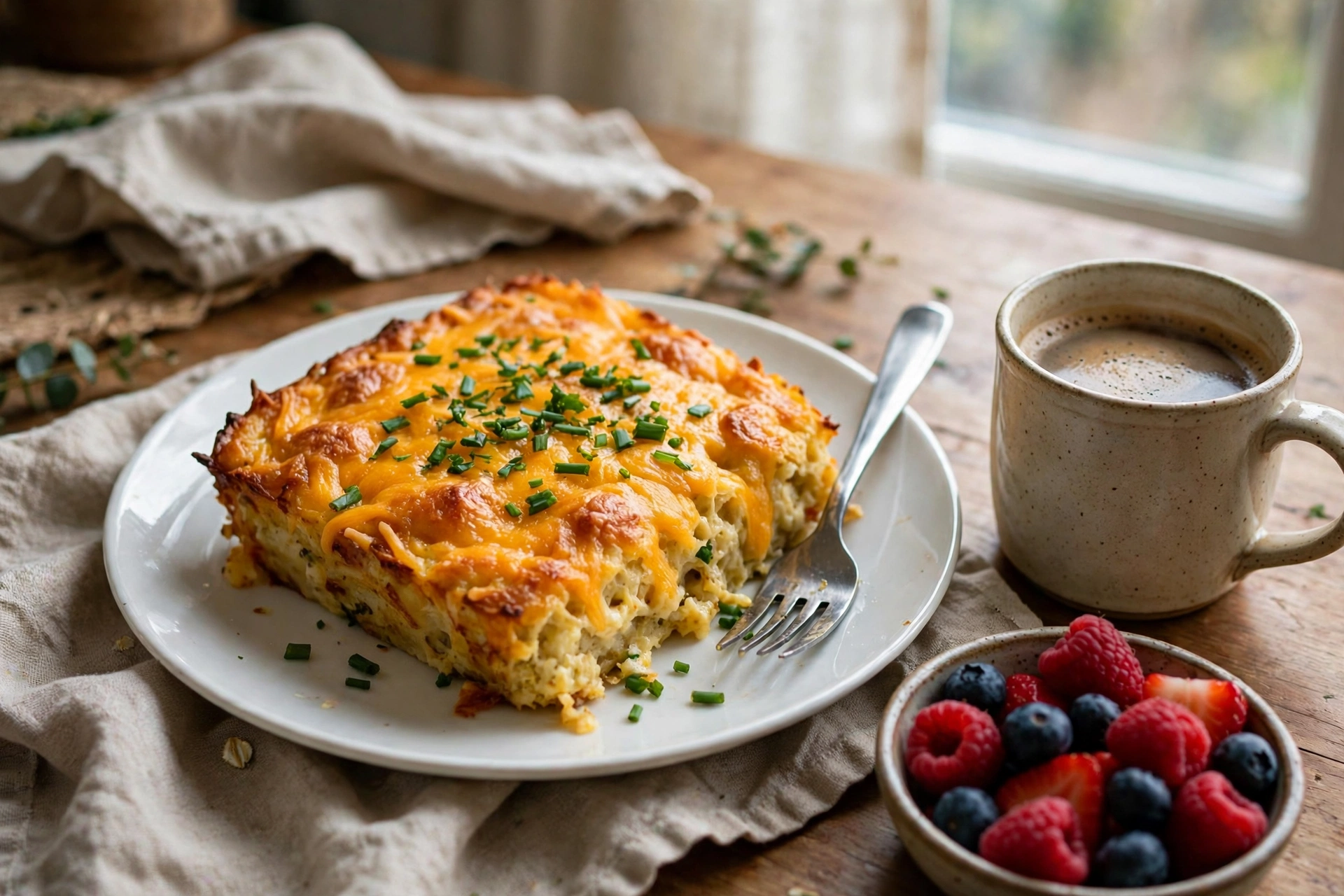
This casserole is rich, so the table around it should stay light. Fresh fruit is the easiest partner: a bowl of mixed berries, sliced oranges, or a simple fruit salad cuts the richness and adds color. Coffee and orange juice cover the drinks, and a pot of hot chocolate keeps kids happy.
If the casserole is part of a bigger Christmas brunch, add something sweet beside it. Our pumpkin cheese ball works as a festive spread for crackers while the casserole bakes. For a heartier table, our KFC-style crispy fried chicken is a crowd-pleasing main for the evening meal, and the same crowd that loves this casserole will ask for it. Keep the sides simple: fruit, coffee, and one sweet bite are enough.
Recipe Notes
- Day-old sourdough is the best base. Fresh bread needs 10 minutes in a low oven to dry out first.
- Brown and drain the sausage before assembling. Fat left in the pan makes the bottom greasy.
- The center is done at 160F on an instant-read thermometer. That reading matters more than the clock.
- Chill 8 to 24 hours. Less than 8 and the center can bake unevenly; more than 24 and the bread can turn soft.
- Rest 10 minutes before slicing so the squares hold their shape.
- Leftovers keep 4 days in the fridge and reheat to 165F.
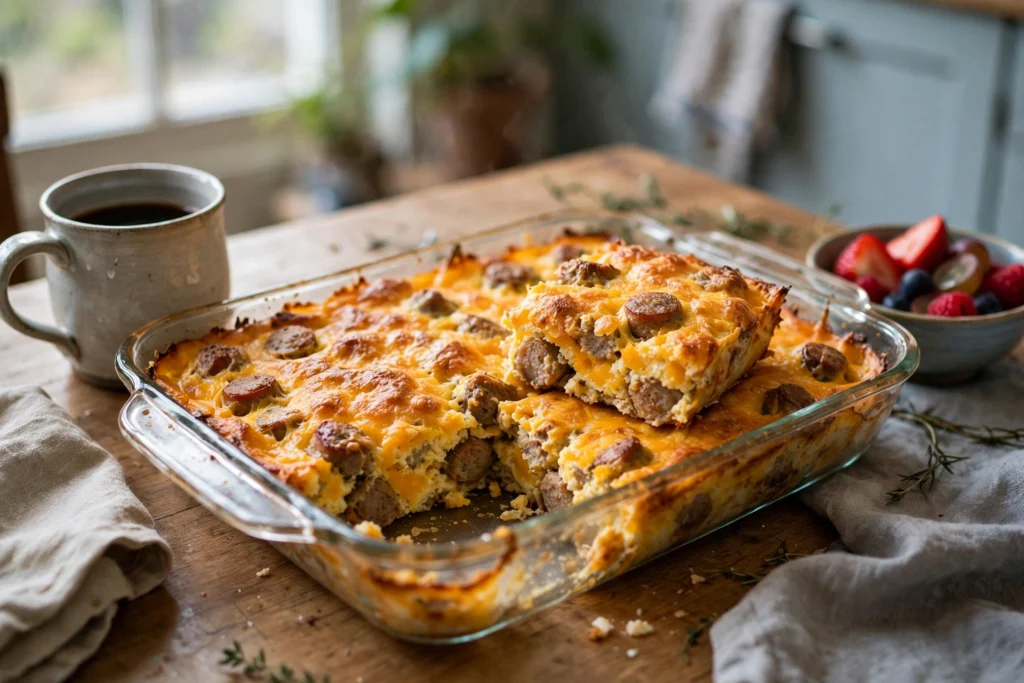

Make-Ahead Christmas Breakfast Casserole — Prep Tonight, Relax Tomorrow
Description
A make-ahead sausage, egg, and cheddar casserole on day-old sourdough. Assemble it on Christmas Eve, chill it overnight, and bake it on Christmas morning. One pan serves 12.
Ingredients
Instructions
-
Brown the sausage and vegetables
Cook the sausage in a large skillet over medium-high heat for 6 to 8 minutes, breaking it into small crumbles, until browned with no pink left. Add the onion and red pepper for the last 3 minutes. Drain off the fat and let the mixture cool 5 minutes. -
Grease the baking dish
Rub 1 tablespoon of butter over the inside of a 9x13-inch baking dish, getting into the corners. -
Layer the bread and sausage
Scatter the bread cubes evenly in the dish. Spoon the sausage, onion, and pepper mixture over the bread. Sprinkle two-thirds of the cheddar over the top. -
Whisk the egg custard
Whisk the eggs, milk, Dijon mustard, salt, black pepper, garlic powder, and smoked paprika in a large bowl for about a minute, until smooth and a little frothy. -
Pour, press, and cover
Pour the custard slowly and evenly over the bread and sausage, pressing the bread down gently so each piece soaks. Scatter the remaining cheddar and the chives over the top. Cover tightly with foil, then wrap in plastic wrap. -
Chill overnight
Refrigerate the covered dish for 8 to 24 hours. Keep it on a level shelf so the liquid settles evenly. -
Bake until golden and set
Heat the oven to 350F (175C). Bake covered for 30 minutes, then uncovered for 20 to 25 minutes, until the top is golden and the center reads 160F on an instant-read thermometer. -
Rest, slice, and serve
Let the casserole rest for 10 minutes before cutting into 12 squares. Serve warm.
Nutrition Facts
Servings 12
- Amount Per Serving
- Calories 360kcal
- % Daily Value *
- Total Fat 23g36%
- Saturated Fat 10g50%
- Sodium 660mg28%
- Total Carbohydrate 15g5%
- Dietary Fiber 1g4%
- Sugars 3g
- Protein 19g38%
* Percent Daily Values are based on a 2,000 calorie diet. Your daily value may be higher or lower depending on your calorie needs.
Note
Day-old bread soaks best. Dry fresh cubes 10 minutes in a 300F oven first.
Drain the sausage well so the bottom layer stays light, not greasy.
The center is done at 160F. Check with a thermometer rather than guessing by color.
Chill 8 to 24 hours. Do not leave the assembled dish on the counter overnight.
Leftovers keep 4 days in the fridge. Reheat to 165F.
Food safety: Egg dishes should reach 160F in the center, checked with a food thermometer (USDA guidance). Refrigerate the assembled casserole within 2 hours and keep it in the fridge, never on the counter overnight. Refrigerate leftovers within 2 hours of serving and reheat them to 165F. Cook the assembled casserole within 24 hours of assembling it.
Nutrition values are estimates calculated from the ingredients listed above, using standard USDA nutrition data for each item. Actual values vary with the brands you use. This is an estimate, not a lab-tested figure.