

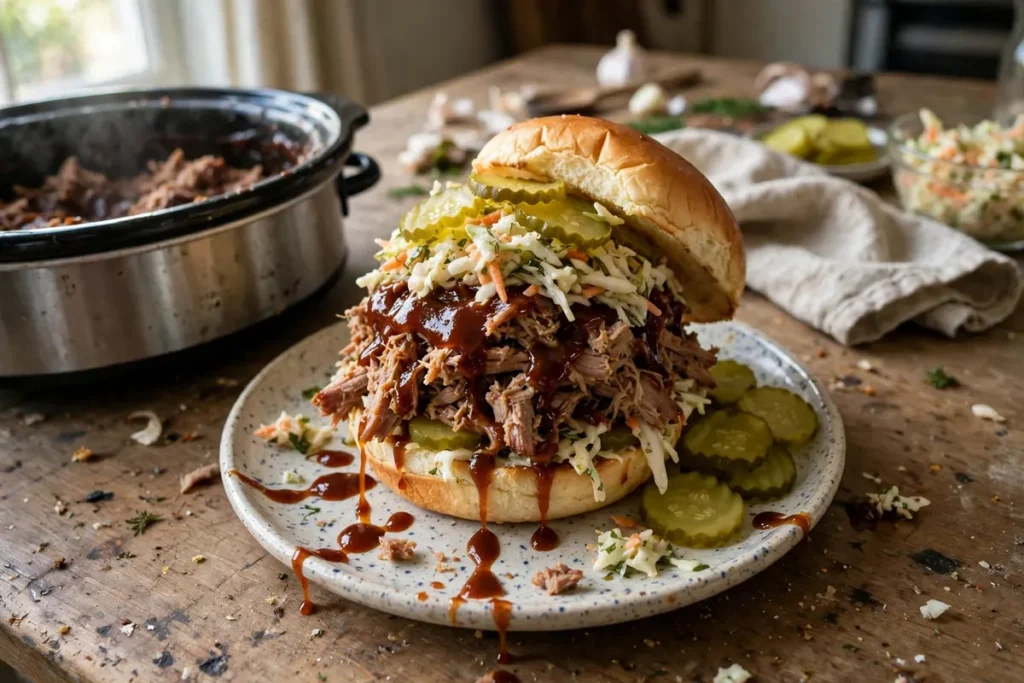

Slow cooker pulled pork is pork shoulder rubbed with a sweet smoky spice mix, cooked low and slow until it falls apart with two forks, then tossed in barbecue sauce. This version takes 15 minutes of prep and 8 hours on LOW, or 5 to 6 hours on HIGH. It serves 8, costs about 15 dollars for the whole batch, and comes out juicy instead of dry. The trick is the right amount of liquid and a target temperature of 195 to 205 degrees, not a timer alone.
That temperature matters more than the clock. Pork is safe to eat at 145 degrees, but it will not shred there. The tough connective tissue in a pork shoulder only breaks down into soft gelatin once the meat pushes past 195 degrees. That is why a roast can sit at 170 degrees for hours, look done, and still refuse to pull apart. Give it time, check the temperature, and it gives up.
This is also one of the cheapest ways to feed a crowd. Pork shoulder runs about 2.50 dollars a pound in most stores, and a 4 pound roast turns into roughly 8 generous servings. One slow cooker, one morning of prep, and dinner is ready when everyone walks in the door. It works for game day, a potluck, a birthday table, or a plain Tuesday when nobody wants to cook.
Table of Contents
Why You’ll Love This Slow Cooker Pulled Pork
- 15 minutes of hands-on work. Mix the rub, season the pork, pour in the liquid, and walk away.
- It shreds cleanly. The weight-based time chart below takes the guessing out of it.
- The sauce comes from the pot. Cooking juices turn into a quick pan sauce in 10 minutes, so nothing goes to waste.
- It feeds 8 and freezes well. Leftovers reheat soft and juicy, which makes it a real make-ahead meal.
- It is forgiving. An hour over on LOW will not ruin it, and the fix section covers the one thing that can go wrong.
Ingredients You’ll Need
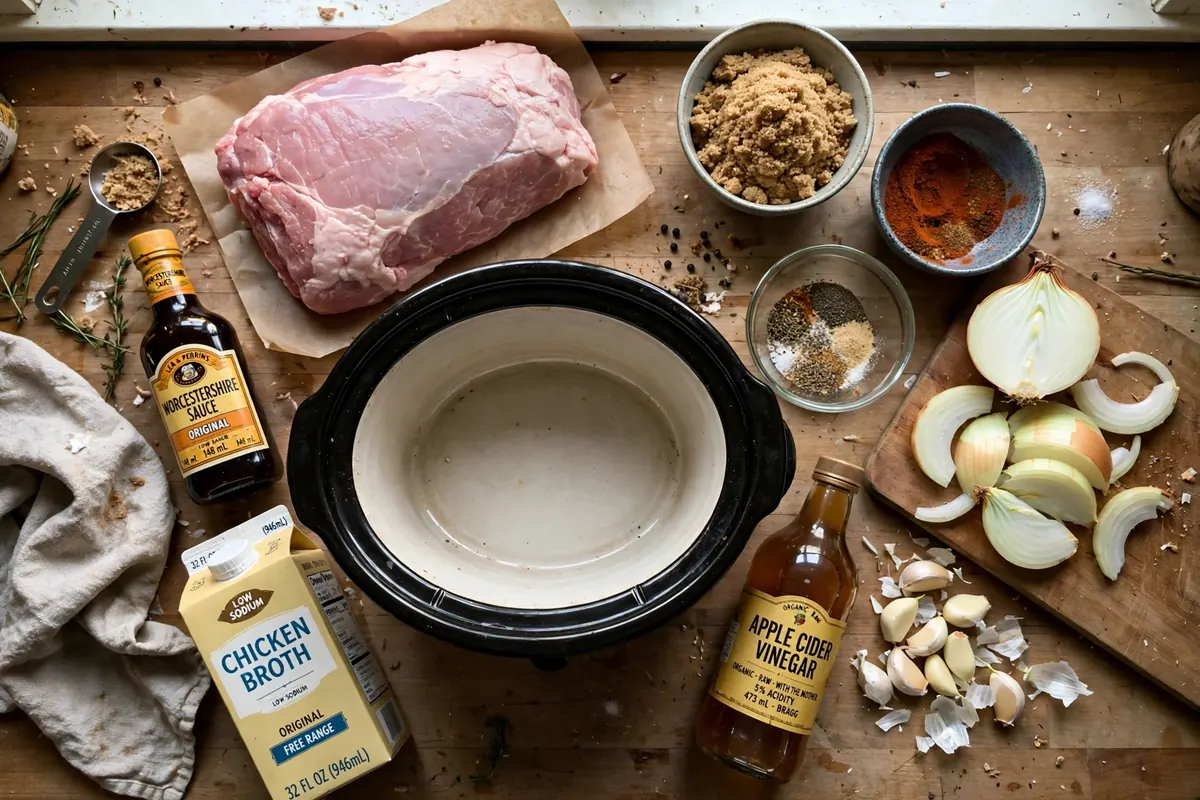
The list is short, and every item earns its place. The rub gives the flavor, the liquid keeps the pork moist, and the sauce ties it together at the end.
Pork Shoulder
Use a 4 pound boneless pork shoulder, also sold as Boston butt. This cut has the marbling and connective tissue that slow cooking needs. Lean cuts like loin or tenderloin dry out over 8 hours and never shred properly, so skip them here. Bone-in works too, and the bone slides out cleanly when the pork is done, but boneless is easier to season all over and fits a wider range of slow cookers. If the roast has a thick fat cap, leave about a quarter inch of it on. It bastes the meat as it cooks, and you trim the rest after shredding.
Brown Sugar
Two tablespoons of light brown sugar go into the rub. It balances the smoke and heat, helps the outside of the pork brown, and gives the finished meat a faint caramel note. It also feeds the sauce later, since some of it dissolves into the cooking juices.
Smoked Paprika
One tablespoon of smoked paprika is the backbone of the flavor. It brings the smoky note that a slow cooker cannot get from a real smoker. Sweet paprika works if that is what you have, but the dish loses its barbecue character without the smoke. Regular paprika plus a few drops of liquid smoke is a fair stand-in.
Kosher Salt
One tablespoon of kosher salt seasons a 4 pound roast all the way through. Table salt measures denser, so if you use it, cut back to 2 teaspoons. Salt the pork the night before if you can. It soaks in deeper overnight, but seasoning right before cooking still works fine.
Garlic Powder and Onion Powder
Two teaspoons of each round out the rub. They give a savory base that fresh garlic and onion cannot match here, because fresh pieces would burn on the surface of the meat during the long cook. The fresh onion and garlic go underneath the pork instead, where they soften into the cooking liquid.
Chili Powder and Ground Cumin
One teaspoon of chili powder and one teaspoon of ground cumin add warmth without real heat. The chili powder brings a mild pepper note, and the cumin adds the earthy edge that makes the rub taste like barbecue instead of plain seasoning. Leave the cumin out if your family hates it, but the rub loses some depth.
Black Pepper and Mustard Powder
One teaspoon of black pepper and half a teaspoon of mustard powder finish the rub. The pepper adds a little bite, and the mustard powder sharpens the other spices. It will not make the pork taste like mustard. It just wakes the rest of the rub up.
Yellow Onion and Garlic
One large yellow onion, sliced, and 4 cloves of garlic go in the bottom of the slow cooker. They lift the pork off the base so hot liquid does not scorch it, and they melt into the cooking juices over the long cook. Those juices become the sauce, so this step pulls double duty.
Apple Cider Vinegar
Half a cup of apple cider vinegar is the acid in the braising liquid. It cuts through the richness of the pork and keeps the finished meat from tasting flat or greasy. It also helps break down the connective tissue. White vinegar works in a pinch, but use a little less, since it is sharper.
Low-Sodium Chicken Broth
Half a cup of low-sodium chicken broth is the rest of the liquid. That is all the liquid this recipe needs. One cup total might look wrong if you are used to recipes that drown the roast, but the pork releases plenty of its own juices as it cooks. Too much liquid boils the meat, washes the rub off, and leaves you with wet, bland pork.
Worcestershire Sauce
Two tablespoons of Worcestershire sauce add a savory, slightly tangy depth to the liquid. It is the quiet ingredient. Nobody will name it in the finished dish, but everyone notices when it is missing.
Barbecue Sauce
One cup of your favorite barbecue sauce finishes the pork. Use a bottled sauce you already like, or make the quick pan sauce in step 8, which starts with the same bottled sauce and thins it with cooking juices. Either way, add the sauce after shredding, not before. Sauce added at the start burns onto the sides of the pot and loses its flavor.
Buns and Toppings (for serving)
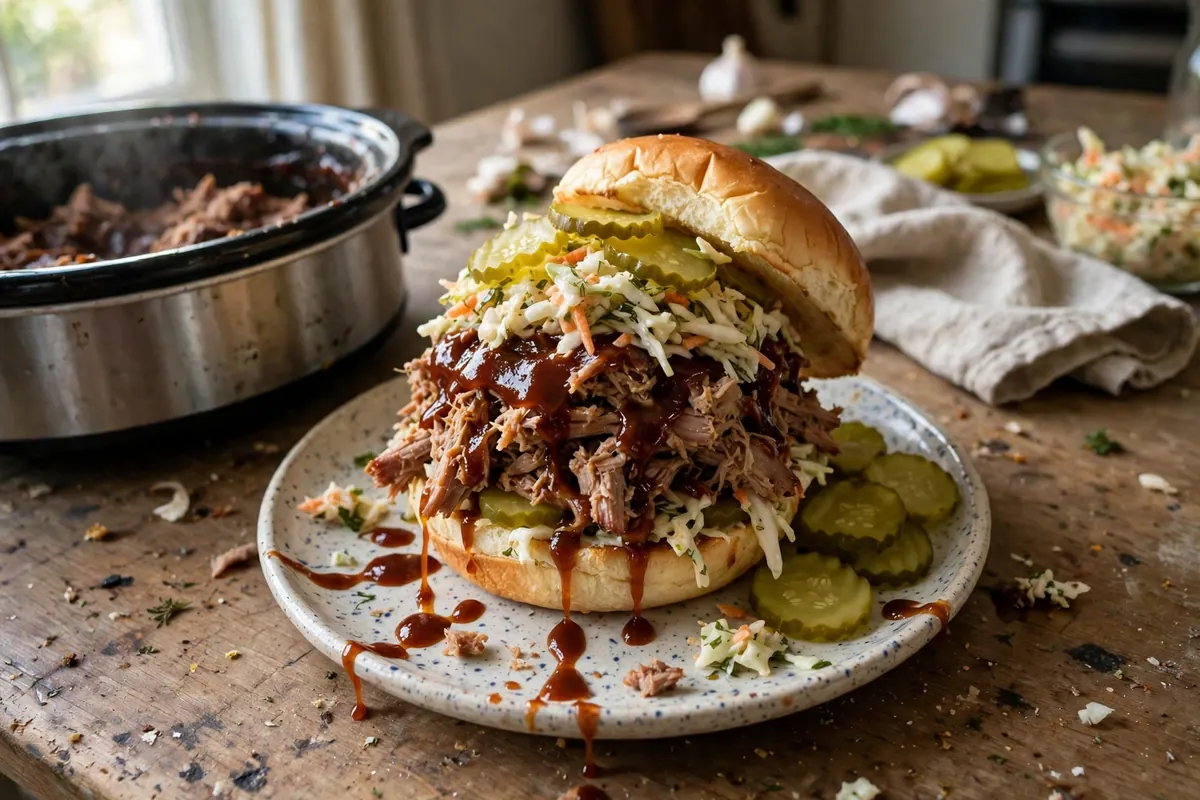
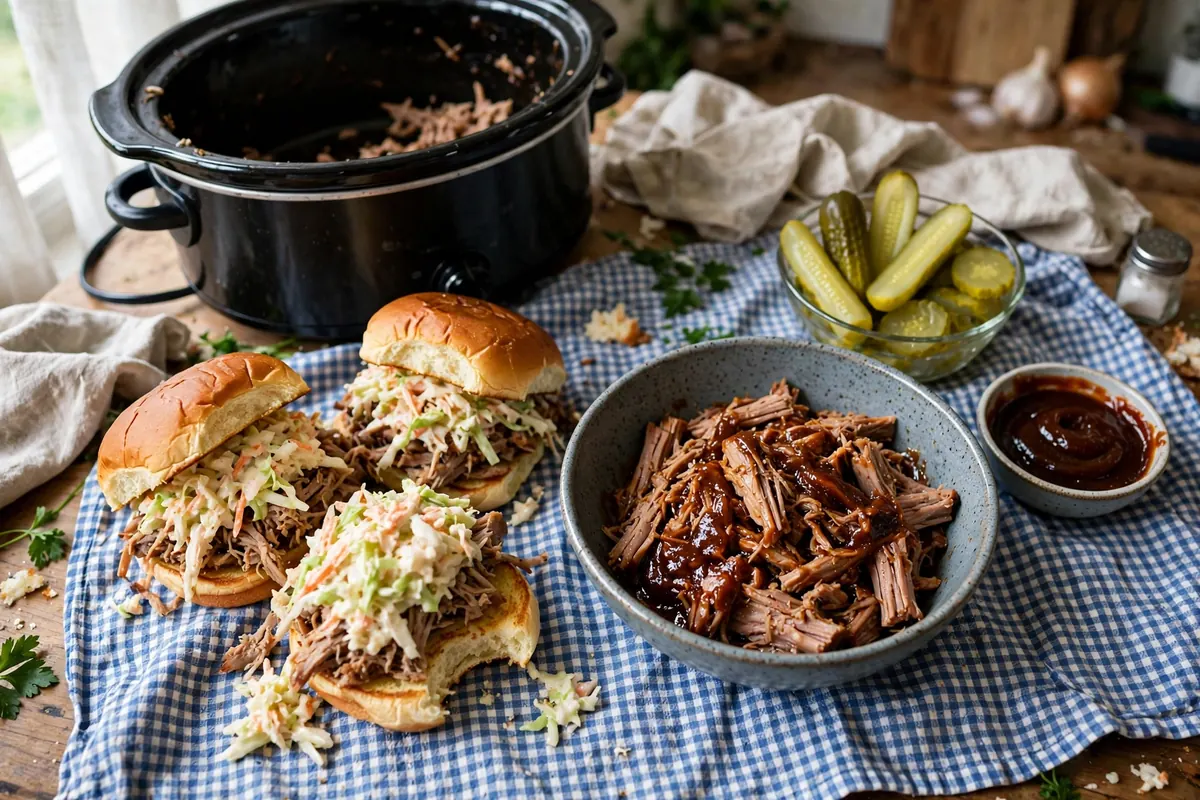
Soft brioche buns or plain hamburger buns hold up best, since they soak up sauce without falling apart. Coleslaw, dill pickles, and thinly sliced red onion are the classic toppings. A spoonful of slaw on top of the pork, inside the bun, is the way most barbecue spots serve it.
Recommended Equipment
- 6 quart slow cooker (a 4 pound roast needs room; a smaller pot crowds it and cooks unevenly)
- Small bowl for mixing the rub
- Instant-read meat thermometer (the only reliable way to know the pork is ready to shred)
- Two forks or meat claws for shredding
- Large rimmed baking sheet or cutting board for shredding
- Medium saucepan for the quick pan sauce
- Fat separator or a large spoon for skimming (a measuring cup and a spoon work too)
How to Make Slow Cooker Pulled Pork
1. Mix the dry rub
Stir the brown sugar, smoked paprika, kosher salt, garlic powder, onion powder, chili powder, cumin, black pepper, and mustard powder together in a small bowl. Break up any lumps of brown sugar with the back of a spoon. The rub makes about a third of a cup, which is the right amount for a 4 pound roast. Taste a pinch. It should be sweet first, then smoky, with a little warmth at the end.
2. Season the pork
Pat the pork shoulder dry with paper towels. A dry surface helps the rub stick instead of sliding off in a wet paste. Sprinkle the rub over every side of the roast and press it in with your hands. Get into the folds and creases. If you seasoned the night before, wrap the rubbed roast tightly and refrigerate it. Take it out 30 minutes before cooking so it is not fridge-cold when it hits the pot.
3. Build the base in the slow cooker
Scatter the sliced onion and garlic cloves across the bottom of the slow cooker. This bed keeps the pork from sitting directly on the hot base, and it flavors the liquid as it cooks. Pour in the apple cider vinegar, chicken broth, and Worcestershire sauce. Stir them together once. The liquid should come about an inch up the sides of the pot, not halfway up the roast.
4. Add the pork and the liquid
Set the rubbed pork on top of the onion bed, fat cap facing up. The fat melts slowly as it cooks and bastes the meat from the top down. Pour any rub left in the bowl over the top. Put the lid on and do not lift it again until the first check. Every lift lets out heat and adds 20 to 30 minutes to the cook time.
5. Cook low and slow
Cook on LOW for 8 to 10 hours, or on HIGH for 5 to 6 hours. The pork is done when an instant-read thermometer in the thickest part reads 195 to 205 degrees and a fork twists through the meat with almost no resistance. Use the chart below to plan around your roast size. Start checking at the low end of the range for your weight, then keep cooking in 30 minute increments until it passes the fork test.
| Roast weight | LOW setting | HIGH setting |
|---|---|---|
| 3 to 4 pounds | 6 to 8 hours | 4 to 5 hours |
| 4 to 6 pounds | 8 to 10 hours | 5 to 6 hours |
| 6 to 8 pounds | 10 to 12 hours | 6 to 7 hours |
These times assume a refrigerated roast. A frozen roast needs 1 to 2 extra hours, and starting from frozen is not the safest choice, since the meat spends too long in the danger zone before the pot gets hot. Thaw it in the fridge overnight instead.
6. Rest the pork
Lift the pork out of the slow cooker with tongs and set it on a large rimmed baking sheet or cutting board. Let it rest for 15 to 20 minutes. Resting lets the juices settle back into the meat instead of running out onto the board when you shred. While it rests, skim the fat off the cooking liquid in the pot. A fat separator makes this easy. Without one, let the liquid sit for a few minutes and spoon the clear fat off the top.
7. Shred it with two forks
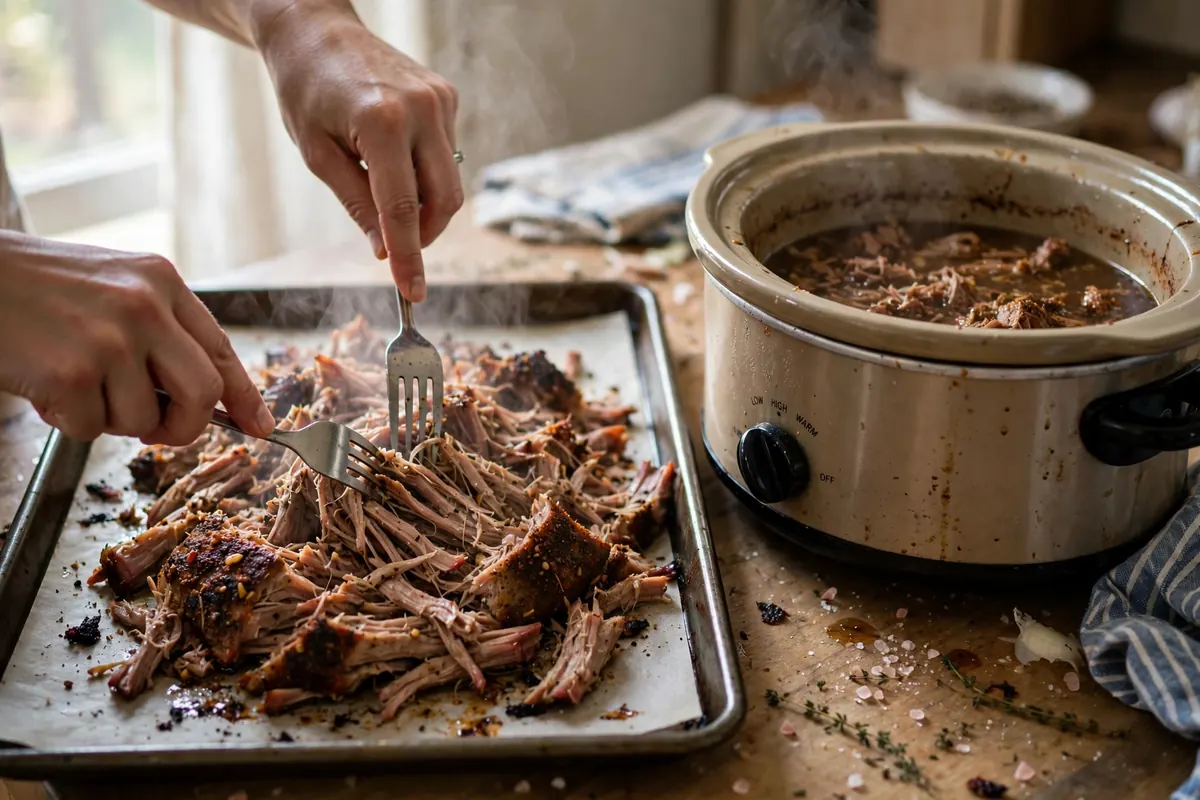
Pull the pork apart with two forks, working with the grain of the meat so you get long tender strands instead of mush. Discard any large pieces of fat or tough connective tissue as you go. If you used a bone-in roast, the bone should slide out cleanly now. Shred while the pork is still warm. Cold pork is stiff and tears instead of pulling apart. Taste a strand. It should be juicy and well seasoned on its own, before any sauce goes on.
8. Make the quick pan sauce
Pour the skimmed cooking liquid into a medium saucepan. You should have about 1 to 1 and a half cups. Simmer it over medium heat for 8 to 10 minutes, until it reduces by about half and turns glossy. Stir in 1 cup of barbecue sauce and a spoonful of the reserved liquid if the sauce looks too thick. Taste it. Add a pinch of brown sugar if it needs sweetness, or a splash of vinegar if it needs brightness. This takes 10 minutes, and it is the step most recipes skip.
9. Toss and serve
Return the shredded pork to the slow cooker or a large bowl. Pour over about three quarters of the sauce and toss gently with tongs. Add more sauce a spoonful at a time until every strand is coated but the pork is not swimming. Turn the slow cooker to WARM and hold it there for up to 2 hours if dinner is not ready yet. Pile the pork onto buns, top with coleslaw and pickles, and serve the extra sauce on the side.
Pro Tips for Perfect Slow Cooker Pulled Pork
Trust the thermometer, not the clock. Slow cookers run hot or cool by brand, and a 4 pound roast is not the same as a 6 pound one. Start checking at the low end of the chart and cook in 30 minute increments until the pork hits 195 to 205 degrees. The fork test matters as much as the number. If a fork does not twist through easily, it needs more time.
Do not lift the lid. Every peek drops the temperature inside the pot and adds time. The first check should come at 8 hours for a 4 pound roast on LOW. If you must look, make it count: check the temperature and the fork test in one go, then put the lid back on.
Keep the liquid low. One cup of added liquid is enough. The pork releases its own juices as it cooks, and the pot will hold far more liquid at the end than it started with. Extra liquid does not make juicier pork. It makes boiled pork with the rub washed off.
Shred warm, and shred with the grain. Warm pork pulls into clean strands. Cold pork tears into chunks. Work along the grain of the meat, and pull gently. Vigorous stirring turns the meat into mush, and that is the most common way a good roast ends up looking like baby food.
Save the cooking liquid. The skimmed liquid is the best part of the pot. It carries the rub, the onion, and hours of pork flavor. Reduced into the pan sauce, it gives the finished dish a depth that bottled sauce alone cannot match. Freeze any extra in a small container for the next batch.
Salt the pork the night before when you can. An overnight rub lets the salt soak past the surface and season the roast all the way through. It is a small step that pays off in every bite. If you forgot, season right before cooking and carry on. The pork will still be good.
Variations
Spicy Chipotle Pulled Pork
Add 1 to 2 tablespoons of minced chipotle peppers in adobo to the cooking liquid, and swap the chili powder in the rub for an extra teaspoon of smoked paprika plus half a teaspoon of cayenne. The heat stays mild once the pork cooks down, but the smoky edge gets sharper. Serve with pickled red onions to cool it down.
Carolina Style Pulled Pork
Skip the barbecue sauce at the end. Toss the shredded pork with a vinegar sauce instead: half a cup of apple cider vinegar, 1 tablespoon of brown sugar, 1 teaspoon of red pepper flakes, and a pinch of salt, whisked together. It is tangy and sharp, and it suits the pork in a completely different way. This is the version to make when someone at the table does not like sweet sauce.
Dr Pepper Pulled Pork
Replace the chicken broth and vinegar with 1 cup of Dr Pepper. The soda adds sweetness and a faint spice note, and the sugar helps the pork brown. Keep the rub the same. This is a crowd favorite for game day, and kids tend to ask for it by name. Cola works the same way if Dr Pepper is not on the shelf.
Hawaiian Pulled Pork (Kalua Style)
Leave out the barbecue sauce and the vinegar. Rub the pork with 1 tablespoon of kosher salt and 1 tablespoon of liquid smoke, then cook it on a bed of sliced onion with half a cup of water. Shred and serve with steamed cabbage and rice. The flavor is simple, salty, and smoky, and it shows how far a pork shoulder goes with almost nothing added.
Lighter Pulled Pork
Trim the fat cap down to a thin layer before cooking, and skim the cooking liquid well before making the sauce. Serve the pork in lettuce cups or over a chopped salad instead of on buns. The meat itself is the same, but the plate reads lighter, and the pork still tastes like barbecue.
Ingredient Substitutions
No pork shoulder? Pork butt is the same cut under a different name, so buy whichever the store labels. A boneless pork loin roast will cook, but it is too lean to shred well, and it dries out over 8 hours. If loin is all you have, cut the cook time to 4 to 5 hours on LOW and slice it instead of shredding it.
No smoked paprika? Use sweet paprika plus half a teaspoon of liquid smoke stirred into the cooking liquid. Or use chipotle powder for a hotter, smokier rub. Regular paprika alone works, but the dish loses its barbecue character.
No apple cider vinegar? White wine vinegar or plain white vinegar will do. Use a tablespoon less of white vinegar, since it is sharper. Lemon juice is a last resort, and it changes the flavor more than the other swaps.
No chicken broth? Water works, or apple juice for a sweeter braise. Beer is the classic choice in a lot of pulled pork recipes: any lager or ale except dark stouts, which turn bitter over a long cook.
No brown sugar? White sugar plus a teaspoon of molasses gives the same flavor. Honey works too, but it burns more easily on the surface of the meat, so rub it in lightly and keep the amount to 1 tablespoon.
No Worcestershire sauce? A tablespoon of soy sauce plus a teaspoon of vinegar gets close. Fish sauce works in a pinch too, a teaspoon at a time, but go easy, since it is much saltier.
Dietary Notes
This recipe is naturally gluten-free and dairy-free as written, as long as the barbecue sauce and Worcestershire sauce you use are labeled gluten-free. Most major brands are, but check the bottle, since a few barbecue sauces use wheat-based thickeners. The rub itself has no gluten and no dairy.
For a lower-sugar version, use a sugar-free barbecue sauce and cut the brown sugar in the rub to 1 tablespoon. The pork will still shred and taste seasoned, though the sauce will be less glossy. For a keto-friendly plate, skip the bun and the sugary sauce, and serve the pork over coleslaw or cauliflower rice with a sugar-free sauce.
Pork shoulder is a rich cut, and this is a comfort dish, not a light one. One serving is about three quarters of a cup of pork with sauce, which keeps portions honest without leaving anyone hungry.
Make-Ahead, Storage & Reheating
Make ahead: Season the pork the night before and refrigerate it wrapped tightly. In the morning, build the slow cooker base, set the pork on top, and start cooking. You can also cook the whole recipe a day ahead, shred it, toss it with sauce, and refrigerate it in the cooking liquid. Reheat it gently and it tastes just as good, sometimes better, since the flavors settle overnight.
Storage: Cool the pork completely, then store it in an airtight container with some of the cooking liquid or sauce spooned over the top. It keeps in the fridge for up to 4 days. The liquid on top keeps the meat from drying out in the fridge.
Freezing: Pulled pork freezes well for up to 3 months. Pack it in meal-size portions with a spoonful of sauce or cooking liquid in each bag, press out the air, and lay the bags flat to freeze. Thaw overnight in the fridge before reheating.
Reheating: Warm it in a covered saucepan over low heat with a splash of cooking liquid or water, stirring now and then, until it is hot all the way through. The microwave works for single servings: cover the bowl, heat in 1 minute bursts, and stir between bursts so it heats evenly. A slow cooker on WARM for an hour works for a crowd. Add a spoonful of sauce if it looks dry after reheating.
Food safety: Never cook a frozen pork roast in the slow cooker. Thaw it in the fridge overnight first, since a frozen roast spends too long warming up through the temperature range where bacteria grow. Cooked pork should not sit out at room temperature for more than 2 hours. Reheat leftovers to 165 degrees before serving, and use a clean thermometer and clean tongs when you check the roast so you do not cross-contaminate the finished meat.
What to Serve With Slow Cooker Pulled Pork
Pulled pork is a main dish that asks for simple sides. Pile it on buns with coleslaw and pickles for the classic sandwich, or plate it with mac and cheese, cornbread, and baked beans for a Southern dinner. It also works over nachos, inside quesadillas, on top of baked potatoes, or folded into tacos with a crunchy slaw.
For a full spread, start with our KFC-style crispy fried chicken on another night, since the two dishes share the same crowd-pleasing energy but cook completely differently. And if you are building a holiday table, our pumpkin cheese ball makes a great appetizer while the pork cooks. A simple green salad or steamed green beans keeps the plate from getting too heavy.
Recipe Notes
- The pork is done at 195 to 205 degrees, not at 145. At 145 it is safe to eat, but it will not shred.
- One cup of added liquid is enough. The pork releases its own juices as it cooks.
- Do not lift the lid until the first check at 8 hours on LOW. Every lift adds 20 to 30 minutes.
- Shred the pork while it is still warm, and work with the grain so you get strands, not mush.
- Skim the fat off the cooking liquid before you make the pan sauce, or the sauce will taste greasy.
- Add the sauce after shredding, never at the start. Sauce added early burns and loses flavor.
- A 4 pound roast feeds 8. For a crowd of 12 or more, cook two 4 pound roasts side by side in a large slow cooker, or cook them one after another and hold the first batch on WARM.
Slow Cooker Pulled Pork — Fall-Apart Tender with a Simple Dry Rub
Description
Pork shoulder rubbed with a sweet smoky spice mix, cooked low and slow until it falls apart with two forks, then tossed in a quick pan sauce made from the cooking juices. 15 minutes of prep, fall-apart tender every time.
For the dry rub
For the slow cooker
For serving
Instructions
-
Mix the dry rub
Stir the brown sugar, smoked paprika, kosher salt, garlic powder, onion powder, chili powder, cumin, black pepper, and mustard powder together in a small bowl. Break up any lumps of brown sugar with the back of a spoon. -
Season the pork
Pat the pork shoulder dry with paper towels. Sprinkle the rub over every side of the roast and press it in with your hands, getting into the folds and creases. -
Build the base in the slow cooker
Scatter the sliced onion and garlic across the bottom of the slow cooker. Pour in the apple cider vinegar, chicken broth, and Worcestershire sauce and stir once. -
Add the pork and the liquid
Set the rubbed pork on top of the onion bed, fat cap facing up. Pour any rub left in the bowl over the top. Put the lid on. -
Cook low and slow
Cook on LOW for 8 to 10 hours, or on HIGH for 5 to 6 hours, until an instant-read thermometer in the thickest part reads 195 to 205 degrees and a fork twists through the meat with almost no resistance. See the weight chart in the article for other roast sizes. -
Rest the pork
Lift the pork out with tongs and set it on a large rimmed baking sheet or cutting board. Rest 15 to 20 minutes. While it rests, skim the fat off the cooking liquid in the pot. -
Shred it with two forks
Pull the pork apart with two forks, working with the grain of the meat so you get long tender strands. Discard large pieces of fat or tough connective tissue. Shred while the pork is still warm. -
Make the quick pan sauce
Pour the skimmed cooking liquid into a medium saucepan and simmer over medium heat for 8 to 10 minutes, until reduced by about half and glossy. Stir in 1 cup of barbecue sauce and a spoonful of reserved liquid if the sauce looks too thick. Taste and adjust with a pinch of brown sugar or a splash of vinegar. -
Toss and serve
Return the shredded pork to the slow cooker or a large bowl. Pour over about three quarters of the sauce and toss gently with tongs. Add more sauce a spoonful at a time until every strand is coated. Serve piled on buns with coleslaw and pickles, with extra sauce on the side.
Nutrition Facts
Servings 8
- Amount Per Serving
- Calories 380kcal
- % Daily Value *
- Total Fat 22g34%
- Saturated Fat 8g40%
- Cholesterol 105mg35%
- Sodium 600mg25%
- Total Carbohydrate 11g4%
- Sugars 8g
- Protein 33g66%
* Percent Daily Values are based on a 2,000 calorie diet. Your daily value may be higher or lower depending on your calorie needs.
Note
The pork is done at 195 to 205 degrees, not at 145. At 145 it is safe to eat, but it will not shred. One cup of added liquid is enough. The pork releases its own juices as it cooks, and too much liquid boils the meat and washes the rub off. Do not lift the lid until the first check at 8 hours on LOW. Every lift adds 20 to 30 minutes. Shred while the pork is still warm, and work with the grain so you get strands, not mush. Skim the fat off the cooking liquid before making the pan sauce, or the sauce will taste greasy. Add the sauce after shredding, never at the start. Sauce added early burns and loses flavor. Never cook a frozen pork roast in the slow cooker. Thaw it in the fridge overnight first. Reheat leftovers to 165 degrees before serving, and do not leave cooked pork out at room temperature for more than 2 hours. Nutrition estimates: these are honest estimates calculated from the ingredients listed above. Actual values vary with the cut of pork, the brand of sauce, and how much fat is skimmed from the cooking liquid.