

Beef Stroganoff Recipe: Creamy, Savory, and Ready in 35 Minutes
Beef stroganoff is tender strips of sirloin in a creamy mushroom sauce, served over buttered egg noodles. This version takes 35 minutes from start to finish, serves 6, and uses a curdle-proof method, so the sour cream sauce stays smooth and glossy instead of splitting. One skillet does the whole job.
If stroganoff has ever gone wrong in your kitchen, the sauce was almost certainly the problem. Sour cream curdles when it hits a boiling pan, and once it splits, no amount of stirring brings it back. This recipe fixes that with three small moves: the sour cream comes to room temperature first, a spoonful of the warm sauce goes into it before it meets the pan, and it gets stirred in off the heat. That is the whole secret, and it works every time.
Everything else about this dish is simple on purpose. The beef sears in two fast batches so it browns instead of steaming. The mushrooms cook in the same pan, so they pick up the browned bits the beef leaves behind. A spoonful of flour and two cups of beef broth turn into a gravy in about three minutes. Dinner lands on the table in half an hour, and the pan cleans up in minutes.
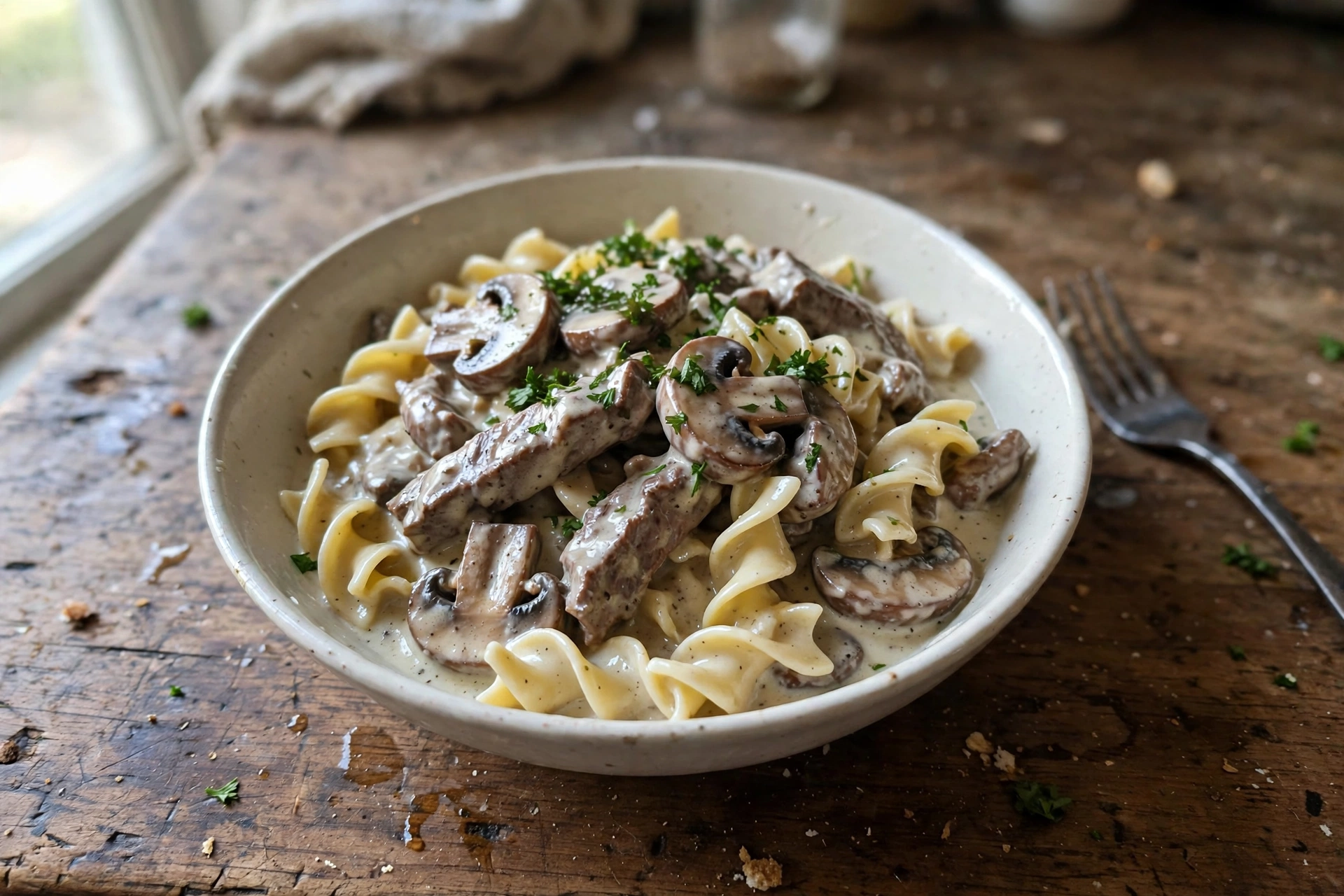
Table of Contents
Why You’ll Love This Beef Stroganoff
- Tender sirloin strips that stay pink inside because they sear for about a minute per side, then finish gently in the sauce.
- A creamy mushroom sauce that stays smooth, thanks to the tempered sour cream method spelled out step by step.
- Dinner in 35 minutes with one skillet and one pot for the noodles, so cleanup stays small.
- Pantry-friendly seasoning: Worcestershire, Dijon, paprika, and garlic do the work, with nothing exotic on the shopping list.
- Flexible beef: sirloin is the pick here, but the guide below covers tenderloin, rump, and a ground beef version with real timing changes.
- Leftovers reheat well for lunch the next day, and the sauce freezes better than most cream sauces if you follow the freezing notes.
Ingredients You’ll Need
Every ingredient here earns its place. Read through the notes before you shop, because two of them (the beef cut and the sour cream temperature) decide whether dinner turns out great or just fine.
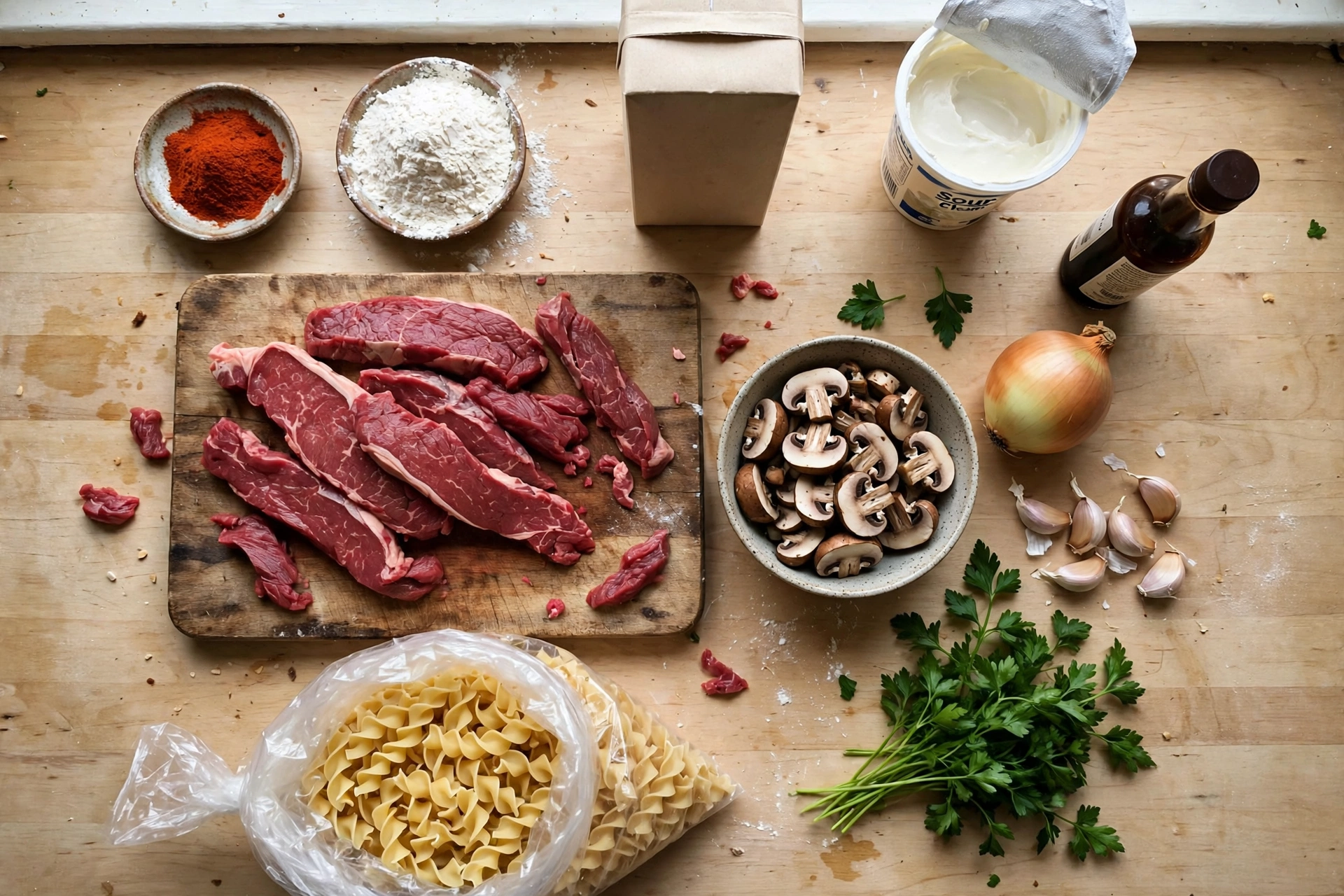
Beef Sirloin
One and a half pounds of boneless beef sirloin, sliced thin against the grain into strips about 2 inches long and 1 inch wide. Sirloin is the sweet spot for stroganoff: tender enough to cook in a minute per side, flavorful enough to stand up to the sauce, and far cheaper than tenderloin. Slice it while it is cold from the fridge, since cold beef cuts cleanly. Cut against the grain, which means across the visible lines running through the meat, because that shortens the muscle fibers and keeps each strip tender. Pat the strips dry with paper towels before they hit the pan. Wet beef steams instead of browning.
Cremini Mushrooms
Eight ounces of cremini mushrooms, sliced. Cremini mushrooms (the brown ones, sometimes labeled baby bellas) bring more flavor than white button mushrooms and hold their shape in the sauce. Slice them about a quarter inch thick so they brown instead of disappearing. Wipe them clean with a damp paper towel rather than soaking them. Mushrooms absorb water fast, and wet mushrooms will not brown.
Yellow Onion and Garlic
One medium yellow onion, thinly sliced, and three garlic cloves, minced. The onion cooks down sweet and soft and forms the base of the sauce. Slice it thin so it melts into the gravy instead of staying in chunky pieces. Garlic goes in last, for about 30 seconds, because minced garlic burns fast in a hot pan and turns bitter.
Butter and Olive Oil
Two tablespoons of butter and one tablespoon of olive oil, split between the searing and the vegetables. Butter gives the sauce its flavor, and the oil raises the smoke point so the butter does not burn while the beef sears at high heat. Use real butter, not margarine, since the sauce depends on it for body.
All-Purpose Flour
Two tablespoons of all-purpose flour. This is the thickener. It gets sprinkled over the cooked mushrooms and onion and stirred for a minute before the broth goes in, which cooks out the raw flour taste and keeps the sauce from going lumpy. No cornstarch slurry needed.
Beef Broth
Two cups of low-sodium beef broth. Low-sodium matters because the sauce reduces and the Worcestershire adds salt of its own. Full-salt broth can tip the finished sauce over into too salty, and there is no easy fix once it is in. If you only have regular broth, skip the extra salt at the end and taste first.
Worcestershire Sauce and Dijon Mustard
One tablespoon of Worcestershire sauce and one teaspoon of Dijon mustard. Worcestershire adds the deep, savory background note that makes the sauce taste like it simmered for hours. Dijon adds a small sharp edge that cuts through the richness of the sour cream. Neither one should be detectable on its own. Together they make the sauce taste complete.
Smoked Paprika
One teaspoon of smoked paprika. Paprika gives the sauce its warm color and a gentle smoky note. Smoked paprika works better here than sweet paprika, since it adds flavor, not just color. If you only have sweet paprika, use it, but add a tiny pinch of cayenne if you like a little warmth.
Sour Cream
Three quarters of a cup of full-fat sour cream, at room temperature. Full-fat is not a suggestion here. Low-fat sour cream has more water and less fat, and it splits far more easily in a hot sauce. Set the measured sour cream on the counter when you start slicing the beef, so it has 15 minutes to lose its fridge chill. Room-temperature sour cream is the single biggest factor in a sauce that stays smooth.
Wide Egg Noodles
Twelve ounces of wide egg noodles. Wide egg noodles are the classic stroganoff partner: their broad, flat shape catches the sauce, and their soft, buttery bite matches the creamy gravy. Cook them in well-salted water while the sauce simmers, and toss them with a knob of butter before serving so they do not clump.
Fresh Parsley, Salt, and Black Pepper
Two tablespoons of chopped fresh parsley for the finish, plus salt and black pepper for seasoning the beef and the sauce. Parsley is more than a garnish here. Its fresh, clean flavor lifts a rich sauce right at the end. Season the beef before searing and taste the sauce before serving, since broth brands vary in saltiness.
Recommended Equipment
- Large deep skillet or saute pan, 12 inches (room for the beef to sear in a single layer matters more than the brand)
- Large pot for the egg noodles
- Cutting board and a sharp knife (a sharp knife is what makes thin, even beef strips possible)
- Paper towels (for drying the beef and wiping the mushrooms)
- Wooden spoon or spatula (for scraping up the browned bits when the broth goes in)
- Small bowl (for tempering the sour cream)
- Tongs (for turning the beef strips fast)
How to Make Beef Stroganoff
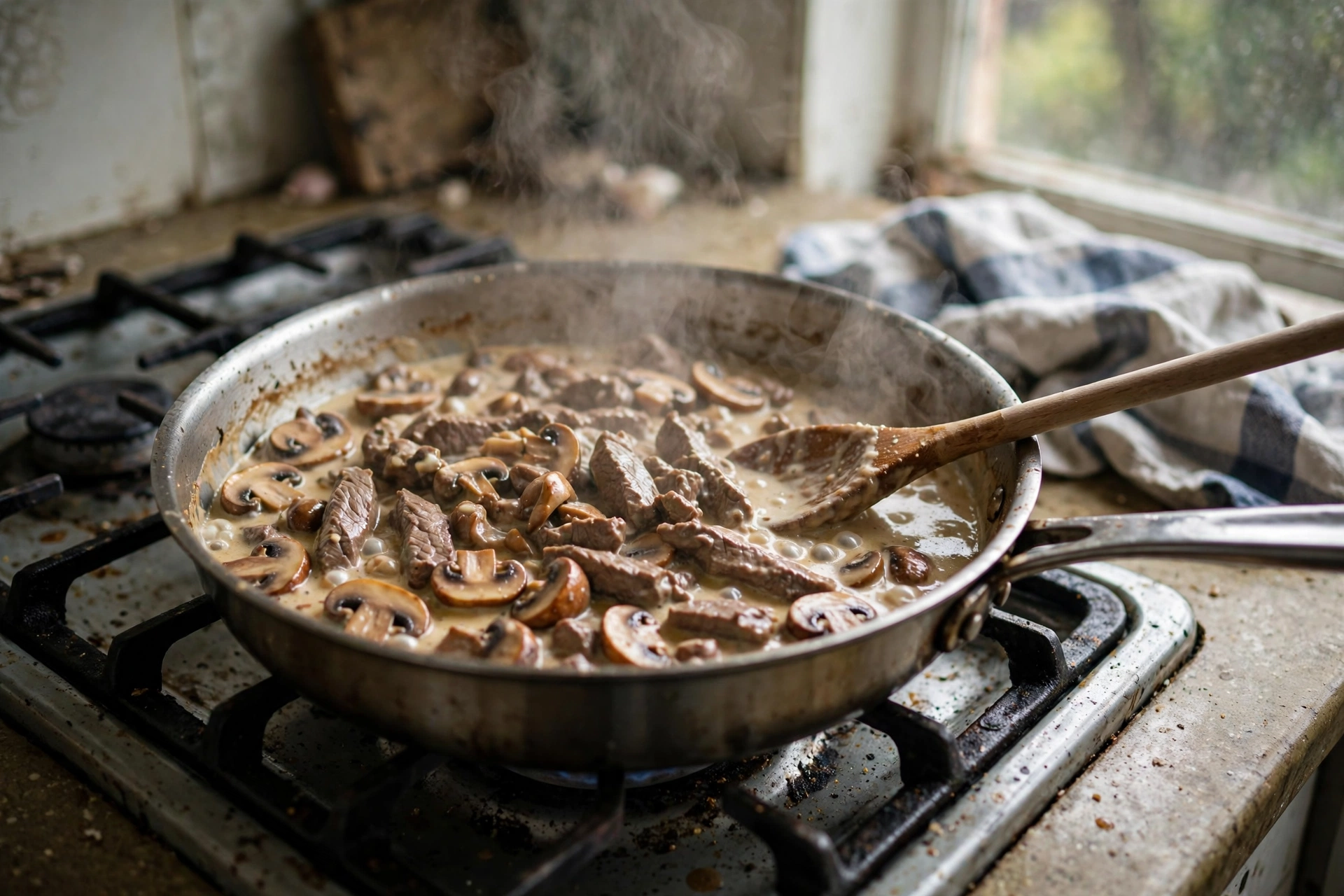
1. Get the noodles going and slice the beef
Put a large pot of salted water on to boil for the noodles. While it heats, slice the sirloin thinly against the grain into strips about 2 inches long and 1 inch wide. Pat the strips dry with paper towels and season them all over with half a teaspoon of salt and half a teaspoon of black pepper. Set the measured sour cream on the counter now so it reaches room temperature while you cook.
2. Sear the beef in batches
Heat one tablespoon of olive oil and one tablespoon of butter in the large skillet over medium-high heat until the butter foams and just starts to smell nutty. Add half the beef strips in a single layer with space between them. Sear for about 1 minute per side, until browned on the outside but still pink in the middle. Move the seared beef to a plate and repeat with the remaining strips. Do not crowd the pan. Crowded beef steams, and steamed beef turns gray and tough. The beef will finish cooking in the sauce later, so pull it early.
3. Cook the onion and mushrooms
Turn the heat down to medium and add the remaining tablespoon of butter to the same skillet. Add the sliced onion and cook for 3 minutes, stirring, until it softens and turns translucent. Add the sliced mushrooms and cook for 5 minutes, stirring now and then, until they release their moisture and turn golden brown at the edges. Stir in the minced garlic and cook for 30 seconds, just until it smells fragrant.
4. Build the gravy base
Sprinkle the flour over the mushrooms and onion and stir for 1 minute, until the flour coats everything and loses its raw smell. Pour in the beef broth a little at a time, scraping the bottom of the pan with a wooden spoon to lift up the browned bits. Those bits are pure flavor. Stir in the Worcestershire sauce, Dijon mustard, and smoked paprika. Bring the sauce to a gentle simmer.
5. Simmer the sauce until it thickens
Let the sauce simmer for 3 to 4 minutes, stirring now and then, until it thickens enough to coat the back of a spoon. It should look like a thin gravy, not a thick paste. The sour cream will add more body in the next step, so stop while the sauce still flows easily. Meanwhile, drop the egg noodles into the boiling water and cook them according to the package directions. Drain and toss with a knob of butter.
6. Temper the sour cream and stir it in off the heat
Take the skillet off the heat completely. Spoon about 3 tablespoons of the warm sauce into the room-temperature sour cream and stir until smooth. This is tempering: it raises the sour cream temperature gently so it does not shock and split when it meets the hot pan. Pour the tempered sour cream into the skillet and stir until the sauce turns pale, creamy, and even. Do not put the pan back on high heat after this point.
7. Return the beef and finish the sauce
Add the seared beef strips and any juices from the plate back to the skillet. Put the pan over low heat for 1 to 2 minutes, stirring gently, just until the beef is heated through. Do not let the sauce boil or even simmer hard now. A few lazy bubbles at the edge are fine. Taste and adjust the salt and pepper. The beef should still be pink inside and the sauce should be silky.
8. Serve over the egg noodles
Spoon the buttered egg noodles into wide bowls and ladle the stroganoff generously over the top. Sprinkle with chopped fresh parsley and serve right away while the sauce is hot and glossy. Pass extra black pepper at the table for anyone who wants it.
Pro Tips for the Best Beef Stroganoff
Cold beef slices thinner. If the sirloin feels soft and hard to slice, put it in the freezer for 15 minutes first. Firm beef cuts into clean, even strips, and even strips cook evenly. Uneven strips mean some pieces overcook while others stay raw in the middle.
Sear, do not cook through. The beef spends about 2 minutes total in the pan during searing, then finishes in the sauce. That is the whole timing. If the strips look fully cooked when they leave the pan, they will be overcooked by the time they reach the table.
Brown the mushrooms properly. Mushrooms need space and patience. If the pan is crowded, they steam and turn rubbery. Give them room, leave them alone for a minute at a time, and let the edges go golden before you stir. Golden mushrooms taste nutty and rich. Pale mushrooms taste like wet sponge.
Temper the sour cream every time. Room-temperature sour cream plus a spoonful of warm sauce stirred in first is the difference between a silky sauce and a grainy one. Skip this step and the sauce can still work, but you are gambling. The tempering takes 20 seconds.
Keep the sauce below a boil after the sour cream goes in. Low heat only, and only long enough to warm the beef through. If you see the sauce bubbling hard, pull the pan off the heat and stir. A split sauce cannot be fixed by stirring, so prevention is the whole game.
Salt at the end, not the start. The broth reduces, the Worcestershire adds salt, and the noodles are salted too. Taste the finished sauce before adding more salt. It is easy to add a pinch and impossible to take it out.
Variations
Ground Beef Stroganoff (the budget version)
Swap the sirloin for 1 pound of ground beef, 85 percent lean. Brown it in the skillet, breaking it up with a spoon, for 6 to 8 minutes until no pink remains. Drain off the extra fat, then carry on from step 3 with the onion and mushrooms. Ground beef costs about half as much as sirloin and the sauce is the same, so this is the weeknight version to reach for when steak is not on sale. The texture is different (crumbly rather than strips), but the flavor holds up.
Mushroom-Forward Stroganoff (extra mushrooms, less beef)
Use 1 pound of beef and double the mushrooms to 1 pound, using a mix of cremini and sliced portobello. The extra mushrooms bulk the dish out and add a deeper, earthier flavor. This version stretches the sirloin further and suits a table where one person wants a smaller portion of beef.
Stroganoff with a Splash of Wine
After the mushrooms brown, pour in a quarter cup of dry red wine or dry sherry and let it bubble for 1 minute, scraping the pan, before adding the flour. The wine adds a layer of acidity and depth that the broth alone does not have. Use a wine you would drink. Cooking wine from a bottle labeled “cooking wine” adds salt and tastes flat.
Creamy Dijon Stroganoff
Double the Dijon to 2 teaspoons and add it with the sour cream instead of with the broth. The mustard stays brighter and sharper this way, and the sauce takes on a gentle tang that balances the richness. This is the version to make if you like your stroganoff with a little bite.
Stroganoff with Tenderloin (the special-occasion version)
Swap the sirloin for beef tenderloin, sliced the same way, and cut the sear to 30 seconds per side. Tenderloin is more tender and more expensive, so the shorter sear protects it. Everything else in the recipe stays the same. Save this one for a dinner that deserves it.
Ingredient Substitutions
No sirloin? Rump steak works, sliced thin against the grain, but sear it for only 45 seconds per side and let it finish in the sauce, since rump toughens faster than sirloin. Chuck steak is not a good swap here. It needs long, slow cooking to turn tender, and a 35-minute stroganoff will leave it chewy. Ground beef (see the variation above) is the better budget swap.
No sour cream? Full-fat plain Greek yogurt works as a 1:1 swap, but it splits even more easily than sour cream, so tempering is essential and the heat must stay low. Creme fraiche is the safest swap of all: it can simmer without splitting, so you can stir it in directly. It costs more, but it removes the curdling worry completely.
No cremini mushrooms? White button mushrooms work fine, though the flavor is milder. A mix of button and shiitake adds a deeper, almost meaty note. Dried porcini, rehydrated and chopped with their soaking liquid strained into the broth, adds a serious flavor boost for a special version.
No Worcestershire? A teaspoon of soy sauce plus a tiny squeeze of lemon juice gives a similar savory depth. It is not identical, but it fills the same gap in the sauce. Fish sauce also works at half a teaspoon, though it changes the flavor more.
No egg noodles? Rice, mashed potatoes, or fettuccine all work as the base. Mashed potatoes turn this into a different kind of comfort dinner, rich and heavy, and they soak up the sauce beautifully. Rice is the lightest option and keeps well for leftovers.
No Dijon? A teaspoon of yellow mustard works in a pinch, though it is sharper and less complex. Whole-grain mustard also works and adds a nice texture to the sauce.
Dietary Notes
This recipe is not gluten-free as written, because of the flour thickener and the egg noodles. For a gluten-free version, swap the flour for a gluten-free all-purpose blend or 1 tablespoon of cornstarch mixed with 2 tablespoons of cold water, stirred in with the broth. Serve over rice or gluten-free pasta. The rest of the recipe is naturally gluten-free, but check your Worcestershire and broth labels.
For dairy-free, the sour cream and butter are the issue. A dairy-free sour cream alternative plus olive oil instead of butter gets you most of the way there, though the sauce will be thinner and less rich. Coconut cream is not a good swap here. Its flavor fights the savory sauce.
This is a rich, hearty dish. One serving lands around 540 calories with the noodles, and the beef provides most of the protein. It is comfort food, not a light dinner, and the recipe makes no claim otherwise. For a lighter plate, serve a smaller portion of stroganoff over a bigger pile of steamed green beans or a simple salad instead of a full portion of noodles.
Make-Ahead, Storage, Freezing, and Reheating
Make ahead: The sauce base (through step 5, before the sour cream goes in) can be made up to 2 days ahead and refrigerated. Reheat it gently, then temper and stir in the sour cream and beef just before serving. Do not add the sour cream ahead of time. A sauce with sour cream in it does not hold well overnight and reheats unevenly.
Storage: Cool leftovers quickly and refrigerate in an airtight container for up to 3 days. Store the noodles separately from the sauce if you can, since noodles left sitting in sauce absorb liquid and turn soft. The sauce will thicken in the fridge. That is normal.
Freezing: Freeze the sauce base only, before the sour cream and beef go in, for up to 2 months. Thaw overnight in the fridge, reheat gently, then add the sour cream and freshly seared beef. Do not freeze the finished sauce with sour cream in it. It separates on thawing and turns grainy. Cooked noodles freeze badly, so always cook those fresh.
Reheating: Reheat the sauce gently in a skillet over low heat, stirring often, and add a splash of beef broth or water to loosen it. Never microwave stroganoff on high. The sauce splits in a microwave hot spot before the middle is even warm. If you must use a microwave, use 50 percent power in 1-minute bursts, stirring between each.
What to Serve With Beef Stroganoff
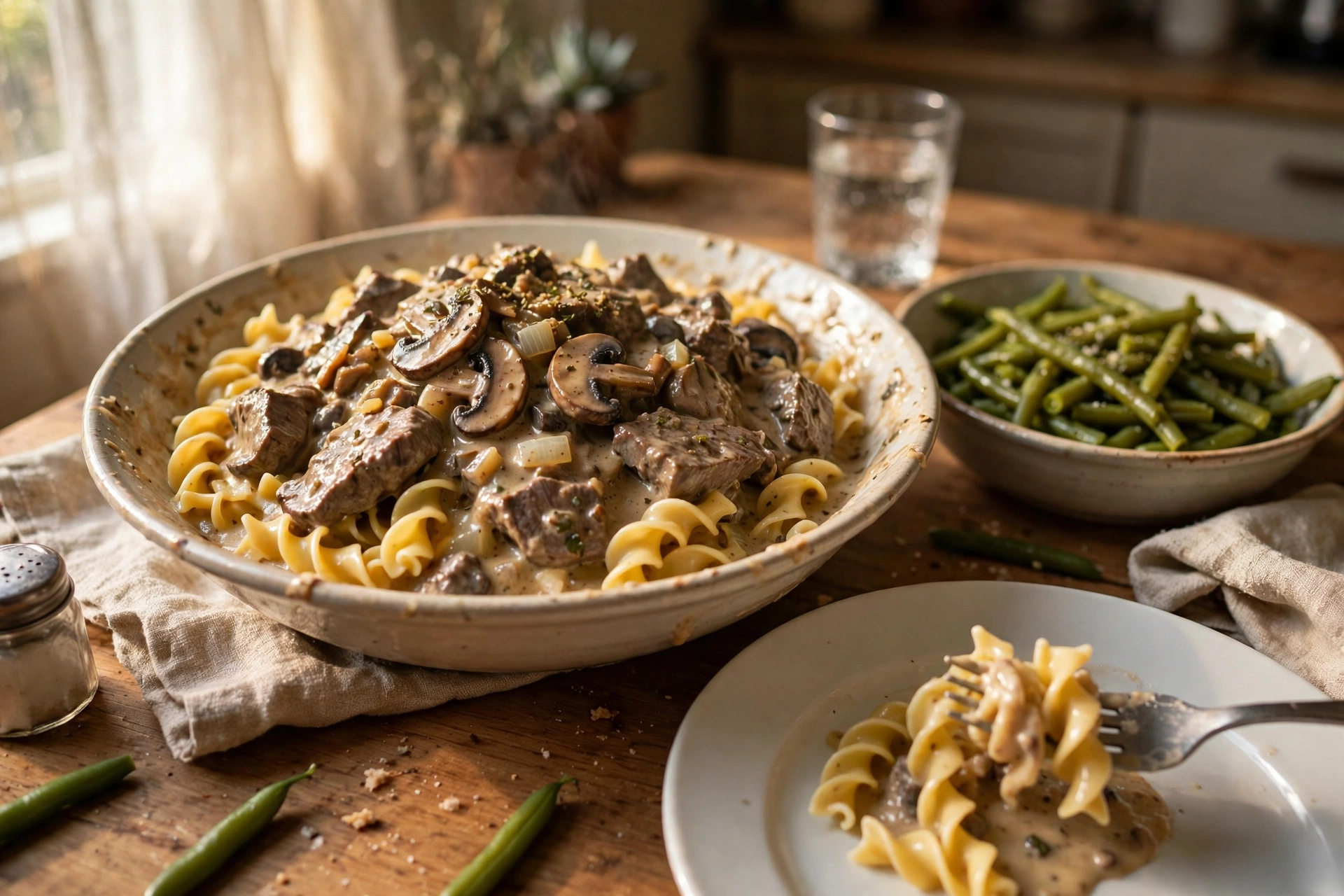
Egg noodles are the classic partner, and this recipe is built around them. Beyond the noodles, a simple green vegetable cuts through the richness. Steamed green beans with a little butter, roasted broccoli, or a crisp cucumber salad all work. A slice of crusty bread helps with the last of the sauce, which is the best part of the plate.
For a fuller dinner table, start with our pumpkin cheese ball as a make-ahead appetizer while the stroganoff cooks, and round out the meal with a fresh salad. For another comfort-food main dish on a different night, our KFC-style crispy fried chicken brings the same crowd-pleasing energy to the table. And for a cozy second course on a cold night, browse the recipe collection for soups and sides that pair well with a rich main dish.
Recipe Notes
- Slice the beef while it is cold and cut against the grain for the most tender strips.
- Sear in batches with space between the strips, about 1 minute per side, and pull the beef while it is still pink inside.
- Set the sour cream out when you start cooking so it reaches room temperature, and temper it with warm sauce before it meets the pan.
- Never let the sauce boil after the sour cream goes in. Low heat, 1 to 2 minutes, just until the beef is warm.
- Cook the noodles while the sauce simmers so everything finishes at the same time.
- Taste the sauce before adding extra salt. The broth and Worcestershire already add plenty.
- Leftovers keep 3 days in the fridge. Store the noodles separately from the sauce.
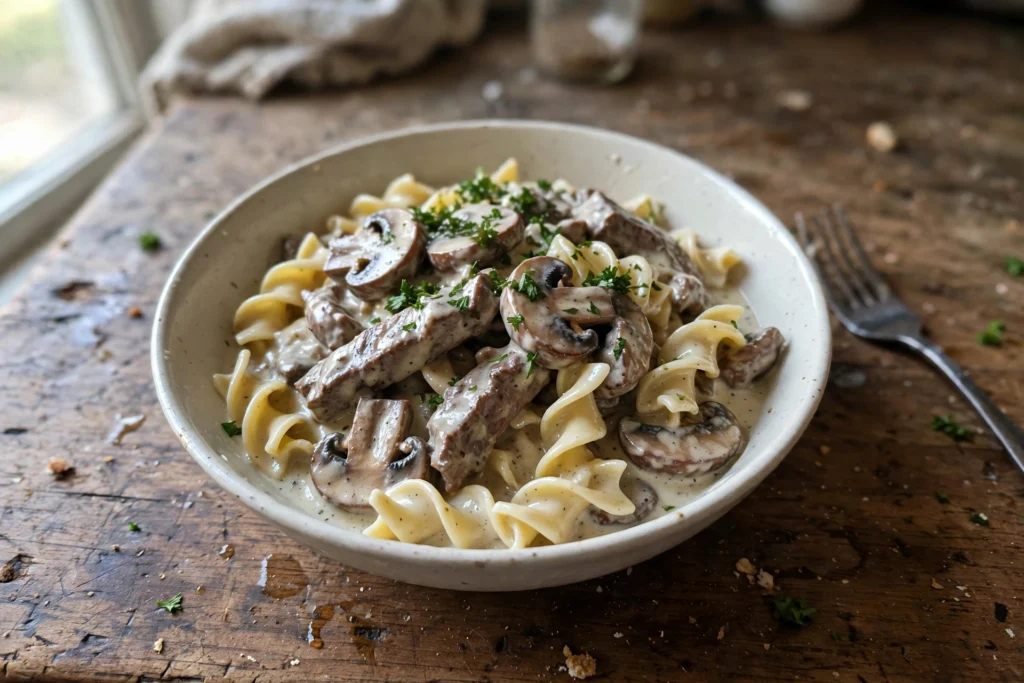

Beef Stroganoff
Description
Tender sirloin strips seared fast, then folded into a creamy mushroom sauce that stays silky thanks to a simple tempered sour cream method. Served over buttered egg noodles, ready in 35 minutes.
Ingredients
Instructions
-
Get the noodles going and slice the beef
Put a large pot of salted water on to boil. Slice the sirloin thinly against the grain, pat dry, and season with salt and pepper. Set the sour cream on the counter to reach room temperature.
-
Sear the beef in batches
Heat the olive oil and 1 tbsp butter in a large skillet over medium-high heat. Sear half the beef strips in a single layer, about 1 minute per side, until browned but still pink inside. Move to a plate and repeat with the rest.
-
Cook the onion and mushrooms
Lower the heat to medium, melt the remaining butter, and cook the onion for 3 minutes until soft. Add the mushrooms and cook 5 minutes until golden. Stir in the garlic and cook 30 seconds.
-
Build the gravy base
Sprinkle the flour over the vegetables and stir 1 minute. Add the broth a little at a time, scraping up the browned bits, then stir in the Worcestershire, Dijon, and smoked paprika. Bring to a gentle simmer.
-
Simmer the sauce until it thickens
Simmer 3 to 4 minutes until the sauce coats the back of a spoon. Cook the egg noodles in the boiling water per the package directions, drain, and toss with butter.
-
Temper the sour cream and stir it in off the heat
Take the skillet off the heat. Stir 3 tbsp of warm sauce into the room-temperature sour cream, then pour the mixture into the skillet and stir until creamy and even.
-
Return the beef and finish the sauce
Add the seared beef and plate juices back to the skillet. Warm over low heat 1 to 2 minutes, just until heated through. Do not let the sauce boil. Taste and adjust salt and pepper.
-
Serve over the egg noodles
Spoon the buttered noodles into bowls, ladle the stroganoff over the top, sprinkle with parsley, and serve right away.
Nutrition Facts
Servings 6
- Amount Per Serving
- Calories 540kcal
- % Daily Value *
- Total Fat 22g34%
- Saturated Fat 9g45%
- Sodium 520mg22%
- Total Carbohydrate 44g15%
- Dietary Fiber 2g8%
- Sugars 3g
- Protein 36g72%
* Percent Daily Values are based on a 2,000 calorie diet. Your daily value may be higher or lower depending on your calorie needs.
Note
Slice the beef cold and against the grain for tender strips. Temper the sour cream with warm sauce and stir it in off the heat so the sauce stays silky. Never boil the sauce after the sour cream goes in. Best season: fall and winter. Store leftovers 3 days in the fridge, noodles kept separate from the sauce. Food safety: cook the beef to at least 145 F (63 C) with a 3-minute rest for whole cuts; refrigerate leftovers within 2 hours; reheat gently to 165 F (74 C) before serving. Nutrition values are estimates calculated from the listed ingredients and will vary with exact brands and cuts used.