



Loaded Baked Potato Soup — Creamy, Cheesy & Fully Loaded
Loaded baked potato soup is the soup version of a fully dressed baked potato. It takes 50 minutes from start to finish, serves 6 people, and comes out creamy with real potato chunks still in the bowl. Crisp bacon, melted sharp cheddar, sour cream and green onions go on top, so each spoonful tastes like the potato itself, not just a smooth cream soup with a garnish.
That texture is the whole point of this recipe. Some potato soups come out like baby food. Others stay thin and watery. This one lands in the middle on purpose. Half the potatoes get mashed right in the pot, which thickens the soup with potato starch. The other half stays in soft chunks. You get body and bite in the same bowl, and you control how far to take it.
The base starts with bacon fat, onion, garlic, flour and chicken broth. Russet potatoes simmer in that broth until tender, then cream, sour cream and cheddar go in off high heat so the cheese melts smooth instead of clumping. Salt gets adjusted at the end, after the bacon and cheese have had their say. Nothing here needs a special tool beyond a pot and a masher, and the whole pot costs about 11 to 12 dollars to make, which works out near 2 dollars a serving.
Table of Contents
Why You’ll Love This Loaded Baked Potato Soup
- It tastes like a baked potato, not a generic cream soup, because the toppings go on generously and the potato chunks stay visible.
- It is ready in 50 minutes on the stove, with no slow cooker wait and no canned soup base.
- The texture is adjustable, so you can keep it chunky, mash it halfway, or blend it smooth for picky eaters.
- It reheats well for lunch the next day, and the fix notes below cover the one reheat problem that trips people up.
- One pot holds dinner for 6, and the same pot stretches to a crowd with bread and salad on the side.
Ingredients You’ll Need
Potato soup has a short ingredient list, and each item has a job. Get these right and the soup mostly takes care of itself.
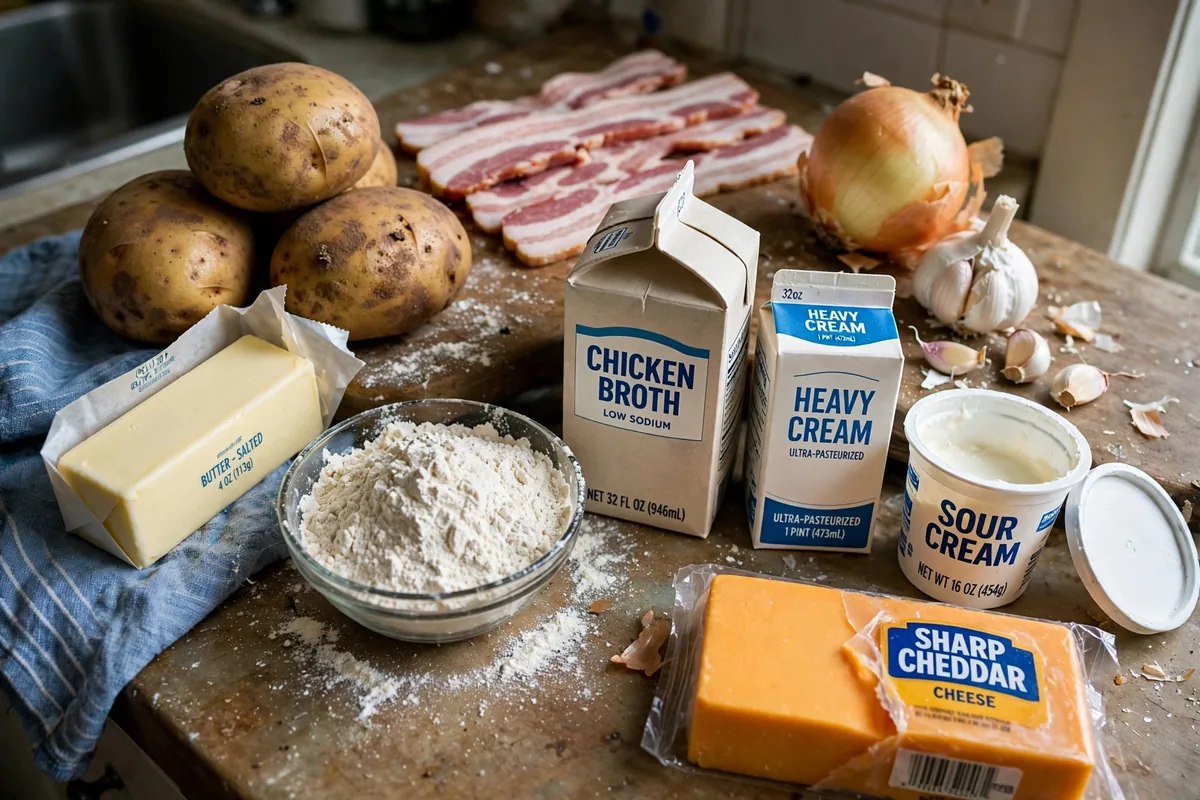
Russet Potatoes: Two and a half pounds of russet potatoes, peeled and cut into half inch cubes, about 5 cups. Russets break down a little as they simmer, and that breakdown is what thickens the soup without extra starch. Peel them for this recipe. Skins add texture that fights the creamy base, and they turn an odd color after mashing. Yukon Gold potatoes work as a swap, and the substitutions section explains what changes. Red potatoes stay firmer and suit the slow cooker version in the search results, but they give less body here.
Bacon: Six slices of bacon, cut into small pieces. Bacon does three jobs. It gives the topping its crunch, its rendered fat flavors the onion and garlic, and the salt in the bacon seasons the whole pot. Cook it first, lift it out with a slotted spoon, and keep 2 tablespoons of fat in the pot. Set the crisp pieces aside for topping. If the bacon goes back in early, it softens and the crunch is lost.
Yellow Onion and Garlic: One medium yellow onion, diced, and 3 garlic cloves, minced. Onion cooked in bacon fat turns sweet and soft in about 5 minutes, and it forms the savory base under the cream. Garlic goes in last for one minute only. Garlic left to brown in hot fat turns bitter fast, and that bitter note shows up in a cream soup more than in a tomato sauce.
Butter and Flour: Two tablespoons of unsalted butter and a quarter cup of all purpose flour. Butter plus bacon fat makes the roux, and the roux is what gives the soup its first layer of thickness before the potatoes add theirs. Cook the flour for a full minute, stirring, until it smells nutty and loses its raw edge. A pale roux keeps the soup light in color. A dark roux belongs in gumbo, not here.
Chicken Broth: Four cups of low sodium chicken broth. Low sodium matters because bacon and cheddar both bring salt, and you cannot take salt out once it is in. The broth should just cover the potatoes. Too much liquid makes a thin soup that no amount of mashing will rescue, and too little leaves dry potato clumps that scorch. Vegetable broth works for the base if you skip the bacon, with notes in the dietary section.
Heavy Cream and Sour Cream: One cup of heavy cream and half a cup of sour cream. Heavy cream gives richness without curdling risk. Sour cream adds the tang a baked potato topping always has, and it goes in off high heat so it melts in smooth. Half and half can replace the cream in a pinch, but the soup will be thinner and less rich. Milk alone is not a good swap here, since it thins the body and can split if the pot boils after it goes in.
Sharp Cheddar Cheese: One and a half cups of shredded sharp cheddar for the soup, plus extra for topping. Sharp cheddar brings real cheese flavor that mild cheddar cannot match at this quantity. Shred it from a block. Bagged shreds carry anti caking starch, and that starch can turn grainy in a cream soup. Stir the cheese in off the heat, a handful at a time, and let each handful melt before the next goes in.
Seasonings and Toppings: One teaspoon of salt to start, with more to taste at the end, half a teaspoon of black pepper, and half a teaspoon of smoked paprika if you like a faint smoky note. Toppings are not an afterthought in a loaded soup. Plan on the reserved bacon, extra cheddar, a spoon of sour cream per bowl, and a quarter cup of sliced green onions. Chives work in place of green onions and taste a little milder.
Recommended Equipment
- Large heavy pot or Dutch oven, at least 5 quarts
- Slotted spoon
- Wooden spoon or heat safe spatula
- Potato masher
- Box grater for the cheddar
- Ladle and 6 soup bowls
An immersion blender is optional. It is the fastest route to a smooth soup, but a masher gives better control for the chunky version this recipe aims for. A regular blender works too, in batches, with the lid vented and a towel over the top. Hot soup in a sealed blender builds pressure, so never fill it past halfway.
How to Make Loaded Baked Potato Soup
1. Crisp the Bacon and Save the Fat
Put the bacon pieces in a cold pot over medium heat. Cold start lets the fat render slowly, so the pieces crisp evenly instead of burning at the edges. Stir now and then for 8 to 10 minutes, until the pieces are deep golden and crisp. Lift them out with a slotted spoon onto a paper towel lined plate. Leave 2 tablespoons of fat in the pot and pour off the rest. Keep the bacon aside for topping. The pot should smell smoky and savory at this point, not burnt.
2. Soften the Onion and Garlic
Add the butter to the bacon fat and let it melt over medium heat. Add the diced onion and a pinch of salt, and cook for 5 minutes, stirring, until the onion turns soft and translucent. Add the garlic and smoked paprika, if using, and cook for 1 minute more. The onion should look soft and glossy, with no brown edges. If the onion starts to color, turn the heat down. Browned onion pushes the soup toward French onion flavor, which is good soup but the wrong soup here.
3. Build the Roux
Sprinkle the flour over the onion and stir until every bit of flour is coated in fat. Cook for 1 minute, stirring constantly. The mixture will look pasty and smell faintly nutty. This minute matters. Raw flour tastes pasty in the finished soup, and no later step hides it. Keep the heat at medium and keep stirring so the flour does not catch on the bottom of the pot.
4. Simmer the Potatoes Until Tender
Pour in the chicken broth a little at a time, whisking or stirring hard after each addition so no flour lumps survive. Add the potato cubes and bring the pot to a gentle boil. Turn the heat down to a steady simmer, cover partly, and cook for 15 to 18 minutes. Test a cube with a fork. It should break apart with light pressure and no hard center. Do not boil hard. A rolling boil breaks the potatoes into mush before you get to choose the texture, and it can scorch the flour base.
5. Mash Half for Body
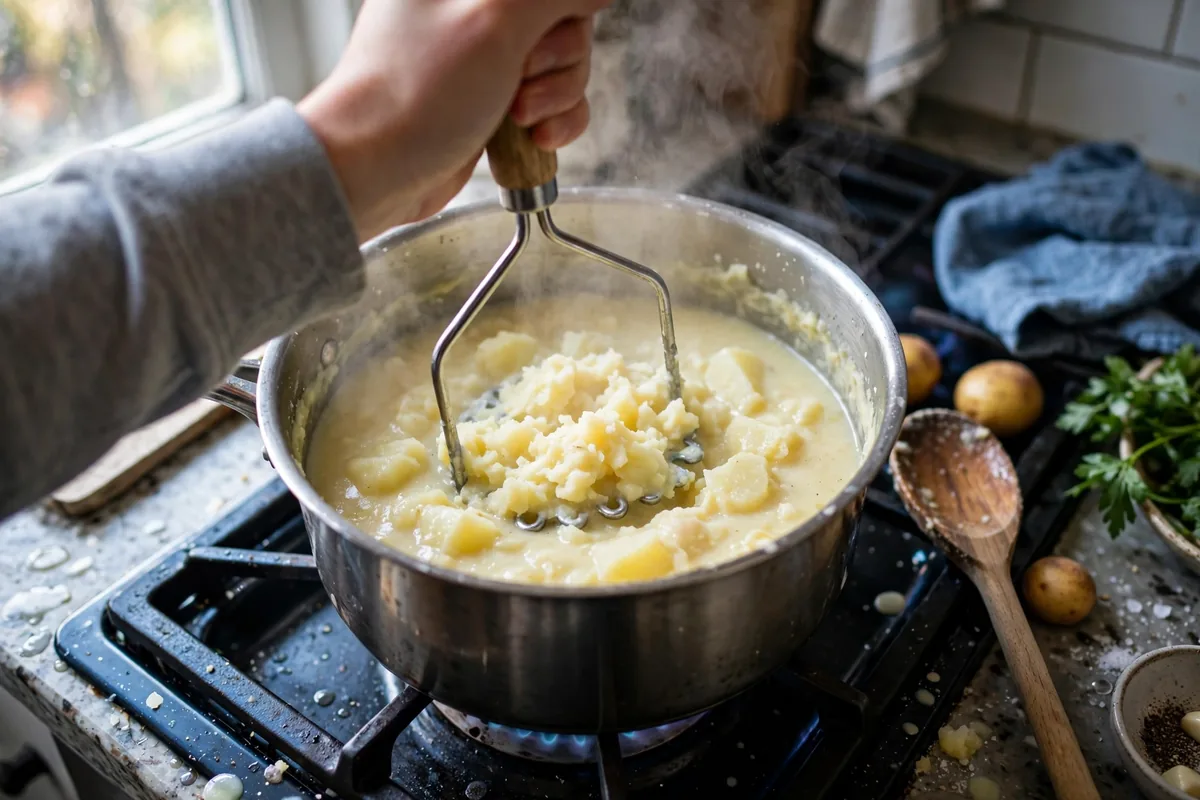
Take the pot off high heat. Push the masher straight down into the soup about 8 to 10 times, working across the pot. Aim to mash roughly half the potatoes and leave the rest in chunks. This is the texture step the top ranking pages skip over or rush. Mashing in the pot, not in a separate bowl, keeps the starch in the soup where it thickens. For a smoother soup, mash more. For a chunkier soup, mash less. If you want it fully smooth, use an immersion blender in short bursts and stop before it turns gluey. Over blending potato soup releases too much starch and gives a sticky texture that no topping fixes.
6. Stir in Cream, Sour Cream and Cheese
Turn the heat to low. Stir in the heavy cream and sour cream until smooth, then add the cheddar a handful at a time, stirring until each handful melts before adding the next. Keep the soup below a simmer from here on. Boiling after cheese goes in can make the cheese clump and the cream split. The soup should look creamy, pale gold, and thick enough to coat a spoon. If it looks too thick, stir in broth a quarter cup at a time until it moves the way you want.
7. Season and Load the Bowls
Taste the soup before adding more salt. Bacon and cheddar vary in saltiness, and the right amount depends on the brands in your pot. Add salt in small pinches and black pepper to taste. Ladle into warm bowls. Top each bowl with reserved bacon, extra cheddar, a spoon of sour cream and a scatter of green onions. Serve right away, while the cheese on top is still melting into the hot soup.
Pro Tips
Salt at the end, not at the start. The broth, bacon and cheese all bring salt, and the total only becomes clear once everything is in the pot. A soup salted early often ends up over salted after the cheese melts.
Shred cheese from a block. Bagged cheese melts less smoothly in cream soups, and the difference shows in the texture. A box grater and two minutes beats a grainy finish.
Keep the heat low after dairy goes in. Cream and cheese both punish a hard boil. Gentle heat melts cheese smooth. High heat makes it clump and separate, and the soup cannot be fixed back to smooth once that happens.
Warm the bowls. A hot soup in a cold bowl cools fast, and cold potato soup thickens into a paste on the way to the table. A quick rinse with hot water and a towel dry is enough.
Save some bacon for the top. It is tempting to stir all the bacon into the pot, but crisp topping bacon is what makes the soup read as loaded. Hold back at least half for the bowls.
Variations
Oven Baked Potato Version: For a weekend version, bake 2 and a half pounds of russet potatoes at 400F until soft, about 50 to 60 minutes. Scoop out the flesh and add it at step 5 in place of simmered cubes, with the broth already hot. Mash lightly and carry on. The flavor is deeper and closer to a real baked potato, and the cost is an extra hour and a second pan. This is the Publix style method from the search results, kept here as a variation rather than the main path.
Slow Cooker Version: Cook the bacon and onion first on the stove, then move everything except cream, sour cream and cheese to a slow cooker. Cook on high for 3 to 4 hours or low for 6 to 7 hours, until the potatoes are tender. Mash half, then stir in the dairy and cheese on high for 20 minutes. This suits a day when nobody is home to watch a pot, and it matches the slow cooker result that ranks well. It does not suit a weeknight dinner plan made at 5 in the afternoon.
Spicy Loaded Soup: Add half a teaspoon of cayenne with the paprika, and top with sliced pickled jalapenos plus the usual bacon and cheese. The heat sits in the back of the throat rather than the front, which suits a cream soup. Keep the cheese generous. Fat and dairy calm heat, and a spicy version with skimpy cheese tastes sharp instead of warm.
Broccoli Cheddar Potato Soup: Stir in 2 cups of small broccoli florets with the potatoes for the last 8 minutes of simmering, and raise the cheddar to 2 cups. The broccoli softens but keeps some bite, and the soup turns into a hybrid of two comfort classics. Mash lightly so the broccoli stays visible. This version also stretches the pot to 7 servings without extra cream.
Lighter Loaded Soup: Swap half the cream for whole milk, use low fat cheddar, and top with turkey bacon. The soup will be thinner and less rich, and that trade is honest. Mash a little more potato to recover body, and keep the sour cream topping, since a spoon of full fat sour cream on top gives back more flavor than the swap takes away.
Ingredient Substitutions
No heavy cream on hand. Half and half works at the same amount, with a thinner result. Evaporated milk is a better swap than regular milk, since it holds up to heat with less splitting risk. Use 1 cup and skip the sour cream reduction, since evaporated milk brings less richness on its own.
No sharp cheddar. Monterey Jack melts smoother but tastes milder, so use 2 cups instead of 1 and a half. Smoked Gouda gives a strong flavor at 1 cup, but it can dominate the potato, so keep the topping cheddar plain. Do not use processed cheese slices. They melt smooth but taste flat and salty in this soup.
No bacon. Cook the onion in 3 tablespoons of butter instead of bacon fat, add half a teaspoon of smoked paprika and a pinch of salt, and top with toasted breadcrumbs fried in butter for crunch. The soup stays savory and the topping still gives texture. A vegetarian version also swaps chicken broth for vegetable broth.
No russet potatoes. Yukon Gold potatoes hold their shape better and give a butter colored soup with a silkier feel. Use the same weight, peel them, and mash a little more, since they release less starch than russets. Red potatoes stay firm and waxy, so they suit a chunky soup but need an extra tablespoon of flour in the roux to reach the same thickness.
No sour cream. Plain Greek yogurt works at the same amount, stirred in off the heat. It tastes tangier than sour cream, so start with a third of a cup and add more to taste. Creme fraiche is the richest swap and never splits, but it costs more and tastes milder.
Dietary Notes
This soup as written contains dairy, pork and wheat flour, and it is not gluten free, dairy free or vegetarian. A gluten free version swaps the flour for 3 tablespoons of cornstarch stirred into a quarter cup of cold broth, added at step 4, and checks that the broth and bacon labels are gluten free. A vegetarian version drops the bacon, uses vegetable broth and butter for the fat, and keeps the dairy. A dairy free version is harder to recommend honestly. Oat milk plus dairy free cheddar gives a soup that looks right but tastes thinner and less rich, and the cheese melt is uneven. It works as a lighter soup, but it does not taste like the loaded version, so the recipe does not present it as an equal swap.
For lower sodium needs, use no salt added broth, skip extra salt until tasting, and use half the bacon as topping with the rest replaced by green onions and extra cheddar. Salt from bacon and cheese still counts, so taste carefully. For smaller households, the recipe halves cleanly in a 3 quart pot with all amounts cut in half and the same times.
Make-Ahead, Storage and Freezing
Make ahead: Cook the soup through step 5, cool it, and refrigerate for up to 3 days without the dairy and cheese. Add cream, sour cream and cheese fresh when reheating. This two stage plan avoids the main make ahead problem, which is dairy splitting on reheat. If the soup is already finished, it still keeps 3 days in the fridge, but reheat it gently and expect to stir it back together.
Storage: Cool the soup within 2 hours of cooking and store in sealed containers in the fridge for up to 3 days. Keep toppings separate. Bacon stored in the soup goes soft, and sour cream stirred in early loses its fresh tang. Reheat on low, stirring often, and do not let it boil. If the soup thickened in the fridge, loosen it with a splash of broth or milk.
Freezing: Freeze the soup base before dairy and cheese go in, for up to 2 months. Cool it fully, pack in freezer containers with headroom, and label with the date. Thaw overnight in the fridge, reheat gently, then stir in cream, sour cream and cheese fresh. Finished soup with dairy and cheese does not freeze well. The cream can separate and the cheese turns grainy on thawing, and stirring will not fully bring it back.
Reheating: Warm on low heat, stirring, until steaming but not boiling. A microwave works in short bursts with a stir between each, in a loose covered bowl. Add fresh toppings after reheating, not before, so the bacon stays crisp and the sour cream stays cool against the hot soup.
What to Serve With Loaded Baked Potato Soup
Soup this rich needs something crisp or fresh beside it. A simple green salad with a sharp vinaigrette cuts the cream, and crusty bread gives a way to scoop the last of the bowl. For a fuller table, pair it with our KFC-style crispy fried chicken on a weekend, when a fried main plus a creamy soup feels like a proper family dinner. For a party spread, set the soup beside our Mummy Hot Dogs and our Pumpkin Cheese Ball and let guests build their own plates. The soup pot stays on low, the finger foods stay on the table, and nobody needs a formal seating plan. Cornbread also works, especially a not too sweet version, since sweet cornbread fights the salty bacon topping.

Recipe Notes
- Mash about half the potatoes for the target texture. Mash more for smooth, less for chunky.
- Keep heat low after cream and cheese go in. Boiling splits cream and clumps cheese.
- Taste for salt only after cheese and bacon are in. Brands vary, and early salting overshoots.
- Keep toppings separate until serving so bacon stays crisp and sour cream stays cool.
- Cool leftovers within 2 hours and refrigerate promptly. Reheat gently and never boil.
- Food safety note: Do not leave the soup at room temperature for more than 2 hours, and reheat leftovers until steaming throughout before serving.
For more cozy soups, try our golumpki soup next — it is another hearty, cabbage-filled bowl.
Loaded Baked Potato Soup — Creamy, Cheesy & Fully Loaded
Description
A creamy stovetop potato soup with soft potato chunks, melted sharp cheddar, sour cream and crisp bacon on top. Ready in 50 minutes and built to taste like a fully loaded baked potato in a bowl.
Ingredients
Instructions
-
Crisp the Bacon and Save the Fat
Put the bacon pieces in a cold pot over medium heat. Cold start lets the fat render slowly, so the pieces crisp evenly instead of burning at the edges. Stir now and then for 8 to 10 minutes, until the pieces are deep golden and crisp. Lift them out with a slotted spoon onto a paper towel lined plate. Leave 2 tablespoons of fat in the pot and pour off the rest. Keep the bacon aside for topping. The pot should smell smoky and savory at this point, not burnt.
-
Soften the Onion and Garlic
Add the butter to the bacon fat and let it melt over medium heat. Add the diced onion and a pinch of salt, and cook for 5 minutes, stirring, until the onion turns soft and translucent. Add the garlic and smoked paprika, if using, and cook for 1 minute more. The onion should look soft and glossy, with no brown edges. If the onion starts to color, turn the heat down. Browned onion pushes the soup toward French onion flavor, which is good soup but the wrong soup here. -
Build the Roux
Sprinkle the flour over the onion and stir until every bit of flour is coated in fat. Cook for 1 minute, stirring constantly. The mixture will look pasty and smell faintly nutty. This minute matters. Raw flour tastes pasty in the finished soup, and no later step hides it. Keep the heat at medium and keep stirring so the flour does not catch on the bottom of the pot.
-
Simmer the Potatoes Until Tender
Pour in the chicken broth a little at a time, whisking or stirring hard after each addition so no flour lumps survive. Add the potato cubes and bring the pot to a gentle boil. Turn the heat down to a steady simmer, cover partly, and cook for 15 to 18 minutes. Test a cube with a fork. It should break apart with light pressure and no hard center. Do not boil hard. A rolling boil breaks the potatoes into mush before you get to choose the texture, and it can scorch the flour base.
-
Mash Half for Body
Take the pot off high heat. Push the masher straight down into the soup about 8 to 10 times, working across the pot. Aim to mash roughly half the potatoes and leave the rest in chunks. This is the texture step the top ranking pages skip over or rush. Mashing in the pot, not in a separate bowl, keeps the starch in the soup where it thickens. For a smoother soup, mash more. For a chunkier soup, mash less. If you want it fully smooth, use an immersion blender in short bursts and stop before it turns gluey. Over blending potato soup releases too much starch and gives a sticky texture that no topping fixes.
-
Stir in Cream, Sour Cream and Cheese
Turn the heat to low. Stir in the heavy cream and sour cream until smooth, then add the cheddar a handful at a time, stirring until each handful melts before adding the next. Keep the soup below a simmer from here on. Boiling after cheese goes in can make the cheese clump and the cream split. The soup should look creamy, pale gold, and thick enough to coat a spoon. If it looks too thick, stir in broth a quarter cup at a time until it moves the way you want.
-
Season and Load the Bowls
Taste the soup before adding more salt. Bacon and cheddar vary in saltiness, and the right amount depends on the brands in your pot. Add salt in small pinches and black pepper to taste. Ladle into warm bowls. Top each bowl with reserved bacon, extra cheddar, a spoon of sour cream and a scatter of green onions. Serve right away, while the cheese on top is still melting into the hot soup.
Nutrition Facts
Servings 6
- Amount Per Serving
- Calories 460kcal
- % Daily Value *
- Total Fat 26g40%
- Saturated Fat 15g75%
- Sodium 900mg38%
- Total Carbohydrate 38g13%
- Dietary Fiber 4g16%
- Sugars 4g
- Protein 14g29%
* Percent Daily Values are based on a 2,000 calorie diet. Your daily value may be higher or lower depending on your calorie needs.
Note
Mash about half the potatoes for the target texture. Mash more for smooth, less for chunky. Keep heat low after cream and cheese go in. Boiling splits cream and clumps cheese. Taste for salt only after cheese and bacon are in. Keep toppings separate until serving so bacon stays crisp. Cool leftovers within 2 hours. Reheat gently until steaming throughout. Do not leave soup at room temperature for more than 2 hours. Nutrition values are estimates calculated from the ingredients in this recipe. Actual values vary by brand, cut of bacon, cheese type and serving size.