

There is a very specific kind of disappointment that only happens at Thanksgiving dinner: you cut into the turkey, everything smells amazing, and then you hit the mashed potatoes — and they’re gluey. Or lumpy. Or cold. Mashed potatoes seem like the simplest thing on the holiday table, but they are also the easiest to get subtly wrong. This recipe for creamy mashed potatoes is built to get every one of those details right: fluffy, cloud-soft potatoes with a rich, buttery flavor, a silky texture with no gumminess, and a method that lets you make them ahead so you’re not mashing while the gravy goes cold.
The whole recipe rests on a handful of decisions that most recipes skip over. Potatoes go into cold, well-salted water — never a rolling boil — so they cook evenly from edge to center instead of turning to mush on the outside while the middle stays raw. They get mashed by hand, never with an electric mixer (the #1 cause of gluey potatoes). The milk and butter go in warm, not cold, so the potatoes absorb them instead of cooling into a stiff mass. And there’s a sour cream option that adds a subtle tang and extra richness without making the dish heavy.
This is the classic, no-cheese version — pure potato, butter, and milk flavor. If you’re a cheese lover, check out our boursin mashed potatoes for the fancier cousin of this recipe. But for the version that belongs next to the herb butter roast turkey and the turkey gravy, this is the one.
One more thing that matters: this recipe is designed to be genuinely make-ahead friendly. Mashed potatoes are notorious for not reheating well, but the method below — with the resting trick and the oven-reheat instructions in the Make-Ahead section — gives you potatoes on Thanksgiving day that taste like they were just mashed. When the whole holiday meal is happening at once, that is not a small thing.
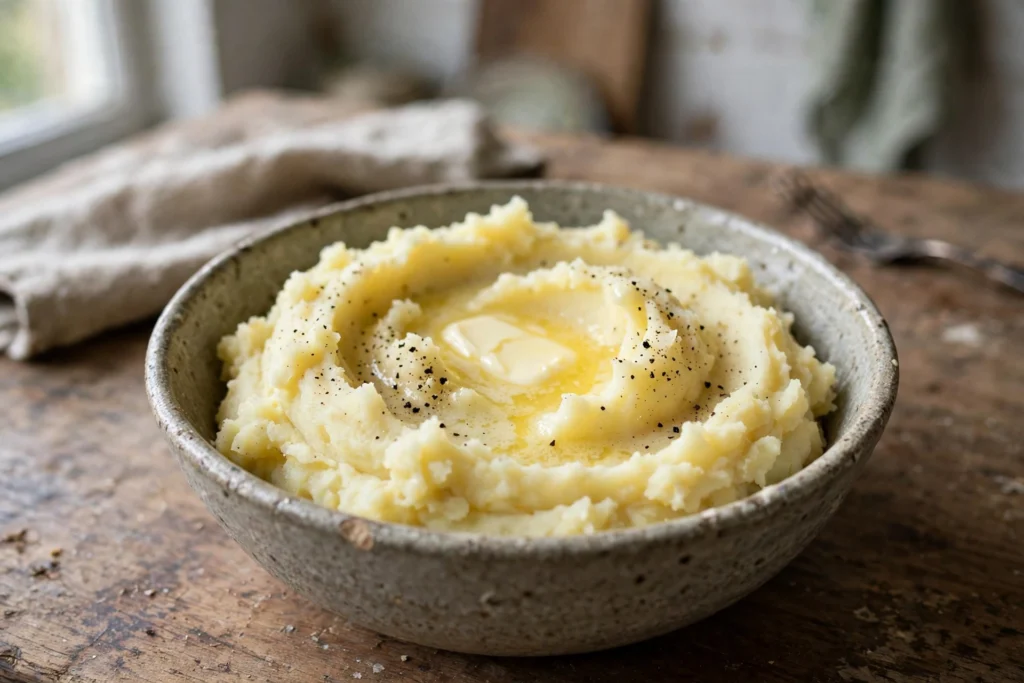
Table of Contents
Why You’ll Love These Creamy Mashed Potatoes
- Genuinely fluffy, never gluey: Hand-mashing plus the cold-water start and warm-dairy method eliminates the gummy texture that ruins most homemade batches.
- Rich but balanced: Real butter, warm whole milk, and an optional sour cream swirl — creamy without being greasy or heavy.
- Thanksgiving-ready: This is the side that carries the holiday plate. It pairs with everything and feeds a crowd.
- Make-ahead friendly: Full instructions for making these up to 2 days ahead and reheating them to just-mashed perfection.
- Simple pantry ingredients: Potatoes, butter, milk, salt, pepper. No specialty shopping, no weird techniques — just the right order of operations.
Ingredients You’ll Need
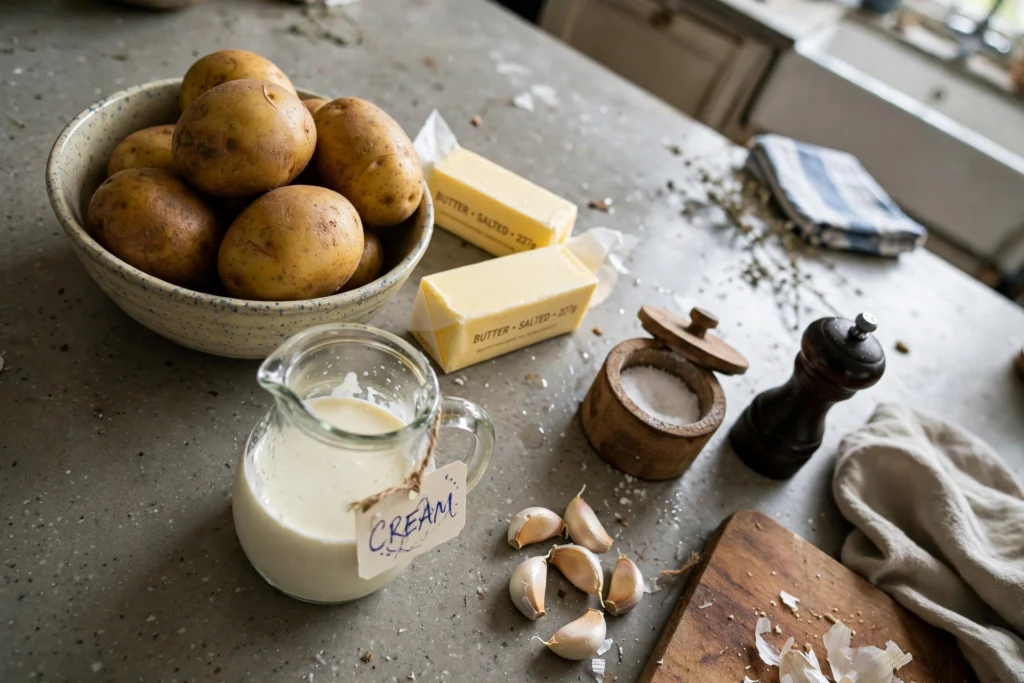
Classic creamy mashed potatoes need very little — which is exactly why each ingredient matters. Here’s what each one does.
Yukon Gold Potatoes
Three pounds of Yukon Gold potatoes are the foundation. Yukon Golds are the ideal mashing potato: naturally buttery in flavor, with a medium starch content that mashes up fluffy rather than gummy. Russets also work (they’re the fluffiest option), but they absorb more liquid and can go watery if overcooked, so Yukon Golds are the safer, more forgiving choice. Red potatoes are too waxy for this — they mash up gluey. Buy potatoes that are firm with no green spots or sprouts.
Kosher Salt (for the water AND seasoning)
Salt goes in twice: a full tablespoon in the boiling water, and about 2 teaspoons stirred in at the end. The water salt is non-negotiable — it’s the only chance the potatoes themselves get to be seasoned all the way through. Unsalted potato interiors stay bland no matter how much salt you add later. Use kosher salt (Diamond Crystal or Morton); if you only have table salt, halve the amounts, since it’s denser and saltier by volume.
Unsalted Butter
Six tablespoons of unsalted butter, cut into pieces. Unsalted lets you control the salt precisely (see above — you’re already salting twice). The butter goes in first, straight onto the hot, just-drained potatoes, so it melts into them before any milk arrives. Cold butter on cold potatoes is how you get lumps of unmelted butter floating in the bowl.
Whole Milk (warmed)
One cup of whole milk, warmed until steaming but not boiling. Warm milk is a small detail with a big payoff: it absorbs into the hot potatoes instantly, keeping the texture silky. Cold milk shocks the potatoes and stiffens them, forcing you to over-mash to get everything incorporated — and over-mashing is the road to glue. Whole milk gives the richest result; 2% works but the potatoes will taste slightly leaner.
Sour Cream (optional but recommended)
Half a cup of full-fat sour cream, stirred in at the end. This is the ingredient that takes these from “good” to “the ones everyone asks about.” It adds a gentle tang and a silkiness that butter and milk alone can’t quite reach, and it helps the potatoes hold their creamy texture when reheated (which is why the make-ahead version depends on it). Use full-fat — light sour cream is thinner and can make the potatoes watery.
Black Pepper and Garlic
A teaspoon of freshly ground black pepper goes a long way in a mild dish like this. Two smashed garlic cloves, boiled along with the potatoes, perfume them gently without any raw garlic bite — completely optional, but worth it if you like a subtle savory depth. Fish them out before mashing, or mash them right in for a stronger garlic note.
Chives (for garnish, optional)
Fresh chopped chives on top add color and a mild onion freshness. Entirely optional, but they make the serving bowl look finished — and a little green against all that pale gold is very Thanksgiving.
Recommended Equipment
- Large pot or Dutch oven (at least 5 quarts — the potatoes need room to cook evenly)
- Colander
- Hand potato masher (a ricer works beautifully too and gives the silkiest texture; a food mill is the gold standard)
- Small saucepan (for warming the milk and butter)
- Large serving bowl, warmed (a cold bowl steals heat from the potatoes)
- Sharp chef’s knife and cutting board
- Kitchen towel or pot holders
How to Make Creamy Mashed Potatoes
1. Choose the right potatoes and cut them evenly
Peel 3 pounds of Yukon Gold potatoes and cut them into even 2-inch chunks. Even sizing is the whole point here — chunks of wildly different sizes mean some pieces turn to mush while the centers of the big ones stay crunchy, and no amount of mashing fixes that. A serrated potato peeler makes fast work of the peeling. If any potatoes are much larger than the rest, quarter those so everything is roughly the same size.
2. Start in cold, well-salted water
Put the potato chunks in your large pot and cover with cold water by about 2 inches. Add 1 tablespoon of kosher salt and stir. Starting cold is one of the two most important steps in this recipe: the potatoes heat gradually and cook evenly from the outside in. Dropping them into already-boiling water cooks the outside to mush before the centers soften — that’s where lumps come from.
3. Simmer — don’t boil — until fork-tender
Bring the water to a boil over high heat, then immediately reduce to a steady simmer. A violent boil bangs the chunks against each other and waterlogs them. If using the optional garlic, add the 2 smashed cloves now. Simmer 20–25 minutes, until a piece slides off a fork or knife with no resistance when pierced. Taste one to be sure — it should be completely tender, not chalky in the center. Err on the side of fully cooked; slightly overdone potatoes mash smoother than slightly underdone ones.
4. Drain and dry the potatoes in the pot
Drain the potatoes thoroughly in the colander, then return them to the hot pot. Set the pot back over low heat for 1–2 minutes, shaking the pot occasionally, until the surface of the potatoes looks dry and a little floury and you see faint steam. This drying step drives off the excess surface water that would otherwise make the potatoes gluey — it’s the second of the two most important steps, and it’s the one most recipes skip. Remove from the heat.
5. Warm the milk and butter
While the potatoes drain, warm 1 cup of whole milk and 6 tablespoons of butter (cut into pieces) in the small saucepan over low heat until the butter is melted and the milk is steaming — not boiling. Warm dairy absorbs into the hot potatoes instead of cooling them down, which keeps the texture silky and means less mashing. If you’re using the sour cream, leave it on the counter so it comes to room temperature while you work.
6. Mash by hand — never with a mixer
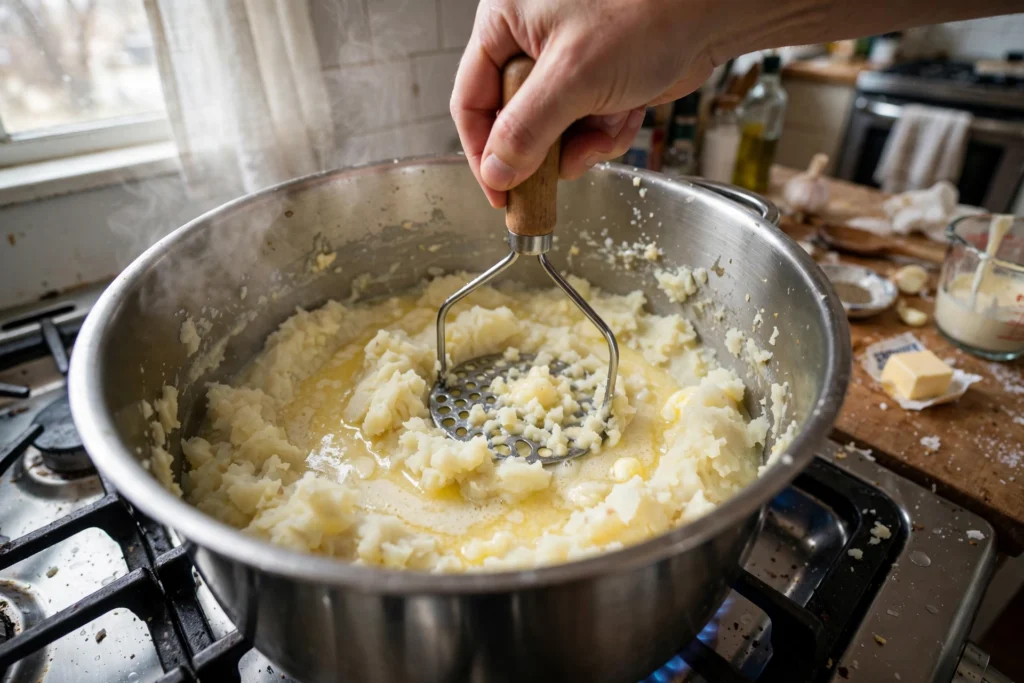
Add the melted butter to the hot, dried potatoes and mash with the hand masher until the butter is absorbed. Then add the warm milk in two or three additions, mashing gently between each, until the potatoes reach your desired consistency. Stop as soon as they’re smooth — every extra mash develops starch and pushes them toward gluey.
This is the step where mashed potatoes die: an electric mixer or food processor overworks the starch and turns potatoes into paste. If you want the absolute silkiest result, push the cooked potatoes through a ricer or food mill instead of mashing — it’s the restaurant method and it’s foolproof.
7. Stir in the sour cream and season
Stir in 1/2 cup of room-temperature sour cream until just combined. Then season with 2 teaspoons of kosher salt and 1 teaspoon of freshly ground black pepper. Taste and adjust — potatoes need more salt than you think, and the right amount is when the flavor tastes full and buttery, not flat. If you boiled the garlic cloves, you can mash them right into the potatoes here for a stronger garlic note, or leave them out.
8. Rest briefly, fluff, and serve
Let the mashed potatoes rest, covered, for 2–3 minutes so the flavors settle. Give them one final gentle fluff with a spoon, transfer to a warmed serving bowl, and top with a pat of butter (it will melt into a glossy pool) and chopped chives if you like. Serve immediately — mashed potatoes wait for no one.
Pro Tips for Perfect Creamy Mashed Potatoes
Start in cold water, every time. Potatoes dropped into boiling water cook unevenly — mushy outside, raw center, lumps forever. Cold water is the fix and it costs you nothing.
Dry the potatoes in the pot. Those 1–2 minutes back on the heat after draining drive off surface moisture that causes gumminess. This is the single most skipped step in home mashed potatoes.
Warm your dairy. Cold milk or sour cream straight from the fridge cools the potatoes, and cooling potatoes stiffen and demand more mashing. Warm milk, room-temp sour cream, melted butter.
Never use an electric mixer. The #1 cause of gluey mashed potatoes is overworked starch from beaters or a food processor. Hand masher or ricer, gentle and brief.
Salt the water generously. A full tablespoon in the pot seasons the potatoes from the inside out. You can’t fix bland interiors by salting at the end.
Taste and re-season after 5 minutes. Salt perception settles as the potatoes rest. What tasted right at the stove may need another pinch at the table.
Warm the serving bowl. Run hot water in the bowl, dry it, and fill it. A cold bowl sucks the heat out of the potatoes in minutes — on Thanksgiving, when everything is competing for oven space, every degree matters.
Variations
Garlic-Herb Mashed Potatoes
Boil 4–5 garlic cloves (instead of 2) with the potatoes and mash them right in. Finish with 2 tablespoons of chopped fresh rosemary or thyme stirred through with the sour cream. The herbs perfume the whole bowl — this version is made for roast chicken night.
Loaded Mashed Potato Casserole
Spread the finished mashed potatoes in a buttered baking dish, top with 1 1/2 cups shredded sharp cheddar, 6 slices of crumbled cooked bacon, and sliced scallions. Bake at 375°F (190°C) for 20 minutes until the cheese is melted and bubbling. Feeds the same 8 as a side, or 6 as a heartier one.
Dairy-Free Mashed Potatoes
Swap the butter for 6 tablespoons of good olive oil (or a dairy-free butter), the whole milk for 1 cup of warm unsweetened oat milk, and skip the sour cream — add an extra 2 tablespoons of olive oil in its place. The texture is slightly less rich but still creamy, and the olive oil gives a lovely savory note.
Roasted Garlic Mashed Potatoes
Roast a whole head of garlic (cut off the top, drizzle with olive oil, wrap in foil, 400°F / 200°C for 40 minutes) and squeeze the soft cloves into the potatoes at the mashing stage. Milder and sweeter than boiled garlic — this is the version for garlic lovers who want depth without bite.
Ingredient Substitutions
No Yukon Golds? Russets are the classic mashing potato and the fluffiest option — use them exactly the same way, but watch the simmer time closely since they overcook faster. Avoid red or new potatoes; they’re too waxy and mash up gluey no matter what you do.
No sour cream? Use 1/2 cup of full-fat Greek yogurt for a similar tang, or simply add an extra 1/4 cup of warm milk and 2 more tablespoons of butter. The potatoes will be slightly less rich but still creamy.
No whole milk? Half-and-half makes them even richer (use 3/4 cup instead of a full cup). 2% milk works in a pinch — add a tablespoon of extra butter to compensate for the missing fat. Avoid skim milk; it waters the potatoes down without adding flavor.
No kosher salt? Use half the amount of fine table salt, since it’s denser. Sea salt flakes work at roughly the same volume as kosher — but always taste before adding the full seasoning amount.
Dietary Notes
These mashed potatoes are naturally gluten-free (potatoes, dairy, salt, pepper — no flour or thickeners anywhere in sight) and vegetarian. For vegan guests, follow the Dairy-Free variation above: olive oil or dairy-free butter plus oat milk. For dairy-free, the same swaps apply. The recipe as written is not low-sodium — potatoes need their salt — but you can reduce the finishing salt to 1 teaspoon and let people salt at the table. Potatoes are naturally low in fat before the butter and dairy go in, so the nutrition below reflects the full classic version.
Make-Ahead, Storage & Reheating
Make ahead (up to 2 days): Make the recipe completely, including the sour cream — this matters, because the sour cream’s fat helps the potatoes reheat creamy instead of grainy. Cool to room temperature (no more than 1 hour on the counter), transfer to an airtight container or a buttered baking dish, press plastic wrap directly onto the surface (this prevents a skin from forming), and refrigerate up to 2 days.
Reheating — the method that actually works: The oven is best. Transfer the cold potatoes to a buttered baking dish, dot the top with 2 tablespoons of butter, cover tightly with foil, and bake at 350°F (175°C) for 30–35 minutes, stirring once halfway through, until steaming hot all the way through. Stir in a splash of warm milk (2–4 tablespoons) at the end if they need loosening. They come out tasting just-mashed.
Stovetop reheating: Works for smaller batches. Warm the potatoes in a pot over low heat with a splash of milk, stirring frequently, until hot. Keep the heat low — high heat scorches the bottom.
Microwave: Only for single servings. Heat in 1-minute bursts, stirring between each, with a splash of milk. The texture suffers compared to the oven method, so save this for leftovers, not the holiday table.
Storage: Cool leftovers within 2 hours and refrigerate in an airtight container for up to 4 days. The potatoes will firm up in the fridge — that’s normal; the reheating methods above restore them.
Freezing: Mashed potatoes freeze surprisingly well because of the butter and sour cream fat. Freeze in portion-sized airtight containers for up to 3 months. Thaw overnight in the fridge, then reheat in the oven as above, adding warm milk as needed. The texture will be very slightly less fluffy than fresh, but still excellent — and miles better than no potatoes at all.
Food safety: Like all cooked potatoes, these must not sit at room temperature for more than 2 hours (1 hour if your kitchen is very warm). Refrigerate promptly, and reheat to steaming hot — 165°F (74°C) — all the way through.
What to Serve With Creamy Mashed Potatoes
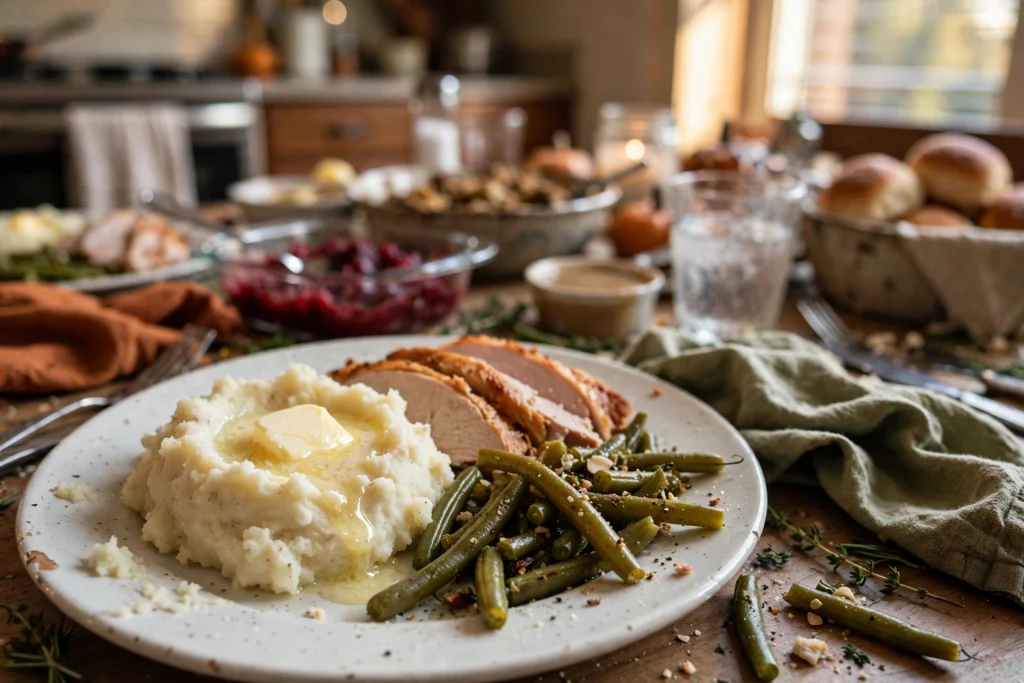
Mashed potatoes are the ultimate team player — they exist to catch gravy and sit next to the main event. The obvious partner is our herb butter roast turkey, and the turkey gravy is what this recipe was practically designed to hold. Round out the Thanksgiving plate with our classic Thanksgiving stuffing, green bean casserole, and fluffy dinner rolls — and finish with classic pumpkin pie.
If you love mashed potatoes with a fancier edge, try our boursin mashed potatoes — same fluffy base, with creamy herb-and-garlic cheese folded through. And the morning after the holiday, any leftovers go straight into our leftover turkey soup.
Recipe Notes
- Start the potatoes in cold, well-salted water — never drop them into boiling water.
- Dry the drained potatoes in the hot pot for 1–2 minutes; this step prevents gumminess.
- Warm the milk and butter before adding; cold dairy stiffens the potatoes.
- Mash by hand with a masher (or use a ricer) — never an electric mixer or food processor.
- The sour cream goes in at the end, at room temperature, and it is what makes the make-ahead version reheat beautifully.
- Season generously and taste after a 5-minute rest; potatoes need more salt than you expect.
- Refrigerate within 2 hours; reheat to steaming hot (165°F / 74°C) all the way through.

Creamy Mashed Potatoes — Fluffy, Buttery & Make-Ahead Friendly
Description
Fluffy, buttery mashed potatoes made the right way — Yukon Golds started in cold salted water, dried in the pot, and mashed by hand with warm milk, butter, and sour cream. Never gluey, never bland, and fully make-ahead friendly for Thanksgiving.
Ingredients
Instructions
-
Choose the right potatoes and cut them evenly:
Peel 3 pounds of Yukon Gold potatoes and cut into even 2-inch chunks so they cook at the same rate. -
Start in cold, well-salted water:
Place the potato chunks in a large pot, cover with cold water by 2 inches, and add 1 tablespoon of kosher salt. Starting cold ensures even cooking from edge to center. -
Simmer — don't boil — until fork-tender:
Bring to a boil over high heat, then reduce to a steady simmer. Add the smashed garlic now if using. Cook 20–25 minutes, until a piece slides off a fork with no resistance and tastes fully tender, not chalky. -
Drain and dry the potatoes in the pot:
Drain thoroughly in a colander, return the potatoes to the hot pot, and set over low heat 1–2 minutes, shaking occasionally, until the surfaces look dry and floury. Remove from heat. -
Warm the milk and butter:
While the potatoes drain, warm the milk and butter in a small saucepan over low heat until the butter is melted and the milk is steaming, not boiling. -
Mash by hand — never with a mixer:
Add the melted butter to the hot potatoes and mash with a hand masher until absorbed. Add the warm milk in two or three additions, mashing gently between each, until smooth. Stop as soon as they reach your desired consistency — do not over-mash. (For the silkiest result, push the potatoes through a ricer or food mill instead.) -
Stir in the sour cream and season:
Stir in the room-temperature sour cream until just combined. Season with 2 teaspoons of kosher salt and the black pepper; taste and adjust. Mash in the boiled garlic now if you want a stronger garlic note. -
Rest briefly, fluff, and serve:
Cover and rest 2–3 minutes. Fluff gently with a spoon, transfer to a warmed serving bowl, and top with a pat of butter and chives if desired. Serve immediately.
Nutrition Facts
Servings 8
- Amount Per Serving
- Calories 255kcal
- % Daily Value *
- Total Fat 13g20%
- Saturated Fat 8g40%
- Cholesterol 35mg12%
- Sodium 700mg30%
- Total Carbohydrate 31g11%
- Dietary Fiber 4g16%
- Sugars 4g
- Protein 5g10%
* Percent Daily Values are based on a 2,000 calorie diet. Your daily value may be higher or lower depending on your calorie needs.
Note
- No electric mixers or food processors — they overwork the starch and turn potatoes gluey.
- Start potatoes in cold, salted water; dry them in the hot pot 1–2 minutes after draining.
- Warm the milk and butter; cold dairy stiffens the potatoes and forces over-mashing.
- The sour cream is optional but recommended — it adds silkiness and is what makes the make-ahead version reheat creamy.
- Refrigerate within 2 hours; use within 4 days or freeze up to 3 months. Reheat to steaming hot (165°F / 74°C) all the way through.
Nutrition is an estimate calculated from this recipe's listed ingredients and will vary with the exact brands and potato sizes used.